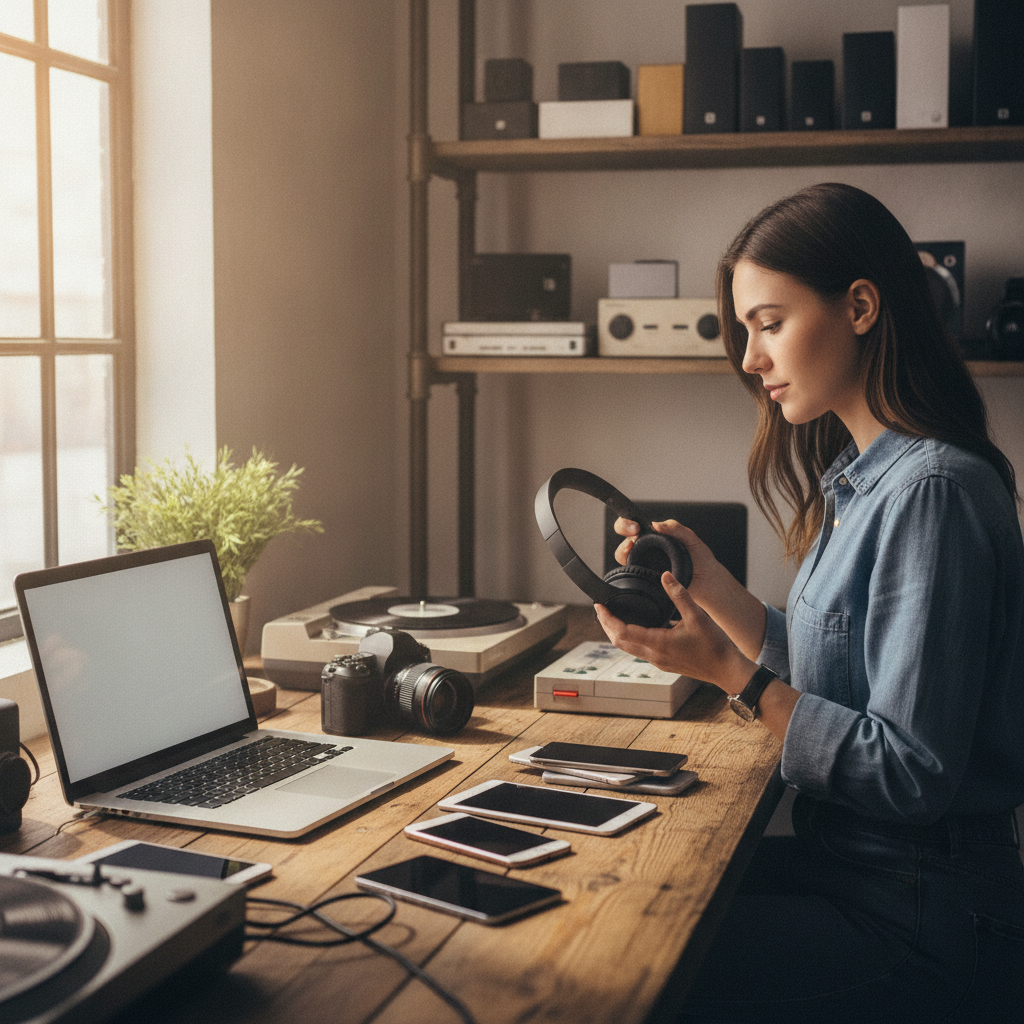
The idea that a device must be new to be valuable has been eroding steadily, replaced by something more pragmatic and, in many ways, more intelligent. Across cities and households, a quiet shift has taken place in how people think about electronics — not just as status objects or technological milestones, but as tools whose worth is largely independent of whether they arrived in a sealed box. The secondhand electronics market, once associated with risk and inconvenience, has matured into one of the most sensible corners of consumer culture.
The Refurbishment Revolution in Consumer Tech
Refurbishment — the process of restoring a used device to functional, often near-original condition — has become a sophisticated industry in its own right. Companies like Apple, Samsung, and Best Buy now operate certified refurbishment programs with warranty protections that rival those attached to new products. The process typically involves replacing worn components, deep cleaning, software resets, and rigorous testing. What arrives in a customer's hands is rarely distinguishable from new in terms of performance, yet the price reflects its previous life. The infrastructure supporting this market has grown quietly but substantially over the past decade.
The Logic of Depreciation Working in the Buyer's Favor
Electronics depreciate faster than almost any other consumer category. A flagship smartphone loses a significant portion of its retail value within the first year, not because its capabilities diminish dramatically, but because a newer model has been announced. Savvy buyers have learned to let early adopters absorb that initial depreciation, then purchase the same device twelve to eighteen months later at a fraction of the original cost. Platforms like Swappa, Back Market, and eBay's certified refurbished listings have made this strategy more accessible and less risky than it once was. The device itself hasn't changed — only its price tag.
Condition Grading and What It Actually Means
One of the developments that transformed buyer confidence in secondhand electronics is the standardization of condition grading. Most reputable platforms now use a tiered system — typically ranging from "like new" or "open box" down through "good" and "fair" — with clear descriptions of cosmetic wear and functional status. Grade A devices often show no visible signs of use whatsoever. Understanding this vocabulary is essential for anyone new to the secondhand market, because a "good" grade device with minor screen scratches may perform identically to a pristine unit while costing considerably less. Reading the grading criteria carefully, rather than assuming, is the practice that separates confident secondhand buyers from hesitant ones.
Environmental Weight and the Case Against Constant Upgrading
The environmental argument for buying secondhand electronics has grown more compelling as awareness of supply chain impact has deepened. Manufacturing a single smartphone requires mining rare earth minerals, significant water usage, and the kind of energy expenditure that doesn't disappear from the ledger just because the end product is sleek and small. Extending the life of an existing device — whether a laptop, tablet, or pair of wireless headphones — delays the manufacturing demand for a replacement unit. This principle, sometimes called *circular economy* thinking (the idea that products should remain in use as long as possible rather than cycling quickly to landfill), has moved from academic discussion into mainstream consumer awareness. Buying secondhand is, among other things, a vote for a longer product lifespan.
Where the Best Secondhand Deals Actually Live
Not all secondhand channels are created equal. Manufacturer-certified programs offer the strongest warranties but tend to price closer to retail. Third-party platforms like Back Market and Decluttr occupy a middle ground — competitive pricing with buyer protection policies that offer reasonable recourse if a device underperforms. Local options, including Facebook Marketplace and platforms like OfferUp, can yield the deepest discounts, particularly on slightly older models that larger platforms don't prioritize. The trade-off is that local sales typically come without warranty coverage, which makes in-person testing — checking the battery health, inspecting the screen, verifying the charging port — more important. Knowing which channel suits the device and the buyer's risk tolerance is part of the skill set.
The Psychology of Letting Go of Newness
There's a cultural concept worth naming here: *neophilia*, the tendency to assign disproportionate value to things simply because they are new. Consumer electronics marketing has long relied on this tendency, building launch events into cultural moments and training buyers to associate novelty with superiority. Stepping outside that framework requires a modest but meaningful shift in thinking — one that asks what a device actually needs to do rather than what its release date implies about its relevance. Many people find, once they make this shift, that a two-year-old laptop running current software meets their needs as fully as anything currently on a store shelf. The performance gap between generations of devices has narrowed considerably, making the psychological leap easier to justify.
Making the Switch With Confidence
If you're considering the secondhand market for your next electronics purchase, a few habits will serve you well. Start by identifying exactly what performance requirements matter — battery life, processing speed, camera quality — rather than defaulting to the newest available model. Research the specific device's known issues and average battery health at the age you're considering; forums and review sites carry years of real-world data on longevity. Choose a platform whose return policy gives you a meaningful window to test the device thoroughly. And resist the impulse to treat a lower price as a signal of lower worth — in a market where depreciation is driven more by marketing cycles than by actual capability decline, price and quality have quietly uncoupled in ways that reward careful buyers.
The broad observation that opened this piece — that new no longer means best, at least not automatically — reflects something genuine about where consumer culture has arrived. The secondhand electronics market didn't become smarter by accident; it became smarter because the tools, the platforms, and the collective knowledge of buyers improved steadily until the old risks shrank and the advantages became hard to ignore. Buying secondhand is no longer a compromise. For a growing number of people, it's simply the more considered choice.