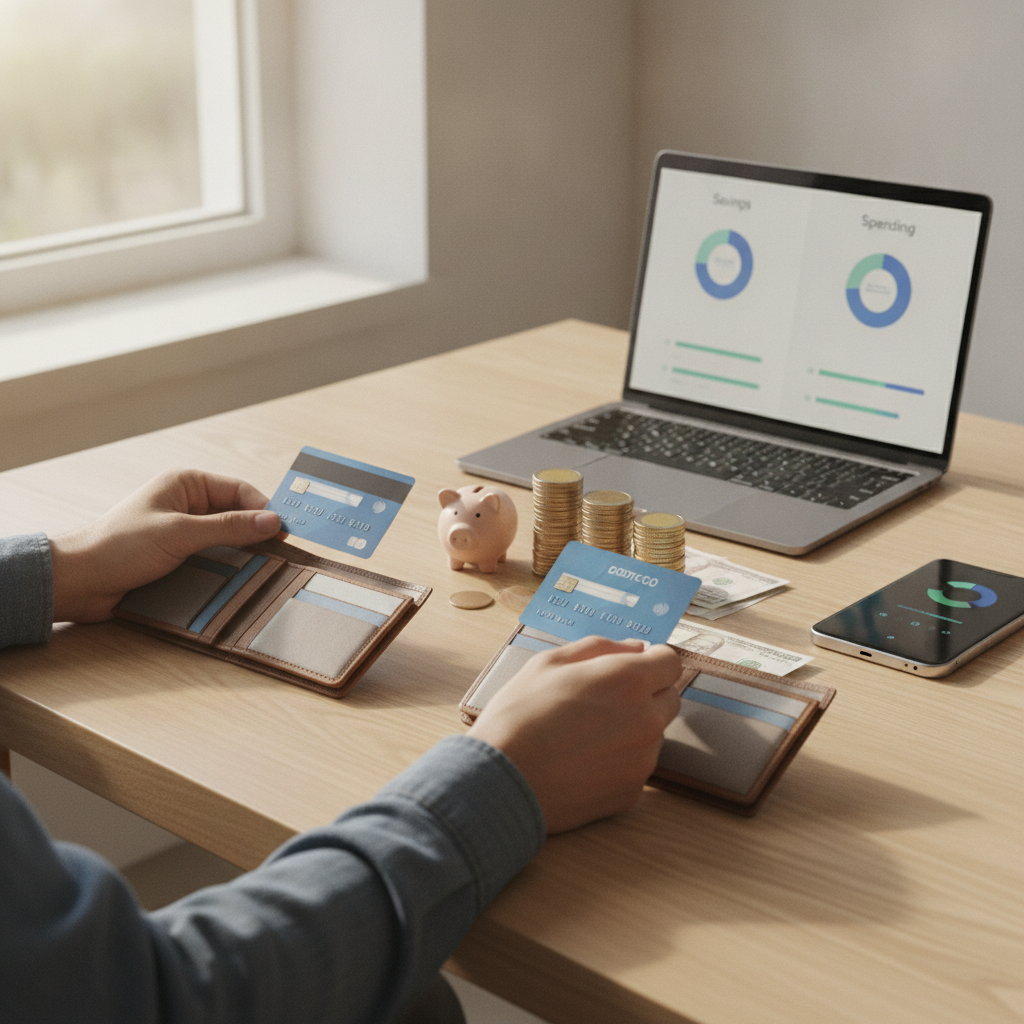
Saving money consistently is one of those things that sounds simple until real life gets in the way. You intend to transfer something at the end of the month, but by then the money has already quietly disappeared into groceries, car expenses, and a few things you can barely remember buying. The problem isn't discipline — it's that the system puts spending first and saving last. Splitting your direct deposit changes that order entirely, and once it's set up, it runs without you having to think about it.
Set Up the Split Before You Ever See the Money
The core idea behind direct deposit splitting is simple: your paycheck never lands in a single account. Instead, your employer's payroll system — or a service like Gusto, ADP, or your own HR portal — routes a fixed amount or percentage directly into a savings account before your main checking account ever sees it. Because the money moves before you can touch it, the temptation to spend it simply doesn't arise. Most banks and credit unions support this split with a basic routing and account number, and it usually takes less than ten minutes to configure.
Choose the Right Second Account for the Job
Not all savings accounts are created equal, and the one you route your split into matters. A high-yield savings account at an online bank — options like Ally, Marcus by Goldman Sachs, or SoFi are worth comparing — typically earns meaningfully more than a standard brick-and-mortar account. The slight friction of not having that money available through your everyday debit card also helps. Out of sight genuinely tends to mean out of mind, which reinforces the whole point of the system.
Start With a Small, Uncomfortable-Feeling Percentage
A common mistake is starting too big. If you redirect too much too soon, you'll feel squeezed by mid-month and raid the savings account, which defeats the purpose. A better approach is to start with a split that feels almost too small — even ten or fifteen percent — and let yourself adjust to living on the remainder. Most people find within a couple of months that they don't actually miss the money. Once that happens, nudging the split up slightly becomes easy.
Use the Second Account for a Specific Purpose
Savings accounts with no defined goal tend to get raided for vague reasons. Giving your second account a clear job — emergency fund, home repair reserve, travel savings, or a down payment — makes the money feel psychologically off-limits. Some people go further and label the account explicitly within their bank's interface. When you log in and see "Emergency Fund" rather than "Savings Account," the mental barrier to spending it gets meaningfully higher.
Keep Your Checking Account Lean on Purpose
Once your split is active, your checking account becomes a spending account with a built-in ceiling. That ceiling is clarifying. You stop making spending decisions based on a total balance that includes money you were planning to save later. Instead, you work with what's actually available for daily life. This is one of the reasons the split method outperforms traditional budgeting for many people — it enforces a boundary without requiring ongoing tracking or willpower.
Automate Bill Pay From Checking to Avoid Gaps
With a smaller checking balance, timing becomes more important. Set up automatic bill payments to align with your pay schedule so nothing bounces. Most major banks — Chase, Bank of America, Wells Fargo, and their online counterparts — allow you to schedule recurring payments for specific dates. Running a quick calendar check when you first set up your split, mapping out when fixed bills hit versus when paydays land, prevents the kind of overdraft surprises that undo the whole system.
Revisit the Split Every Few Months
A direct deposit split isn't a set-it-and-forget-it decision forever. Life changes — rent goes up, income increases, a debt gets paid off, or a new goal emerges. Building in a brief quarterly review, even just fifteen minutes, keeps the split aligned with where you actually are financially. Many people find that after clearing a credit card balance or finishing a car payment, that freed-up amount gets redirected into the savings split naturally, accelerating progress without requiring a lifestyle change.
Treat the Second Account Like It Doesn't Exist Day-to-Day
The final piece is behavioral, not logistical. Once the split is running, deliberately avoid checking the second account during your normal banking routine. Remove the app shortcut if you use mobile banking. Let the balance grow quietly in the background and only check it during intentional review sessions. This isn't about denial — it's about removing the daily temptation to reassess whether you really need that money sitting there. The less present it feels in your daily mental landscape, the more effectively it accumulates.
Getting started is genuinely the hardest part, and even that takes less than half an hour. Pull up your employer's direct deposit form or payroll portal, add your second account's routing and account numbers, pick a starting split that feels manageable, and let the system do the rest. Small, consistent, automatic actions tend to outperform big financial intentions every time — and this one is among the easiest to put in motion.