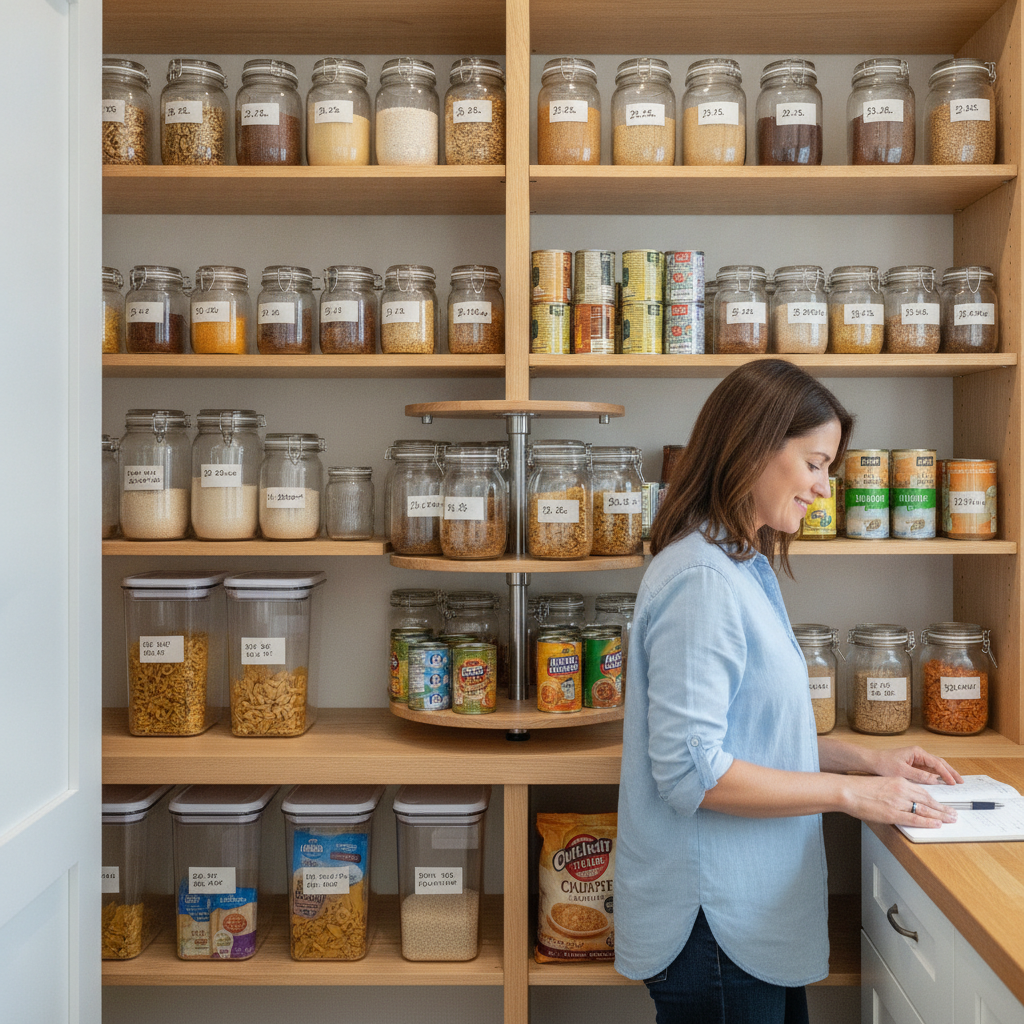
Discovering three cans of crushed tomatoes buried behind expired soup mix, or realizing you bought another bottle of olive oil when two were already hiding in the back of the cabinet — these moments are frustratingly common. Most households don't have a grocery problem so much as an organization problem. When you can't see what you own, you keep buying what you think you need, and the pantry quietly becomes an expensive mystery box.
A rotating pantry system solves this at the root level. It's a simple, sustainable approach to stocking your kitchen that keeps older items in front, newer ones behind, and your shopping list accurate for the first time in years.
Start With a Full Pantry Audit
Before building any system, you need to know what you're actually working with. Pull everything out of your pantry, cabinets, and any overflow storage areas. Check expiration dates, group similar items together, and toss anything that's past its prime. This one-time reset often reveals duplicates you didn't know existed — two bags of brown rice, four cans of chickpeas, half-empty spice jars that can be consolidated. It's temporarily chaotic, but it gives you an accurate baseline and usually reduces what you think you need to buy for the next few weeks.
Group Items by Category Before Putting Anything Back
Once everything is out, resist the urge to simply put it back where it was. Instead, create dedicated zones by category — canned goods together, grains and dried legumes together, oils and vinegars together, snacks in one section. When items live in consistent zones, you stop accidentally buying a second jar of tahini because you couldn't find the first. Apps like Pantry Check or Out of Milk can mirror this organization digitally, but the physical grouping is what actually prevents duplicate purchases at the store.
Apply the First-In, First-Out Rule Consistently
The core principle of any rotating system is simple: newer items go behind older ones, and you always reach for what's in front first. This is the same method grocery stores like Trader Joe's and Whole Foods use on their own shelves. When you bring home a new can of black beans, you slide existing cans forward and place the new arrivals at the back. It takes an extra ten seconds per item and reliably prevents the situation where you find perfectly good food that expired two years ago because it was never reached.
Use Shelf Risers and Pull-Out Bins to Make Everything Visible
The biggest enemy of pantry organization isn't laziness — it's depth. Standard shelves let items hide behind each other, and anything not immediately visible gets forgotten. Tiered shelf risers for canned goods, pull-out bins for packets and pouches, and clear stackable containers for bulk items like oats, pasta, and lentils all solve the visibility problem without requiring a kitchen renovation. The investment in a set of OXO Pop containers or similar airtight alternatives pays off quickly when you stop buying ingredients you already have sealed and stored.
Build Your Shopping List Directly From the Pantry
One of the most reliable ways to cut grocery spending is to shop from your pantry first and your grocery app second. Before writing a single item on your list, check what's running low and what needs to be used up soon. Meals built around ingredients already on hand reduce both spending and food waste simultaneously. This habit also makes store circulars more useful — when you know your pantry inventory, you recognize genuine restocking opportunities rather than buying something just because it's on sale.
Set a Restocking Threshold, Not a Standing Order
Rather than buying the same items every week regardless of current stock, define a restocking threshold for each category. For example, you might decide to buy canned tomatoes only when you're down to two cans, or cooking oil only when you're in the last quarter of a bottle. This threshold approach prevents the slow accumulation of excess that buries your pantry over time. It also creates natural flexibility — if something is on a genuine markdown that week, you know exactly whether it makes sense to stock up based on your current level.
Reassess the System Every Season
A pantry system doesn't maintain itself permanently. Cooking habits shift with the seasons, new recipes get added to the rotation, and some items you stocked up on simply don't get used as quickly as expected. Doing a lighter version of your initial audit four times a year — checking dates, adjusting zones, donating sealed items you've decided not to use — keeps the system functional rather than slowly reverting to chaos. Local food banks are always glad to receive unexpired pantry staples, so nothing useful needs to go to waste during these seasonal resets.
Label Shelves, Not Just Containers
Labeling containers is helpful, but labeling the shelf zones themselves is what keeps the system intact when other household members are putting groceries away. A simple piece of masking tape with a category name — "canned beans," "pasta and grains," "oils" — removes the guesswork for anyone helping stock the pantry. It takes five minutes to set up and significantly extends how long your organization system holds before breaking down. Clear expectations built into the physical space work better than relying on everyone remembering a mental map.
Building a rotating pantry system isn't about achieving a magazine-perfect kitchen — it's about making your food money go further by using what you buy and buying only what you need. Start with the audit, organize what comes back in, and let the first-in-first-out rule do the rest. Once the system is running, the grocery bill tends to reflect it pretty quickly.