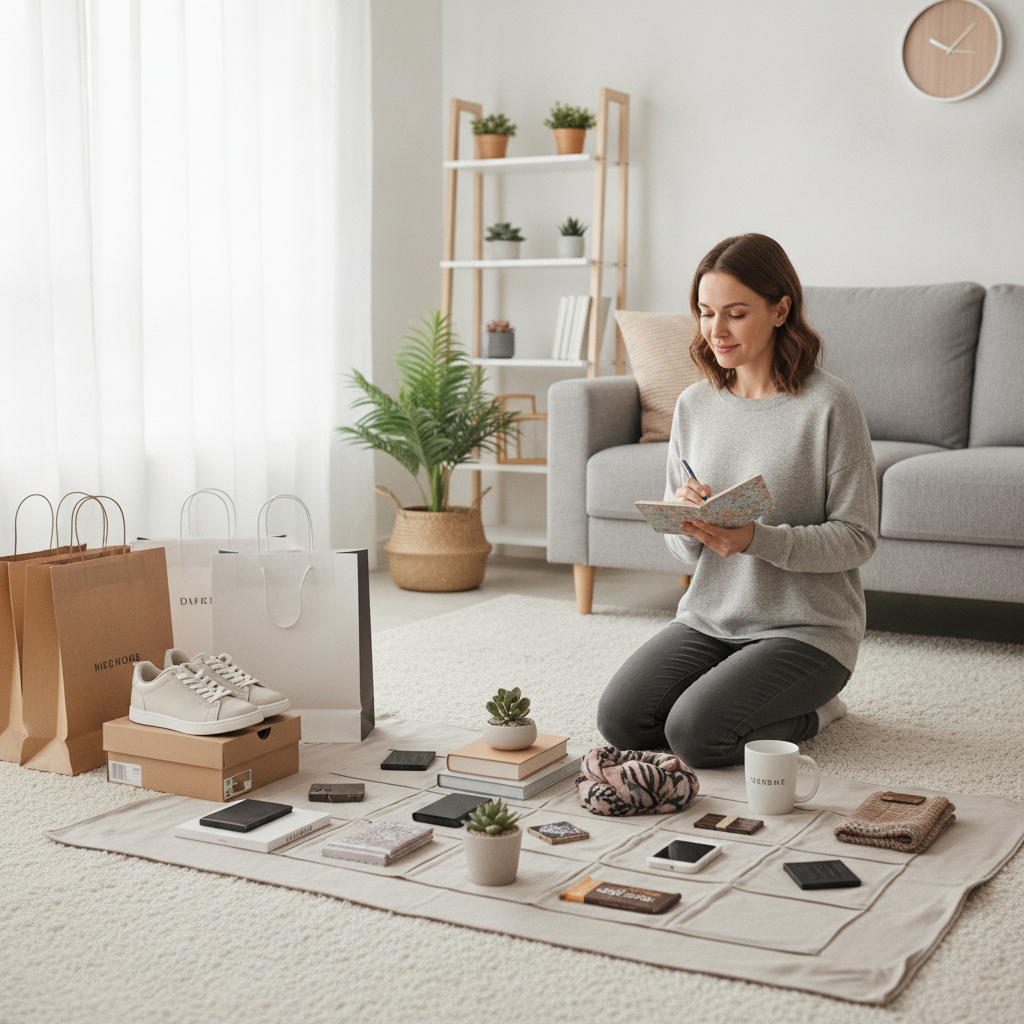
Clutter almost never arrives all at once — it accumulates gradually, one small purchase at a time, until a home that once felt spacious starts to feel overwhelming. The one-in-one-out rule is one of the simplest systems for breaking that cycle. For every new item that enters a space, one existing item leaves. No spreadsheets, no strict budgets, no willpower marathons required. The rule works quietly in the background, and its effect on spending turns out to be just as powerful as its effect on organization.
Start With a Room-by-Room Inventory
Before the rule can work, you need a clear picture of what you're already living with. Walk through each room and take stock of what's actually being used versus what's simply occupying space. Closets, kitchen cabinets, and bathroom shelves tend to be the most revealing. When you see that you already own four black sweaters or three spatulas, the urgency behind a new purchase tends to dissolve on its own. This initial audit doesn't need to be exhaustive — even a rough sense of what you have creates a mental anchor that changes how you shop.
Decide What Leaves Before Anything New Arrives
The most effective version of this rule puts the decision in reverse order: before buying something new, identify what will go. This small shift does a lot of heavy lifting. It turns a mindless purchase into a deliberate trade-off, forcing a moment of real reflection. Apps like Mercari and Facebook Marketplace make it easy to rehome items quickly, so the friction of letting go is lower than most people expect. When you know something has to leave to make room, you naturally start asking whether the incoming item is worth the exchange.
Apply the Rule in Your Wardrobe First
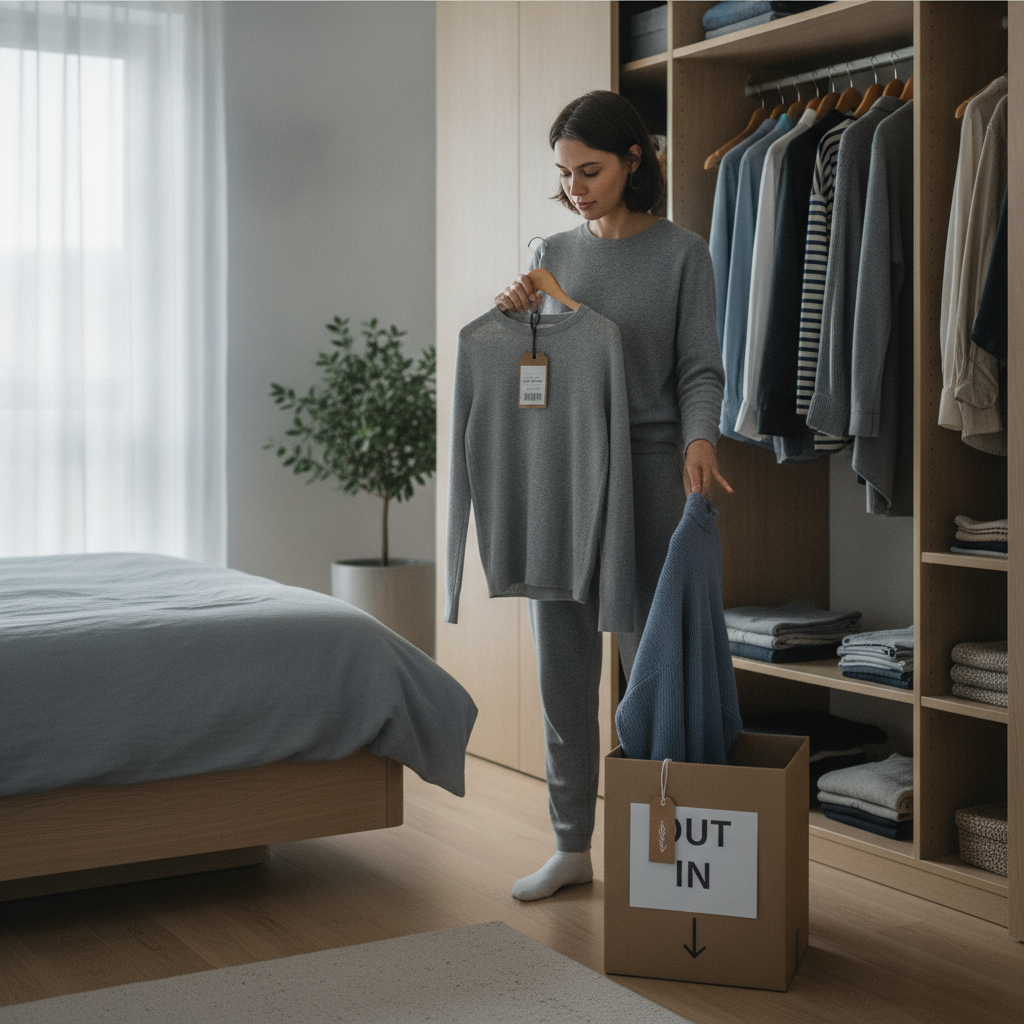
Clothing is where impulse spending tends to hit hardest, and it's also where one-in-one-out delivers the most visible results. A closet with a fixed capacity — whether that's 30 pieces or 60 — stops growing by default. Brands like Uniqlo and Everlane have built their appeal around the idea of fewer, better items, and the logic translates well to this system. When every new top or pair of shoes requires removing something else, you start evaluating purchases against your actual wardrobe rather than an imaginary ideal version of it.
Extend It to the Kitchen and Pantry
Kitchens accumulate clutter in ways that feel justified — gadgets, appliances, duplicate utensils, and pantry staples that sounded useful once. The one-in-one-out rule works just as well here. Bringing in a new appliance means an existing one gets donated, sold, or discarded. Stocking a new pantry item means finishing or clearing out something already on the shelf. This naturally limits the pull of kitchen gadget deals at stores like Williams Sonoma or Target, because you're forced to picture what physically leaves before you add anything new.
Use It to Rethink Gift-Receiving Habits
One overlooked source of clutter is gifts — well-intentioned but often mismatched to what you actually need or want. Applying one-in-one-out to incoming gifts reframes your relationship with them. If a gift enters your home, something else leaves. This doesn't require awkward conversations with gift-givers, but it does encourage you to be more specific about what you'd genuinely use when someone asks. Over time, it tends to shift your preference toward experiences, consumables, or items on a maintained wish list — all of which align better with intentional living.
Let the Rule Reveal Your Real Shopping Patterns
After a few months of practicing one-in-one-out consistently, a pattern usually emerges: the categories where you struggle to find something to remove are the categories where you've been over-buying. If you can never find a kitchen item to part with when bringing something new in, that's information. If your bookshelf is constantly at capacity, that's worth noticing too. The rule essentially builds a feedback loop into your spending. It doesn't tell you what to value — it just makes visible what you actually do value versus what you purchase out of habit or impulse.
Keep It Lightweight So It Actually Sticks
The biggest risk with any organizing system is that it becomes its own burden. One-in-one-out only works if it stays easy to execute. That means not requiring every outgoing item to be sold — sometimes donation or even disposal is the right call. Apps like ThredUp simplify clothing resale, while local Buy Nothing groups on platforms like Nextdoor make rehoming household items nearly effortless. The goal is a frictionless exit path so that the rule never becomes a reason to delay action. A system you actually use consistently will always outperform a perfect system you abandon after two weeks.
Watch the Spending Effect Compound Over Time
The financial benefit of one-in-one-out is rarely obvious in the moment, but it accumulates steadily. When every potential purchase requires identifying something to remove, a significant portion of impulse buys simply don't happen. The fleeting appeal of a new throw pillow or a trending kitchen tool fades when you realize you'd have to part with something you genuinely like to make room for it. Over months and years, that quiet friction prevents dozens of small purchases from ever materializing — which amounts to real money staying in your account without the effort of a formal budget.
The one-in-one-out rule works because it reframes every purchase as a choice rather than an addition. It doesn't require strict discipline or detailed tracking — just a consistent habit of trading rather than accumulating. The result is a home that stays manageable and a spending pattern that naturally gravitates toward things you genuinely want, rather than things that simply crossed your path at the right moment.