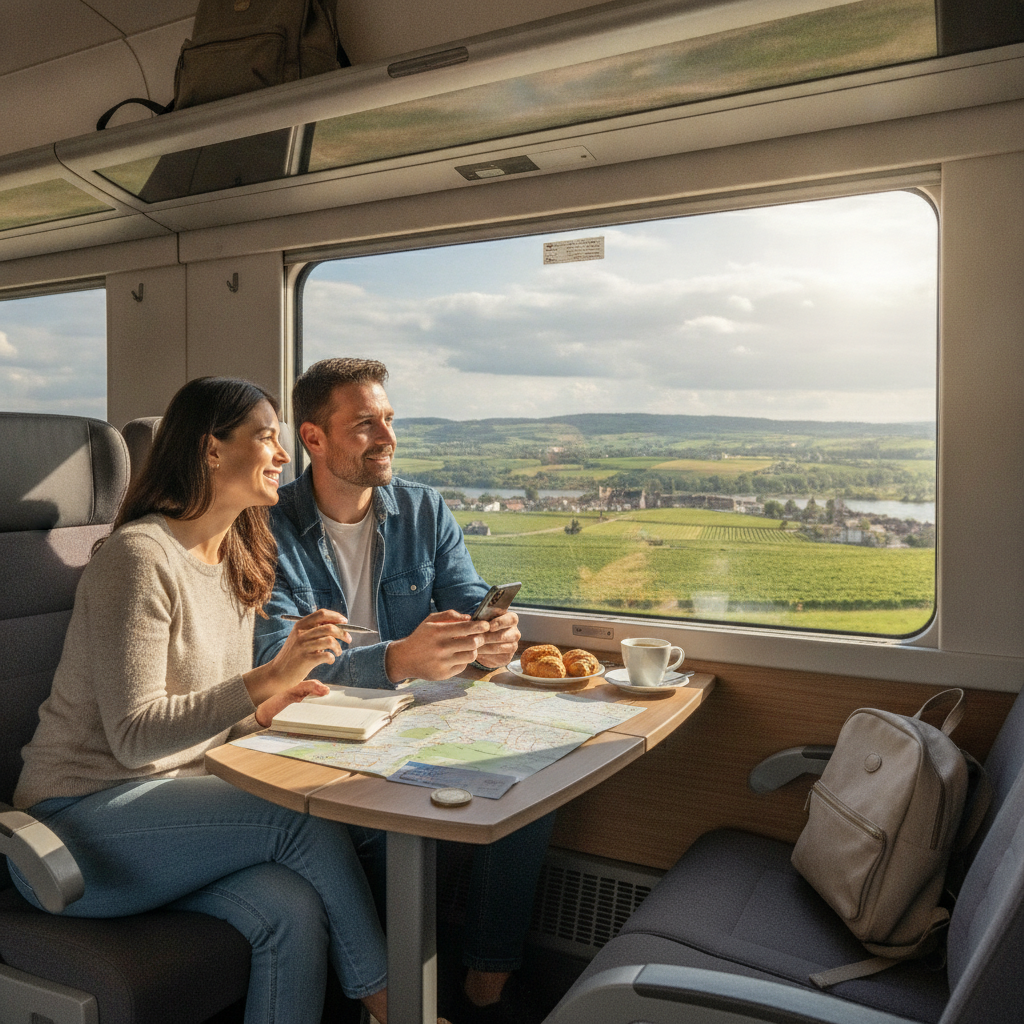
Short-haul flights are often the first option people reach for when planning a trip between cities, but they're rarely the smartest one. Once you factor in baggage fees, airport transfers, security queues, and the dreaded two-hour early arrival rule, what looks like a one-hour flight becomes a half-day ordeal. Train travel sidesteps most of that friction — and frequently costs less in the process. Whether you're crossing France by TGV, threading through the English countryside on Avanti West Coast, or riding Amtrak's Northeast Corridor between New York and Boston, the math and the experience tend to favor the rails.
The True Cost of Flying Is Never Just the Ticket Price
Airline pricing is designed to look attractive before you've added anything to your basket. By the time you've selected a seat, added a carry-on, chosen a checked bag, and booked a taxi or train to an airport that's inevitably located forty minutes outside the city, the total frequently doubles. Train tickets, particularly when booked through carriers like Eurostar, SNCF, or Trenitalia, price in a way that's far more transparent. You arrive and depart from city-centre stations, the ticket usually includes a standard seat, and baggage policies are far more relaxed. That gap in real cost is where train travel consistently wins.
Booking Early on Rail Is as Powerful as It Is on Flights
The same advance-booking logic that applies to flights works on trains — sometimes even more dramatically. Eurostar routes between London and Paris regularly drop to a fraction of their peak walk-up price when booked six to twelve weeks out. In Spain, Renfe's AVE high-speed network operates promotional fares that expire quickly but genuinely reflect deep discounts. The key is to set a date, search early, and lock in the fare rather than treating train travel as something you can book the week before. Rail booking platforms now work much like flight search engines, making it easy to scan flexible dates for the cheapest departures.
Rail Passes Shift the Equation for Multi-City Trips
If you're planning to move between several destinations rather than making a single return journey, a rail pass can change the economics entirely. The Interrail pass for European residents and the Eurail pass for visitors outside Europe both offer multi-country access across dozens of carriers. For a trip covering four or five cities in two weeks, the per-journey cost under a pass often undercuts individual point-to-point tickets significantly. Passes also remove the planning pressure — you're not locked into specific departure times weeks in advance, which gives your itinerary genuine flexibility that budget airlines, with their rigid change fees, simply can't match.
City-Centre Arrival Changes Everything About Your Day
Landing at a central station rather than a peripheral airport reshapes the entire rhythm of a travel day. When Eurostar pulls into Paris Gare du Nord or a Frecciarossa arrives at Roma Termini, you step onto the platform and you're already inside the city. No shuttle bus, no forty-minute metro ride, no queuing for an overpriced taxi rank. This convenience translates directly into time and money — accommodation near train stations is often excellent, and you can be at your hotel, café, or first appointment within minutes of arrival. That recovered time is one of the most underrated advantages of choosing rail over air.
The Journey Itself Becomes Worth Something
One of the stranger costs of flying is how completely it erases the distance between places. You board, the landscape disappears, you land somewhere unfamiliar. Train travel keeps that geography visible. The stretch between Barcelona and Madrid on the AVE passes through a landscape that changes dramatically over a few hours. The Eurostar's underwater passage gives way to the French countryside almost immediately. These are experiences with real value — particularly for first-time visitors who benefit from arriving somewhere with a visual sense of how far they've come and what surrounds them. The journey stops being dead time and starts functioning as part of the trip itself.
Overnight Trains Compress Time and Cut Accommodation Costs
Europe's overnight rail network is quietly expanding again after years of decline, and that's genuinely useful news for budget-conscious travellers. Services like the Nightjet network operated by Austrian Federal Railways connect cities including Vienna, Brussels, and Amsterdam with sleeper and couchette options that let you travel through the night, arrive in the morning, and skip a night's hotel entirely. Done right, an overnight train replaces both a short-haul flight and a hotel room in a single booking. For a long weekend trip where every night of accommodation adds up, this is one of the more effective money-saving strategies available.
Flexible Fare Rules Make Rail Less Risky to Book
One persistent anxiety around advance booking is the risk of plans changing. Airlines typically charge steep fees to modify or cancel, and budget carriers often make changes nearly impossible at any reasonable cost. Many rail operators, particularly in the UK and across continental Europe, offer ticket types with much more forgiving exchange policies. Even fixed-price advance fares sometimes allow date changes for a modest fee, and fully flexible tickets — while more expensive — provide genuine peace of mind for business travel or trips around variable commitments. Understanding the fare categories before booking takes five minutes and can save significant frustration later.
Your Device Works the Whole Way There
This sounds minor until it isn't. Trains offer something flights structurally cannot: continuous connectivity, usable space, and freedom of movement throughout the journey. Working on a laptop, making calls, browsing without airplane mode, getting up to stretch, ordering a coffee from the buffet car — all of this is simply available. On a two-hour train journey between London and Edinburgh, or Paris and Brussels, a productive worker can complete a meaningful chunk of the day. That productivity has real economic value, especially for travellers combining business and leisure. The train doesn't ask you to power down and stare at a seatback for the duration.
Rail travel between cities is already the dominant choice in parts of Europe and Japan precisely because the overall value — in time, comfort, cost, and experience — makes flying on short routes feel inefficient once you do the full comparison. As high-speed networks continue expanding and overnight services return to more routes, the case for defaulting to trains on journeys under five or six hours will only strengthen. Keeping an eye on new route launches and early-bird promotions from operators like Eurostar, Renfe, and the emerging BlaBlaCar Bus and rail hybrid services is one of the better habits any frequent traveller can develop.