It's Wednesday evening, the kitchen is cold, the day ran long, and the path of least resistance leads straight to a delivery app. A few taps later, dinner is solved — and somewhere between thirty and fifty dollars quietly disappears from the month's budget. Multiply that by two or three nights a week, and the number that accumulates by year's end is substantial enough to fund a vacation, an emergency buffer, or several months of groceries.
This kind of spending rarely shows up as a problem in the moment. It feels like a reasonable response to being tired. But when you pull back and look at the pattern across four or five months of bank statements, the convenience category becomes one of the most quietly damaging line items a household can carry.
Understand What You're Actually Spending Before You Change Anything
The first move isn't to buy a meal prep container set or batch-cook twelve portions of rice. It's to get honest about the current cost. Pull up three months of statements and total everything tagged as food delivery, fast casual, convenience stores, and drive-throughs on weeknights specifically. Most households are surprised. The number tends to be higher than any rough mental estimate, because individual purchases feel small and the frequency is easy to underestimate.
Once that total is visible, it becomes a motivating number rather than an abstract problem. You now have a concrete target — not to eliminate all convenience spending, but to redirect a meaningful portion of it.
Start With One Prep Session, Not a Full System
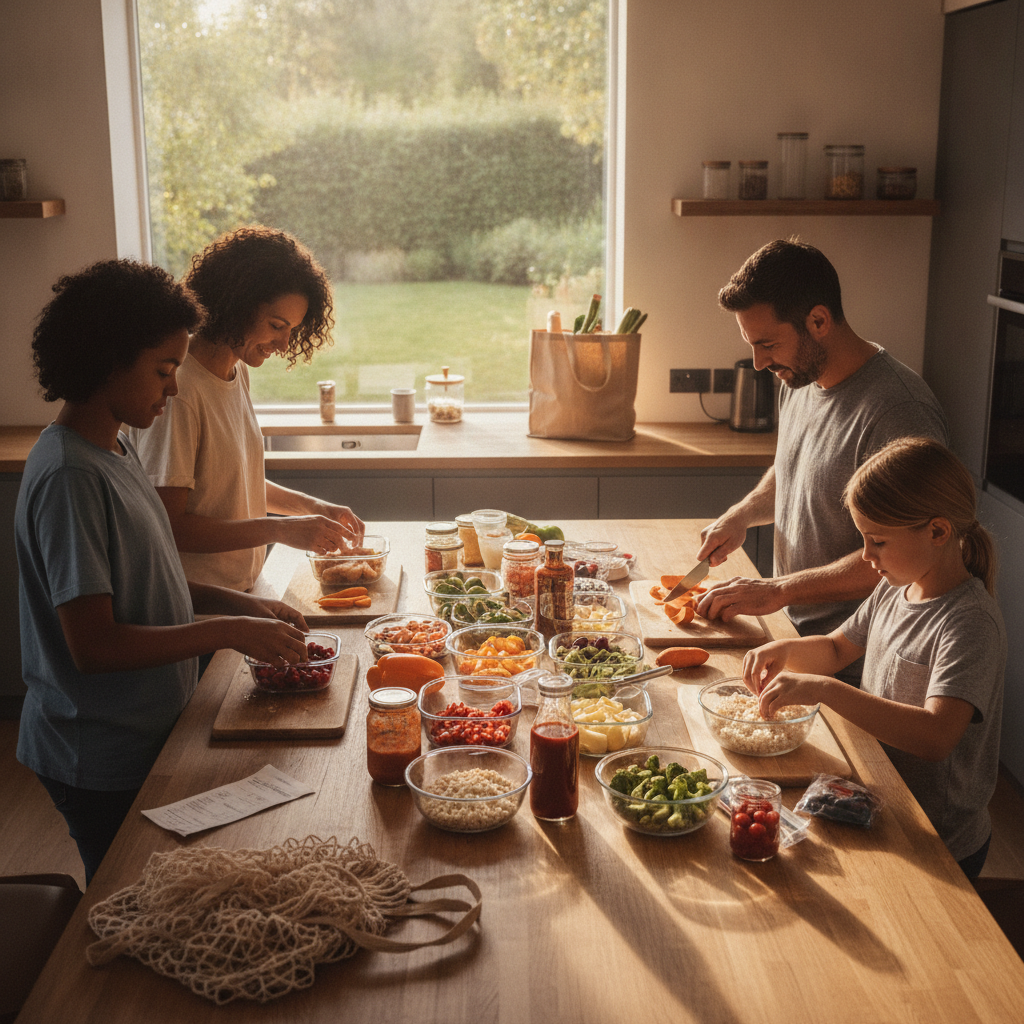
The instinct when adopting meal prep is to go all-in immediately — planning seven days of meals, buying in bulk, spending a full Sunday afternoon cooking. That approach tends to collapse by the third week. A more sustainable entry point is narrower: pick three weeknight dinners, prepare the components for those meals only, and keep Sunday prep under ninety minutes.
This means cooking a pot of grains, roasting a sheet pan of vegetables, marinating a protein, and making a sauce that works across multiple meals. None of it requires elaborate recipes. The goal is to reduce the number of decisions and the time required on weeknights, not to create restaurant-quality meals from scratch each day. When the barrier drops low enough, reaching for what's already prepared becomes easier than opening a delivery app.
Use Apps Like Mealime and Paprika to Lower the Planning Friction
One of the invisible costs of meal prep is the mental energy required to plan. Deciding what to make, checking what's on hand, writing a shopping list, cross-referencing what's on sale — it's genuinely tedious, and that friction is part of why people abandon the habit. Apps built specifically for this reduce the load considerably.
Mealime generates weekly meal plans based on dietary preferences and automatically builds a consolidated grocery list. Paprika lets you save recipes, scale portions, and organize a pantry inventory so you're not buying duplicates of things already in the cabinet. Using either one on a Saturday morning — even for fifteen minutes — means Sunday prep begins with clarity rather than improvisation. That difference matters more than it sounds.
Shop Once, With Intention, and Let the Circular Guide You
Meal prep becomes significantly more economical when the weekly shop is built around what's already discounted rather than around fixed recipes. Most major grocery chains publish their weekly circulars digitally, and apps like Flipp aggregate them across multiple stores in one place. Spending five minutes with the current circular before deciding what to prep means protein and produce choices align with what's on sale that week.
This one habit compounds quickly. A week where chicken thighs are marked down becomes a chicken-forward prep week. A week with discounted sweet potatoes and broccoli shapes the vegetable components. Over time, you develop a flexible repertoire of meals that can bend to whatever is cheapest, rather than a rigid rotation that ignores pricing entirely.
Build the Ritual Around Timing, Not Willpower
The difference between a habit that sticks and one that doesn't usually comes down to where it sits in your weekly rhythm. Meal prep works best when it's anchored to a specific Sunday window — say, the two hours after morning coffee and before the afternoon settles in. Pairing it with something enjoyable helps: a podcast, a playlist, a sports broadcast in the background. The task starts to feel like a comfortable part of the week rather than a chore.
Seasonal timing matters here too. In autumn and winter, when evenings get darker earlier and the impulse to order comfort food is strongest, having a container of soup or a ready-made grain bowl in the refrigerator does something powerful. It removes the decision entirely at the moment you're most vulnerable to convenience spending. Spring and summer shift the prep toward lighter fare — prepped salad bases, marinated proteins for grilling, cold grain salads — which feel appropriate for the season without requiring a completely different system.
Track the Shift in Spending, Not Just the Habit
After four to six weeks of consistent Sunday prep, return to the same exercise you did at the start: pull three months of weeknight convenience spending and compare. Most households see a meaningful reduction — not to zero, because life intervenes, but enough that the savings become real and visible. Seeing that number shrink is what reinforces the habit more reliably than any motivation-based approach.
You Nab, a budgeting tool that syncs with bank accounts and automatically categorizes transactions, makes this comparison straightforward without requiring manual tracking. Watching the food delivery category trend downward week by week provides the same kind of feedback loop that makes any new behavior feel worth continuing.
Let the Ritual Evolve With the Season
Meal prep doesn't have to look the same year-round, and insisting that it does is another reason people abandon it. Winter prep leans toward braises, soups, and slow-cooked proteins that reheat well. Summer prep favors items that require no reheating at all — grain salads, prepped vegetables, cold proteins. Autumn is perfect for roasted root vegetables and hearty legumes. Spring brings asparagus, peas, and lighter preparations that feel seasonal without demanding a full recipe overhaul.
Letting the ritual breathe and adapt means it remains something you look forward to rather than something you endure. And the financial benefit it produces — quietly dismantling weeknight convenience spending week after week — continues regardless of what's in the containers.
If none of this is part of your Sunday yet, the best starting point is simply the calculation: total what convenience spending actually costs over three months, then pick one prep session for next weekend. That first container of ready-made food in the refrigerator on a tired Wednesday night is where the habit begins to pay for itself.