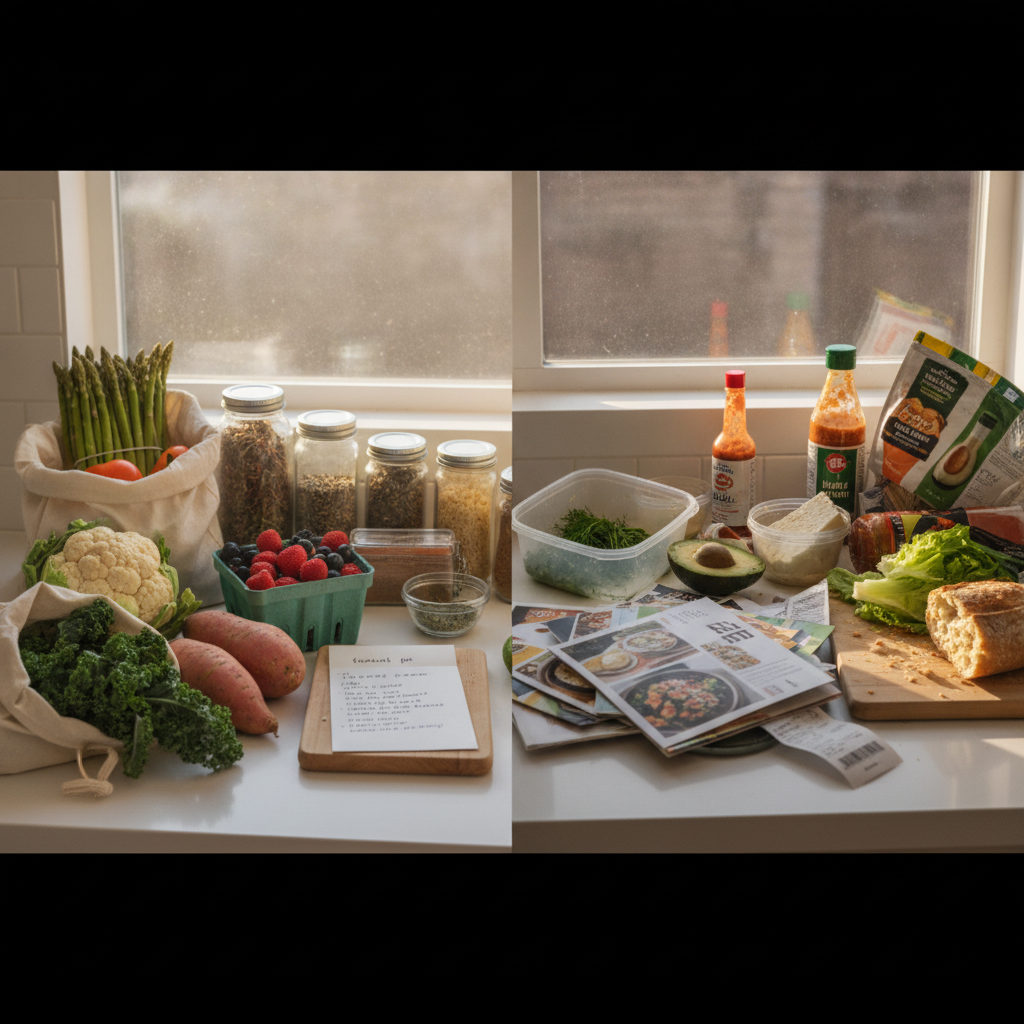
Most household grocery budgets erode not through dramatic overspending but through the quiet accumulation of half-used ingredients, abandoned recipe experiments, and weekly shopping lists built around whatever looked appealing on a food blog that Tuesday. The modern kitchen has become a casualty of culinary trend culture — stocked with specialty items purchased for one dish and forgotten, while everyday staples run out unnoticed. There is a quieter, more grounded alternative that home cooks across generations have relied upon without ever giving it a formal name: the seasonal meal rotation.
The Logic of Repetition in the Kitchen
A meal rotation is simply a set of dishes that recur on a predictable cycle — perhaps twelve to sixteen recipes distributed across four weeks, refreshed at the turn of each season to reflect what is naturally available and affordable. Unlike the constant novelty-seeking that drives most recipe browsing, a rotation creates what Japanese domestic culture calls *katachi* — a settled, reliable form that reduces decision-making and builds unconscious efficiency. When the same eight ingredients appear in three different combinations across a week's worth of cooking, shopping becomes a targeted exercise rather than an exploratory one. The cart fills with purpose. Nothing arrives at the checkout that lacks a clear destination, and nothing lingers in the crisper drawer long enough to soften into waste.
The appeal of trending recipes is understandable — platforms like Pinterest and YouTube have made global cuisines accessible in ways previous generations never experienced, and there is genuine pleasure in attempting something new. But novelty comes at a cost that rarely appears on any recipe card. A single trendy dish might require fish sauce, smoked paprika, or a specific cut of meat that the neighborhood Kroger or Whole Foods doesn't reliably stock. Sourcing those ingredients often means either a second store trip or an online order, both of which consume time and frequently trigger additional purchases.
What Seasonal Availability Actually Does to Prices
Seasonal cooking is not a nostalgic affectation — it reflects something real about supply chains and wholesale pricing. When stone fruits are at peak abundance in late summer, their price at farmers' markets and in grocery chains drops noticeably. Butternut squash in October costs a fraction of what it does in March, when it has been held in cold storage for months and transported across greater distances. Root vegetables in winter, leafy greens in spring, tomatoes and corn in summer: each season brings a reliable window during which certain ingredients are both fresher and cheaper than at any other point in the year.
Building a meal rotation around these patterns means that the grocery list is naturally aligned with whatever the market is offering at its lowest price point. There is no friction between what the cook wants to make and what is currently affordable. An app like Flipp, which aggregates weekly circular ads from major grocery chains, makes it easy to confirm which seasonal items are on promotion at any given moment, reinforcing a rotation rather than disrupting it. Over a full year, this alignment between seasonal availability and planned cooking quietly compounds into meaningful savings — not from couponing or extreme frugality, but simply from cooking with the rhythm of the calendar.
How a Rotation Shrinks the Weekly Shopping Trip
One of the least-discussed benefits of a meal rotation is what it does to the act of shopping itself. Families and individuals who cook from a fixed rotation report that their weekly grocery run becomes faster, more automatic, and less mentally taxing over time. Because the same core ingredients recur across recipes — olive oil, onions, dried pasta, canned tomatoes, a rotating protein — the list almost writes itself. There is no need to inventory every pantry shelf or cross-reference three different recipes simultaneously. The cook knows from experience that Monday's roasted chicken will yield enough for Wednesday's grain bowl, and that Thursday's vegetable soup will use the carrot tops that would otherwise be discarded.
This kind of embedded efficiency has a name in behavioral economics: *automaticity* — the process by which repeated decisions become low-effort habits rather than active choices. Grocery shopping under a rotation moves in that direction. The mental energy that once went into deciding what to cook and then hunting for its ingredients gets redirected or simply conserved. For households managing demanding schedules, that reduction in cognitive load is itself a form of savings.
Waste as the Hidden Cost Most Budgets Ignore
Food waste is one of the most consistently underestimated line items in any household budget. Studies of pantry behavior in the United States suggest that the average family discards a significant portion of the fresh food it purchases — not from carelessness, but from the mismatch between aspirational grocery lists and actual cooking behavior. A bunch of cilantro bought for one recipe wilts before the next occasion for it arises. A head of fennel, purchased after seeing it in a recipe on a cooking site like Smitten Kitchen, sits untouched because the dish it was meant for felt too ambitious on a Wednesday night.
A seasonal rotation addresses waste structurally rather than behaviorally. It doesn't ask the cook to try harder or shop more carefully — it builds a system where the same ingredients are used across multiple meals before they can expire. A whole chicken becomes roasted chicken one night, chicken stock the next morning, and pulled chicken tacos by midweek. A bag of spinach goes into a frittata on Sunday and wilts into a pasta on Tuesday. The ingredients don't outlast their usefulness because the rotation is designed to use them completely. Waste drops not through discipline but through design.
Building Your Own Rotation Without Starting From Scratch
For anyone ready to move away from trend-driven cooking, the shift toward a seasonal rotation doesn't require discarding favorite recipes or adopting an austere approach to food. The starting point is simply identifying eight to ten dishes that a household genuinely enjoys and already knows how to make with reasonable confidence — meals that feel comfortable rather than effortful. These become the backbone of a four-week cycle, with one or two slots left open for seasonal experimentation or whatever looked good at the farmers' market that week.
The next step is mapping those dishes to ingredient families: which ones share proteins, which ones use the same grains, which ones can absorb the same vegetables in different proportions. A simple spreadsheet or even a handwritten grid works well for this. Meal planning apps like Paprika or Plan to Eat can help digitize the process and generate consolidated shopping lists, but the underlying logic doesn't require technology — it requires only a willingness to let repetition become a feature rather than a limitation. Swapping the rotation out each season, replacing summer salads with winter braises and spring grain bowls with autumn soups, keeps things from feeling stale while preserving all the structural benefits that make the system work.
There is something quietly countercultural about choosing the familiar over the fashionable when it comes to feeding yourself and the people around you. The food internet rewards novelty and visual drama; a bowl of well-seasoned lentil soup photographed in ordinary kitchen light will never go viral. But that soup, made from ingredients purchased on a Tuesday for less than the cost of a single specialty ingredient in last week's trending recipe, represents exactly the kind of small, consistent choice that gradually transforms a grocery budget — and a kitchen — into something that actually works. The rotation, like most things that endure, earns its place not through excitement but through the steady accumulation of value over time.