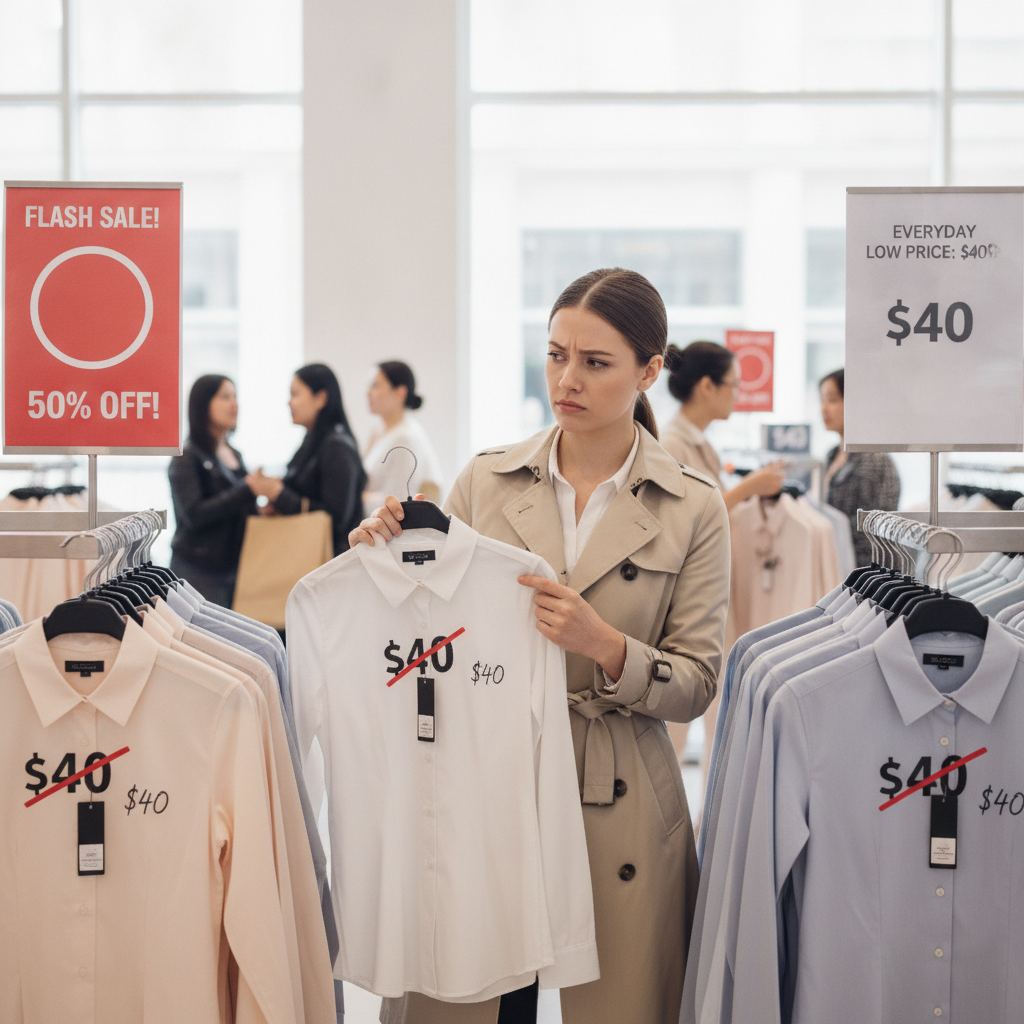
Retailers are extraordinarily good at making prices feel like events. A tag marked down from $89.99 to $54.99 triggers a quiet sense of triumph in most shoppers — the feeling of having caught something before it slipped away. But that feeling depends entirely on whether the original price was real, and in a significant share of cases, it wasn't.
What Makes a Baseline Price Different From a Sale Price?
A baseline price is the price a product genuinely sells at for an extended, ordinary period — not inflated in anticipation of a promotion, not temporarily raised to manufacture a discount. A sale price is simply whatever a retailer marks as the reduced figure, which may or may not represent actual savings. The gap between these two concepts is where most shopping mistakes live. When the baseline is artificially inflated before a promotional window, the resulting "sale" is arithmetic theater: the numbers change, but the value does not. Understanding this distinction is the foundation of any serious effort to spend less without sacrificing quality.
How Do Retailers Create the Illusion of a Discount?
The most common technique involves raising a product's reference price weeks before a sale event, then discounting back to — or only slightly below — the original everyday price. This is sometimes called a "was/is" pricing strategy, and it's particularly visible around major retail events like Black Friday and end-of-season clearances. Platforms like Amazon have been studied extensively for this pattern, where price history tools frequently reveal that a "deal" price is actually the product's standard price 90% of the time. Retailers aren't necessarily deceiving shoppers through illegal means — in most markets, pricing regulations only require that a reference price was charged at some point — but they are exploiting the way the human brain anchors on the first number it sees.
Why Does the Anchoring Effect Make This So Difficult to Resist?
Anchoring is a well-established cognitive tendency: when people encounter a number first, it shapes how they evaluate every number that follows. A jacket listed at $220 that drops to $110 feels like a radically better deal than the same jacket priced at $110 with no reference point — even though the final cost is identical. Retailers design their pricing displays around this tendency deliberately. The crossed-out original price isn't incidental; it exists specifically to make the sale price feel earned and urgent. Recognizing this mechanism doesn't eliminate its pull, but it creates the pause necessary to ask a more useful question: not "how much am I saving?" but "is this price actually good?"
What Is the True Baseline and How Do You Find It?
Finding a product's true baseline price requires looking beyond the tag in front of you. Price-tracking tools like CamelCamelCamel for Amazon purchases or browser extensions like Honey and Capital One Shopping record historical pricing over months, making it possible to see whether today's "sale" price represents a genuine low or a routine figure dressed up in promotional language. For in-store purchases, a brief search on Google Shopping or a competitor's website before completing the transaction often reveals the actual market rate within seconds. Grocery shoppers can build a simple price book — a running log of unit prices for regularly purchased items — which makes it immediately obvious when a "sale" at one store is simply the everyday price at another.
Which Shopping Contexts Make Fake Discounts Most Common?
Certain retail environments generate inflated reference prices more reliably than others. Furniture stores, mattress retailers, and jewelry chains are historically among the most aggressive practitioners, with some running near-perpetual "sale" events that make identifying a true baseline almost impossible without outside research. Online marketplaces with third-party sellers, particularly for electronics and home goods, present a different version of the same problem: sellers adjust prices dynamically, sometimes raising them before major shopping periods to amplify the apparent discount afterward. Department stores with multi-tiered coupon structures — where a percentage-off coupon applies to an already "reduced" price — can involve two or three layers of reference price manipulation before the final number appears. None of this means these retailers never offer genuine deals; it means the burden of verification rests with the shopper, not the tag.
How Can You Build a Habit of Checking Before Celebrating?
You don't need elaborate systems to protect yourself from phantom discounts — just a consistent pause before completing any purchase over a threshold you set for yourself. Before buying, take thirty seconds to check the item's price history using a free tracking tool, search for the same or comparable product on two competing platforms, and ask whether you would consider this price acceptable if no original price were displayed at all. That last question is the most clarifying: strip away the crossed-out number and decide whether the remaining figure represents fair value on its own terms. If it does, it may be a genuine deal. If it only looks good in comparison to the reference price, you're likely paying for the performance of a discount rather than for a real one.
Shopping with awareness of baseline pricing isn't about distrust — it's about grounding purchasing decisions in what products actually cost rather than what retailers want that cost to feel like. The difference between a sale price and a true baseline price is the difference between a deal and an illusion, and developing the habit of checking that gap before spending turns one of retail's oldest psychological tools into something that simply no longer works on you.