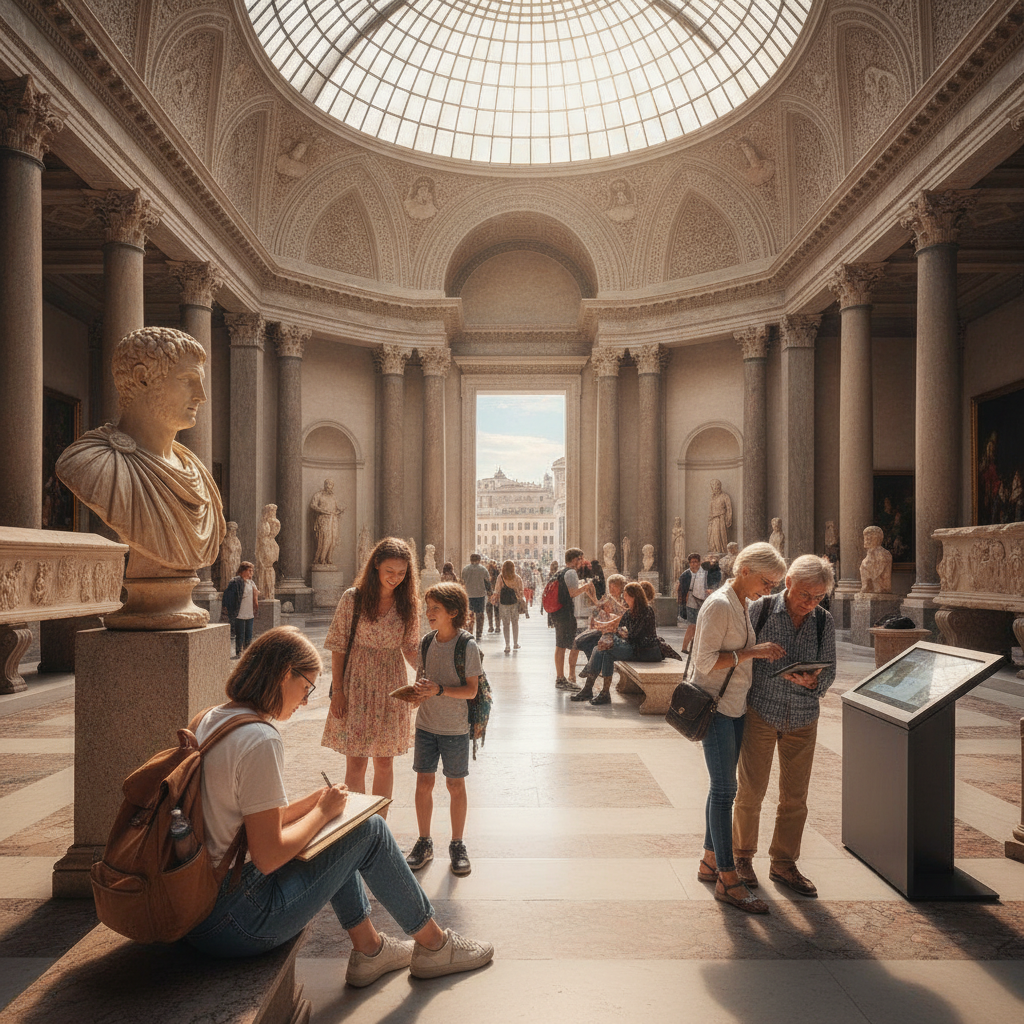
The most rewarding travel experiences rarely come from the most expensive ones. Across cities as varied as Lisbon, Chicago, and Kyoto, travelers who spend an hour researching free museums, civic galleries, public libraries, and community festivals before their trip consistently report deeper cultural immersion than those who arrive and book the first guided tour they encounter near the hotel. The difference isn't luck — it's preparation, and it pays off in both quality and cost.
What Makes Pre-Trip Research So Much More Powerful Than On-the-Ground Booking?
When you research a destination's cultural offerings before leaving home, you're operating with time, clarity, and no pressure. Tour desks in tourist districts exist to sell what's available and profitable, not what's most meaningful or best suited to your interests. By contrast, a traveler who has spent thirty minutes on a destination's official city tourism portal, a Reddit community thread, or a platform like **Atlas Obscura** arrives knowing exactly where to go, when to go, and what requires advance registration. That quiet confidence shapes the entire trip. It means less time wandering and more time actually experiencing — which is what most people travel for in the first place.
How Free Museum Days and Civic Galleries Deliver More Than Paid Experiences
Many of the world's finest cultural institutions offer free or heavily reduced admission on designated days, and these aren't second-rate windows into the collection. The **Smithsonian Institution** in Washington, D.C., for example, operates all its museums and galleries at no charge every day of the year. London's **Victoria and Albert Museum** has no general admission fee. In cities across Europe, local civic museums — the kind that rarely appear on packaged tour itineraries — hold regional art, historical artifacts, and architectural collections that provide genuine context a scripted bus tour simply cannot replicate. The key is knowing they exist before you arrive.
Why Timing Your Visit Around Public Festivals Transforms the Budget
Public festivals, seasonal markets, and civic celebrations are almost always free to attend and yet represent some of the most vivid cultural encounters a traveler can have. Arriving in a city during its annual food festival, neighborhood street fair, or public concert series costs nothing beyond your own curiosity and some comfortable shoes. The challenge is that these events require advance knowledge — they don't advertise themselves on hotel lobbies or tour booking kiosks. A destination's official tourism website, combined with a platform like **Eventbrite** set to the relevant city and travel dates, can surface dozens of free or low-cost public events weeks before departure.
How Does Advance Research Compare to Booking Paid Tours on Arrival?
Paid tours booked at the destination are almost always priced at a premium. Operators near major attractions charge what the immediate market will bear, which tends to be significantly more than the same experience booked in advance — or replaced entirely by a self-guided visit that costs nothing. Beyond the financial difference, on-the-ground tour booking is reactive. You're choosing from whatever is available, at whatever time suits the operator, often with a group of strangers who may have entirely different interests. Pre-researched itineraries built around free institutions and public events, on the other hand, are entirely your own.
What Platforms Actually Help You Find Free and Low-Cost Cultural Offerings?
Several tools make pre-trip cultural research genuinely straightforward. **Atlas Obscura** is particularly useful for surfacing unusual public spaces, free historic sites, and off-calendar events that standard travel guides overlook entirely. **Eventbrite** allows travelers to browse free and ticketed events in any city filtered by date range, making it easy to plan around a festival or community performance that happens to fall during your stay. The destination's official municipal tourism website — often overlooked in favor of commercial booking platforms — almost always maintains a current calendar of free civic events, museum free days, and public exhibitions. Combining these three sources before you book accommodation takes less than an hour and consistently produces an itinerary that a paid tour desk could never replicate.
When Is the Best Time to Do This Research?
The ideal window for cultural institution research sits between two and four weeks before departure. At this stage, accommodation and transport are typically settled, leaving mental space to focus on activities. More practically, some free museum days require timed entry passes that are released several weeks in advance — arriving without one can mean missing an opportunity entirely. Free passes for institutions like the **British Museum's** special exhibitions, or timed slots at popular civic galleries during peak season, disappear quickly once they're released. Doing this research after arrival is often too late for the best slots, and doing it too far in advance means some event listings haven't yet been published.
How Seasonal Timing Amplifies the Value of This Approach
Seasonal travel brings a specific layer of opportunity that rewards advance planning. Summer brings outdoor concert series, public art installations, and waterfront festivals to cities across the Northern Hemisphere. Autumn opens harvest markets, regional food events, and cultural heritage weeks. Winter sees civic light installations, free museum programming tied to public holidays, and indoor community performances that rarely appear in commercial tour catalogs. A traveler who understands the seasonal cultural rhythm of their destination — and plans around it rather than defaulting to what's sold on arrival — experiences a version of that place that most visitors simply never access.
What Does This Approach Mean for the Overall Trip Budget?
The savings from replacing paid tours with researched free experiences can be meaningful across a multi-day trip. Guided city tours, paid attraction entries, and packaged excursions booked on the ground often represent the largest discretionary line item in a travel budget after accommodation and transport. Redirecting even a portion of that spending — or eliminating it entirely through pre-researched free alternatives — frees up funds for the experiences that genuinely benefit from a guide or require paid access. The goal isn't to spend nothing; it's to spend deliberately, on things that matter, rather than reactively on what's visible at street level near the tourist center.
Preparing well before a trip isn't about being frugal at the expense of experience — it's about recognizing that the richest encounters with a new place are rarely the ones being sold loudest near the hotel lobby. The traveler who arrives knowing exactly when the municipal museum opens its doors for free, where the neighborhood market sets up on Saturday morning, and which civic garden hosts live music on summer evenings hasn't just saved money. They've built a trip that belongs entirely to them — and that kind of ownership is worth far more than anything a tour desk could offer.