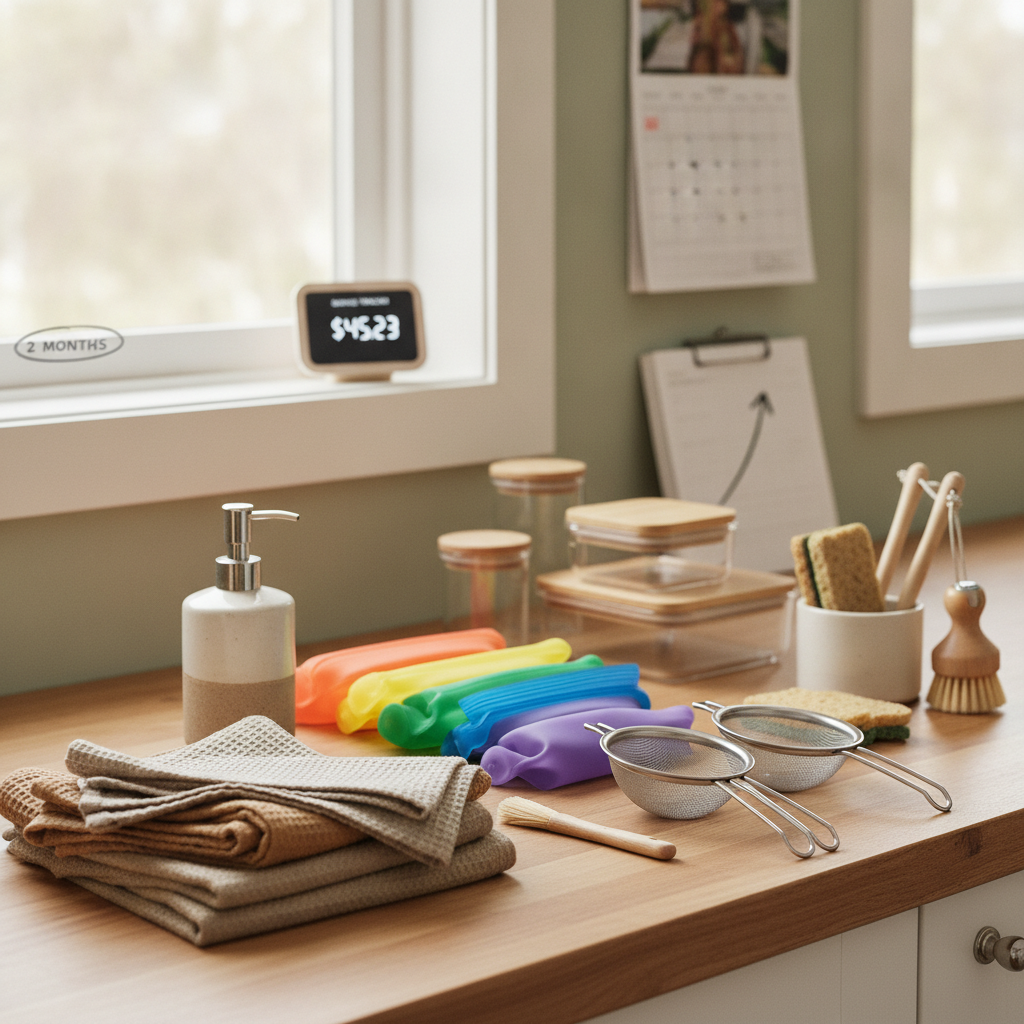
Small, habitual spending has a way of hiding in plain sight. Paper towels, plastic wrap, and disposable coffee filters feel like necessary household costs — each purchase modest enough to overlook, each refill automatic enough to never question. But when you add those purchases across a full year, the number is quietly significant. The good news is that the kitchen is one of the easiest places to make a switch that pays you back fast, and then keeps doing so every month after.
Understand Why Disposable Costs Compound So Quickly
The trap with disposable kitchen items isn't any single purchase — it's the repetition. You don't buy one roll of paper towels; you buy dozens across a year. You don't reach for a sheet of plastic wrap once; you reach for it multiple times a week. These aren't luxuries you can simply cut. They serve real functions. That's exactly why finding washable replacements that match or exceed the performance of disposables is the only strategy that sticks. A switch that feels like deprivation will reverse itself within weeks. A switch that genuinely works becomes invisible within days.
Start With Paper Towels and Reusable Cloth Alternatives
Paper towels are almost certainly the heaviest repeating cost among kitchen disposables. A household that goes through a roll every few days — which is common when paper towels handle spills, surface wipes, and hand drying — will spend meaningfully on them across a year. Swedish dishcloths, available from brands like Skoy, absorb significantly more than a paper towel, can be rinsed or machine washed, and last months rather than days. A set of six or eight unpaper towels made from terry cloth or flannel costs roughly what you'd spend on two or three months of paper towels, and the payback period closes quickly from there. The key is keeping them accessible — a small basket on the counter where the paper towel holder used to sit removes the friction entirely.
Replace Plastic Wrap With Beeswax Wraps or Silicone Lids
Plastic wrap is the kitchen item that tends to frustrate people even as they keep buying it — it clings to itself, tears unevenly, and runs out without warning. Beeswax wraps, popularized by brands like Bee's Wrap, mold gently around bowls, fruit, and cheese using the warmth of your hands, and rinse clean in cool water. A set of three sizes covers most common needs. Silicone stretch lids, which fit snugly over bowls and containers of varying sizes, are a practical complement for anything too heavy or liquid for a beeswax wrap. Together, these two items handle nearly every task plastic wrap was doing, and they're ready to use again within minutes of rinsing. Most households recover the cost of both within six to eight weeks of regular use.
Swap Disposable Coffee Filters for a Permanent Option
If you brew coffee at home daily — and most people do — disposable paper filters are a low-cost-per-unit but high-volume expense. A box of 100 filters sounds like it lasts a while, but it doesn't when you're brewing every morning. A permanent metal or reusable cloth filter costs a few dollars more upfront and pays for itself within the first month. For pour-over drinkers, metal cone filters from Able Brewing produce a slightly fuller-bodied cup and never need replacing. For drip machine users, most machines accommodate a reusable basket filter. The only adjustment is rinsing the grounds into compost or the sink after each brew — a ten-second habit that quickly becomes automatic.
Time Your Switch Strategically to Minimize the Overlap
The smartest approach isn't to throw out what you already have and replace everything at once. Instead, let your current stock of disposables run down naturally, then switch. This means your upfront investment in washable alternatives doesn't overlap with money already spent. Set a reminder using an app like Google Keep or Notion to order your replacements when you notice your current supply is roughly halfway gone. That timing means you're buying the reusable versions before you've run out, you're not doubling up on costs, and the transition feels gradual rather than dramatic.
Track the Return Over the First Two Months
One of the most reinforcing things you can do after making this switch is to track what you would have spent on restocking. Apps like Copilot Money or YNAB let you tag a recurring category — household consumables, for example — so you can watch the reduction play out in your actual spending data. When you see that you've stopped spending on paper towels, plastic wrap, and filters for two consecutive months while the washable versions continue performing without any deterioration, the math becomes real rather than theoretical. That visible confirmation is also what makes the habit permanent.
Build the Habit With Simple Storage Choices
The biggest practical reason people drift back to disposables is convenience. If the cloth towels are in a drawer and the paper towels are on the counter, you'll reach for the paper towels. Storage placement is the entire difference between a habit that holds and one that fades. Hang a small hook or use a simple basket to keep cloth alternatives exactly where the disposable used to live. Store beeswax wraps and silicone lids in the same drawer where plastic wrap used to sit. Keep your permanent coffee filter next to the machine, already positioned in the basket. The switch only needs to happen once; the placement makes it automatic every day after.
As more households adopt washable kitchen alternatives, the market has responded with better products at more accessible price points. What once felt like a compromise — slightly less convenient, slightly less familiar — has genuinely improved. The options available now perform well, last longer than early versions, and are increasingly found at mainstream retailers like Target and through everyday marketplaces rather than specialty eco-stores. If you've considered this switch before and felt unsure, the timing has rarely been better to give it a proper try.