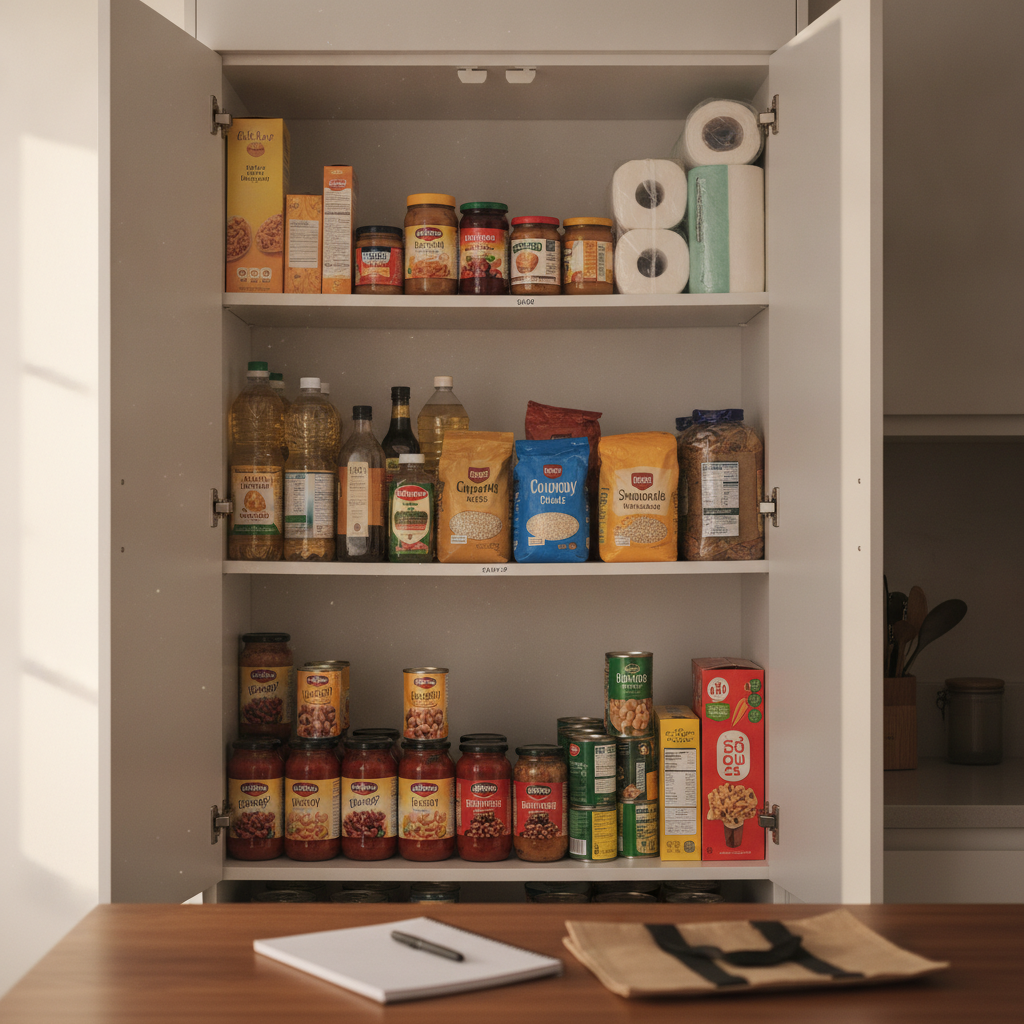
Grocery prices don't move in straight lines. They rise and fall based on supply chain disruptions, seasonal harvests, fuel costs, and regional demand — and households that shop reactively end up absorbing every spike at full price. Building a modest buffer stock of non-perishable staples during sales is one of the quietest, most effective ways to stabilize your monthly food budget without clipping a single coupon or obsessing over loyalty point math.
Starting With a Clear Definition of "Buffer Stock"
A buffer stock isn't a bunker. It's a deliberately maintained layer of extra inventory — typically four to eight weeks' worth of staples you actually use — that sits behind your active pantry supply. The goal is simple: when prices drop, you buy a little more than you need right now. When prices spike or a sale isn't running, you shop from your buffer instead of paying peak prices. Brands like Barilla, Hunt's, and Goya are useful anchors here because their sale cycles are predictable and their shelf lives are long.
Choosing the Right Products to Stock
Not everything belongs in a buffer stock. The products worth accumulating share three qualities: long shelf life, frequent use in your household, and significant price variation between sale and regular pricing. Dried pasta, canned tomatoes, dried lentils, canned fish, cooking oils, soy sauce, and rolled oats are reliable candidates. Paper goods like toilet paper and paper towels also fit the model. If your family doesn't eat kidney beans, stocking them creates waste, not savings — only buffer what you genuinely rotate through.
Reading Sale Cycles Instead of Reacting to Them
Most grocery chains — Kroger, Aldi, Trader Joe's, and regional independents alike — run predictable promotional calendars. Pasta and canned goods often cycle on sale every six to eight weeks. If you track even a handful of staples across a few shopping trips, patterns emerge quickly. Apps like Flipp aggregate weekly circulars and let you compare prices across nearby stores without driving from one to the next. The shift from reacting to a sale to anticipating one changes how much value you extract from each trip.
Setting a Comfortable Stock Depth Without Overcrowding
The most common mistake new buffer-stockers make is overbuying on the first big sale. A four-week supply of any staple is a reasonable starting depth. That means if you use one can of diced tomatoes per week, keeping four to six cans on hand is sufficient. Beyond that, you risk storage problems, forgotten expiration dates, and pantry chaos that defeats the whole system. Label shelves lightly by category, store newer purchases behind older ones, and resist the urge to stockpile more than your household can realistically consume within a few months.
Budgeting for Buffer Purchases Without Straining the Week
The practical question most households face is cash flow: where does the money come from to buy extra when you buy it on sale? One workable approach is setting aside a small fixed amount each week — think of it as a pantry investment contribution rather than a grocery splurge. Even a modest weekly allocation, consistently applied over two months, builds a meaningful buffer without any single trip feeling expensive. Once the buffer is established, the savings from avoiding peak prices naturally replenish the fund.
Tracking What You Have So Nothing Gets Wasted
A buffer stock only saves money if you actually use what you buy before it expires. A simple running list — either a notes app on your phone, a dry-erase board inside a cabinet door, or a basic spreadsheet — helps you stay honest about current inventory. Apps like Pantry Check or Out of Milk exist specifically for this purpose. Doing a quick review before each shopping trip takes two minutes and prevents the double-buying that creates clutter and waste. Waste is the enemy of any savings strategy built around buying ahead.
Understanding When the Strategy Pays Off Most
Buffer stocking delivers the most obvious returns during periods of food price inflation, supply disruptions, or seasonal shortages. A household with eight weeks of staples on hand barely notices when a news cycle drives up canned good prices for a few weeks — they simply keep cooking normally while other shoppers absorb the increase. The protection isn't dramatic, but it's reliable. Over the course of a year, the difference between consistently buying staples at sale price versus regular price on a household grocery budget is meaningful without requiring any extreme behavior.
Expanding Gradually Rather Than Overhauling at Once
The best way to build a buffer stock is incrementally. Pick three or four items you use every week, identify their usual sale price at your preferred store, and start buying an extra unit or two whenever that price appears. Do that for a month, then add three more items. Within a quarter, you'll have a working buffer across a dozen staples without any single dramatic outlay. The system compounds quietly — each new category added extends the protection a little further and smooths out more of your budget's exposure to price volatility.
The households that feel the least stress around grocery price swings are rarely the ones spending hours on extreme couponing strategies. More often, they've simply built a modest layer of insurance in their pantry — one sale at a time, without any single dramatic effort required. Starting with just a few staples this week is enough to put the system in motion.