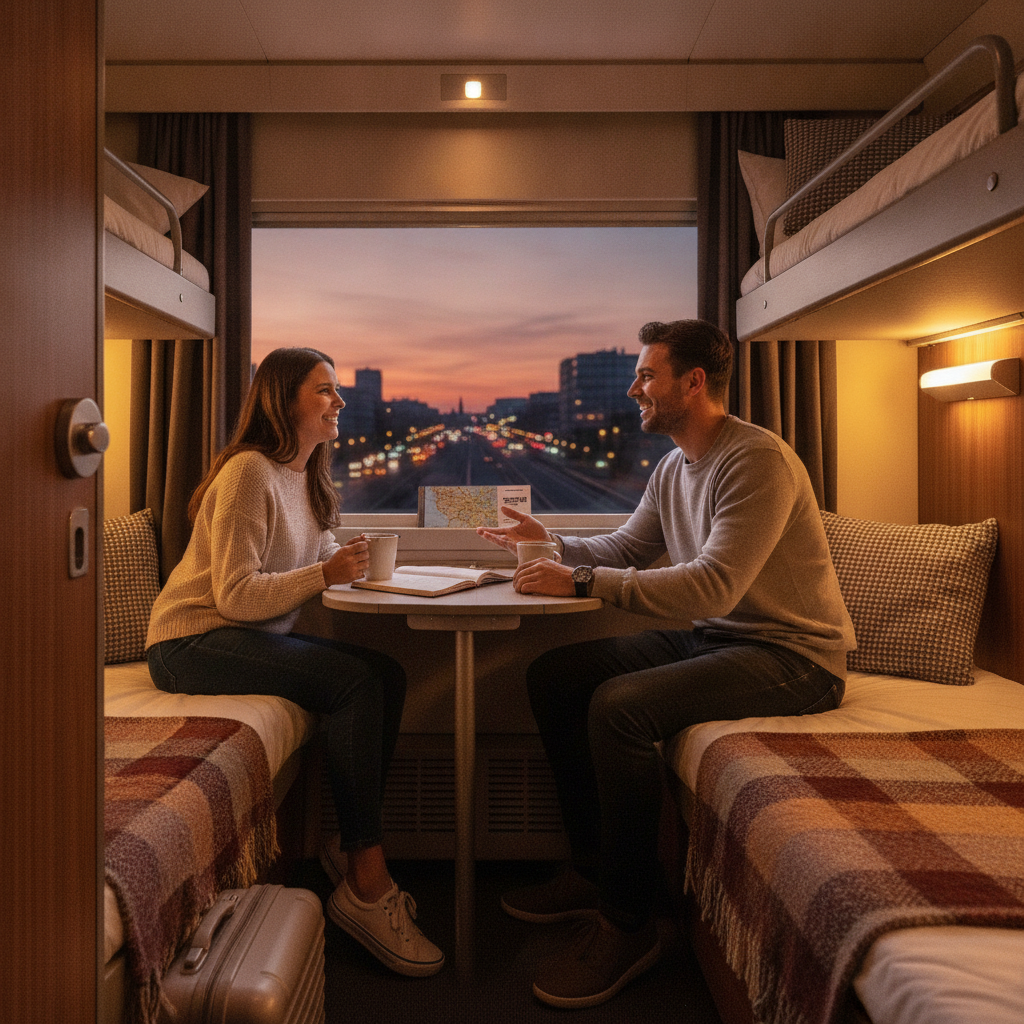
Smart travelers have long known that the journey itself can be a financial tool, not just a means to an end. Overnight trains sit at a unique intersection where transportation and accommodation merge into a single transaction — and that overlap is where the savings happen. Instead of paying separately for a flight and a hotel room, you pay once for a sleeper berth that moves you hundreds of miles while you sleep.
The Real Math Behind the Overnight Sleeper
When you book a night train with a sleeper cabin or couchette, you're essentially combining two budget lines into one. A hotel room in a European capital like Vienna or Budapest can easily run the same price as a full sleeper ticket on routes operated by Nightjet, the Austrian rail service that connects cities across Central Europe. The train fare covers your overnight accommodation and delivers you to your next destination by morning, recharged and already in place. That's one less night to book, and one less check-in line to stand in.
Routes Where This Strategy Delivers the Most Value
Not every overnight train makes sense for every traveler, but certain corridors are particularly well-suited. The Nightjet network links cities like Amsterdam, Munich, Rome, and Zurich with overnight departures that arrive at sensible morning hours. In Southeast Asia, the Thai Railways overnight sleeper from Bangkok to Chiang Mai is a classic example — comfortable berths, a full night's rest, and a fraction of what you'd spend on even a budget guesthouse plus a budget airline ticket combined. Identifying these routes before you build your itinerary is what separates the travelers who come home with money left over from those who don't.
How to Compare the True Total Cost
The comparison requires honesty about all the costs involved in flying. A short-haul flight might look cheap at the headline price, but once you add baggage fees, the taxi or train to a distant airport, an early departure that forces a night near the airport, and the taxi from the arrival airport into the city center, the actual cost climbs sharply. An overnight train, by contrast, typically departs from a central city station and arrives at another central station, eliminating most of those peripheral costs. When you put all the numbers side by side — flight plus hotel plus transfers versus sleeper ticket — the train frequently wins by a meaningful margin.
Choosing the Right Berth for Your Budget
Overnight trains usually offer several tiers of accommodation. A couchette — a fold-down bunk in a shared compartment — is the most affordable option and works well for solo travelers comfortable sharing space with strangers. Private sleeper cabins offer a door that closes and often include a small sink, making them closer to a budget hotel room experience. On routes like the Caledonian Sleeper between London and the Scottish Highlands, private rooms come with bedding, a breakfast option, and enough quiet to arrive genuinely rested. Matching the berth to your needs prevents overspending on comfort you don't need or underspending on rest you can't afford to lose.
Booking Windows and Pricing Patterns
Sleeper inventory on popular routes sells out well ahead of travel dates, particularly in summer. Rail booking platforms like Rail Europe or Trainline open reservations months in advance, and the earliest sleeper berths tend to carry the lowest price — much like airline seat pricing works at its most rational. Building a rough outline of your itinerary early, even if you haven't booked flights, lets you lock in sleeper tickets at favorable rates while the most affordable berths are still available. Waiting until the week before your trip often means either paying a premium or finding no availability at all.
Arrival Timing and How It Shapes Your Day
One underappreciated advantage of the overnight train is how it compresses your trip timeline. Departing at 9 or 10 in the evening and arriving at 7 or 8 in the morning means you gain an entire usable day that a daytime journey would have consumed. In practical terms, that's a full morning in a new city — time for a coffee, a market visit, and your first proper exploration — before many tourists have even arrived. On a one-week itinerary, recovering a full day this way can mean fitting an extra destination into the trip without extending the total length or budget.
What to Bring to Sleep Well on a Train
The quality of your overnight train experience depends partly on preparation. A light sleep mask and earplugs handle the ambient light and background noise that varies by route and berth class. A small padlock for your bag gives peace of mind in shared couchettes. Most sleeper services provide bedding, but a light layer for temperature variation is worth packing. Downloading offline maps, podcasts, or reading material in advance means your phone's data usage stays controlled during border crossings where roaming charges sometimes apply unexpectedly.
Building Overnight Legs Into a Broader Itinerary
The overnight train works best when treated as a deliberate structural element of your trip rather than a fallback option. Plotting your route so that the longest point-to-point distances align with overnight legs — while shorter hops are done by day train or local transport — produces an itinerary that's both efficient and varied. A route through Europe that strings together Prague, Vienna, Venice, and Rome, for example, can be built almost entirely around night trains, with hotel nights reserved for the cities themselves rather than the travel between them.
Night trains are expanding across Europe again after years of decline, with new routes and upgraded rolling stock appearing regularly across France, Spain, and Northern Europe. Rail operators have recognized the growing demand from travelers who want to reduce both costs and environmental impact simultaneously. As more networks invest in modern sleeper stock, the gap between the overnight train experience and a budget hotel room continues to narrow — making this a strategy worth building into every multi-city trip you plan.