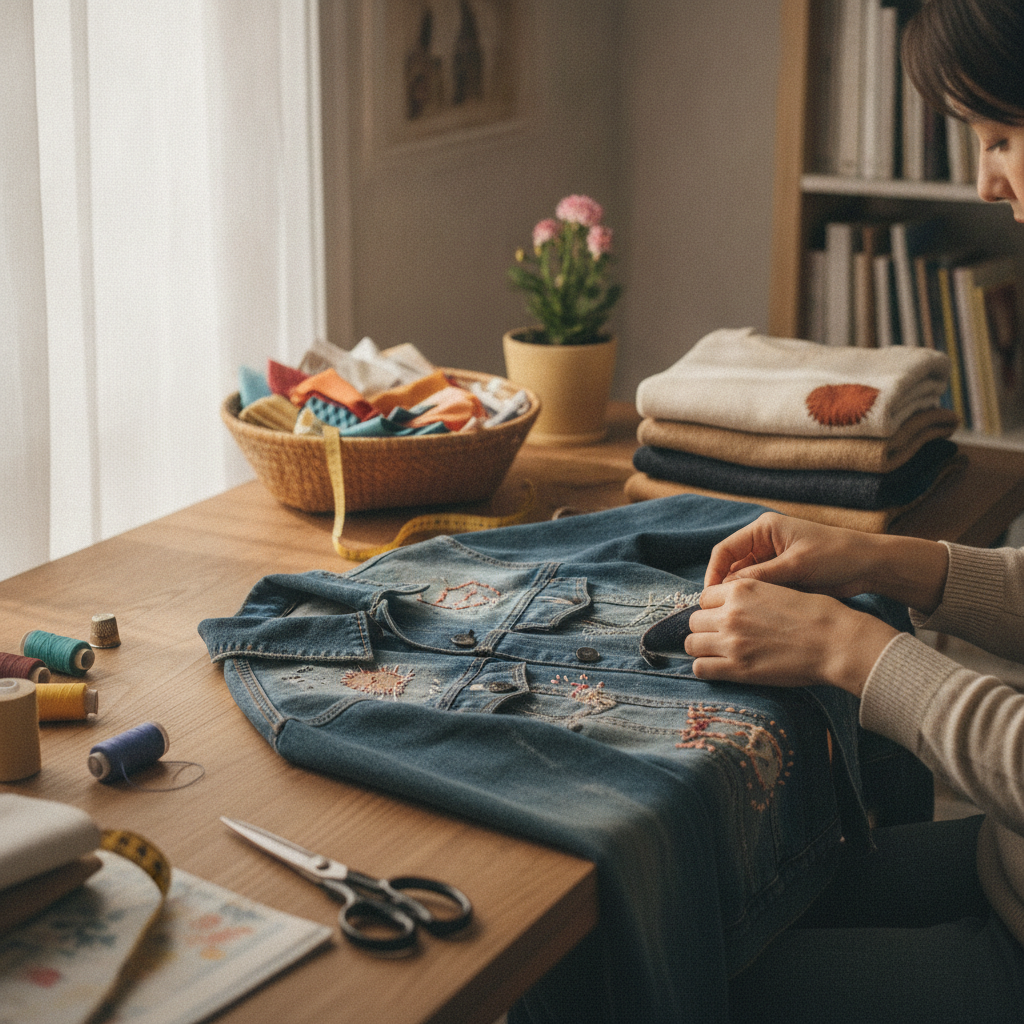
There's a particular frustration that comes with discovering a hole in a favorite sweater or a split seam in a pair of jeans that still have years of life left in them. The automatic response, for most people, is to set them aside, forget about them, and eventually replace them with something new. But that reflex is quietly expensive — and the alternative is far more accessible than most people assume.
Start by Auditing What You've Already Set Aside
Before picking up a needle or searching for a tutorial, take stock of the clothes you've stopped wearing because of minor damage. Most households have a small pile of garments in this limbo — a jacket with a broken zipper, a pair of trousers with a fraying hem, a knit sweater with a small pull. These items are worth money you've already spent, and many of them can be fully restored in under thirty minutes. Starting with a damage audit helps you see the real cost of avoidance and gives you a clear and manageable starting point.
Learn the Three Core Repairs Worth Knowing First
You don't need to master tailoring to make clothing repair genuinely useful. Three basic skills cover the vast majority of common clothing damage: hand stitching a seam, sewing on a button, and mending a small hole using a technique called darning. Hand stitching takes about an hour to learn from a short video tutorial and handles split seams on pants, jackets, and bags. Button replacement is even faster. Darning — weaving thread across a hole to rebuild fabric — looks intimidating but is straightforward with practice and works beautifully on wool socks, sweaters, and elbows. Apps like Creativebug and platforms like Skillshare offer clear beginner-level lessons on all three techniques, often with instructor feedback and project-based formats that make the learning feel purposeful rather than abstract.
Gather a Minimal Kit That Covers Nearly Every Repair
One of the most appealing things about clothing repair is that the tools require almost no investment. A basic sewing kit — needles in multiple sizes, thread in neutral shades, small scissors, and a seam ripper — costs very little and handles most repairs you'll encounter. Adding an iron-on interfacing sheet and a few spare buttons covers more complex fixes. For machine users, even an entry-level sewing machine from a brand like Brother opens up hemming, seam reinforcement, and patch work. The key is keeping the kit somewhere visible and accessible, because out-of-sight tools have a way of staying unused.
Use the Season as Your Motivation
Spring and autumn are ideal times to build this habit. As you rotate your wardrobe seasonally, you're already handling garments you haven't touched in months — which makes it natural to assess what needs attention before it goes back into rotation. A coat with a loose lining, pulled out of storage in October, is far better addressed before it's needed than discovered on a cold morning. Similarly, transitioning summer clothes into storage is a good moment to mend anything you kept meaning to fix. Treating these seasonal rotations as repair checkpoints builds the habit without requiring you to carve out separate time for it.
Explore Online Communities for Guidance and Encouragement
Clothing repair has developed a genuinely enthusiastic community online, and tapping into it makes the learning process faster and more enjoyable. The Reddit community r/Visiblemending celebrates repairs done with contrasting thread and decorative patches — treating the mend as a design choice rather than something to hide. YouTube channels dedicated to slow fashion and textile repair offer free walkthroughs for everything from replacing zippers to patching denim. The Japanese art of sashiko, which involves stitching geometric patterns to reinforce worn fabric, has found a large international following through platforms like Instagram and YouTube, with creators sharing beginner-friendly approaches that require only basic materials.
Calculate the Real Savings Over Time
The financial argument for clothing repair becomes compelling once you start thinking in terms of replacement cost rather than repair time. A pair of quality jeans might cost considerably more to replace than the ten minutes and handful of thread it takes to resew a split seam. Winter coats, leather goods, and structured blazers are especially worth repairing given what they cost new. Over a full year, households that repair rather than replace even a modest number of garments often redirect that money toward things that matter more. The habit also changes how you shop — people who repair tend to buy more deliberately, choosing quality over quantity because they now have a direct relationship with the longevity of their clothes.
Make It a Low-Stakes Weekend Practice
The easiest way to build any skill is to lower the stakes enough that failure doesn't feel costly. Set aside an hour on a quiet weekend afternoon and pick one repair from your audit pile — ideally something you'd consider donating or discarding anyway. Practice the stitch on a scrap of fabric first if you're uncertain. The first repair will be imperfect, and that's entirely the point. By the third or fourth attempt, muscle memory starts to form and the process becomes surprisingly meditative. Many people who start repairing clothes for purely financial reasons find that they genuinely enjoy it — the combination of a clear problem, a tactile process, and a visible result is deeply satisfying in a way that scrolling through a shopping app simply isn't.
If your wardrobe audit has been sitting in the back of your mind, now is a good time to pull out that pile and start with the easiest item on it. A single repaired garment is enough to shift the habit — and the skills build faster than most people expect.