The math rarely gets examined closely enough. When a group of friends or family members books individual hotel rooms for a trip, they each pay a per-person rate designed for pairs at best — a rate that quietly bundles overhead, staffing, and brand margin into every night. What happens when that same group rents a single private home, apartment, or villa and divides the total cost equally is often a revelation: the per-person nightly rate drops significantly, the space expands dramatically, and the experience shifts from transactional to communal.
The Economics Behind the Per-Person Advantage
Hotel pricing is built around double occupancy. A room that costs a set nightly rate is designed for two people, meaning a solo traveler absorbs the full cost while a third or fourth traveler in a group has no room to spread into at all. Private accommodation, by contrast, is priced by the property rather than the person. A three-bedroom home listed on Vrbo or Airbnb at a fixed nightly rate can sleep six or eight travelers, and when that total is divided among all contributors, the individual share often lands well below what a single hotel room would cost. Groups of three or more begin to see the arithmetic work in their favor almost immediately.
Why Kitchen Access Multiplies the Savings
Accommodation cost is only part of the travel budget equation. Food spending — particularly in tourist-heavy areas — can quietly outpace lodging expenses over a multi-night stay. Private rentals almost universally include a full kitchen, and groups willing to cook even a few meals collectively can redirect significant spending away from restaurants. A shared breakfast at home, a packed lunch for a day trip, or a group dinner prepared in the rental kitchen produces savings that compound across the length of the trip. Cities like Lisbon, Seville, and Porto offer abundant local markets where fresh ingredients are inexpensive, making self-catering both economical and genuinely enjoyable.
What Platforms and Property Types Make Sense
The short-term rental market has matured considerably, and travelers now have meaningful options across a wide price range. Airbnb and Vrbo remain the dominant platforms for whole-home rentals, but alternatives like Plum Guide — which curates higher-quality properties — and direct-booking options through local property managers often yield better rates without platform service fees. For larger groups, vacation homes with four or more bedrooms in residential neighborhoods consistently offer the strongest value. Beach towns in the Algarve, mountain villages in the Italian Dolomites, and coastal towns along the Adriatic all have robust inventories of properties priced for group occupancy that undercut comparable hotel arrangements by a meaningful margin.
Coordinating Costs Without Creating Friction
The practical side of shared accommodation requires some advance organization, and groups that handle it well report far smoother trips. Designating one person to book and manage the reservation, then collecting contributions through a tool like Splitwise or Venmo before departure, removes ambiguity and prevents the awkward tallying that often happens at checkout. It's worth agreeing on a simple cost-sharing structure upfront — whether contributions are perfectly equal or adjusted based on room size and occupancy — so that expectations are clear. Groups that establish these norms early tend to spend their actual travel time focused on the destination rather than the logistics.
The Experience Difference That Numbers Don't Capture
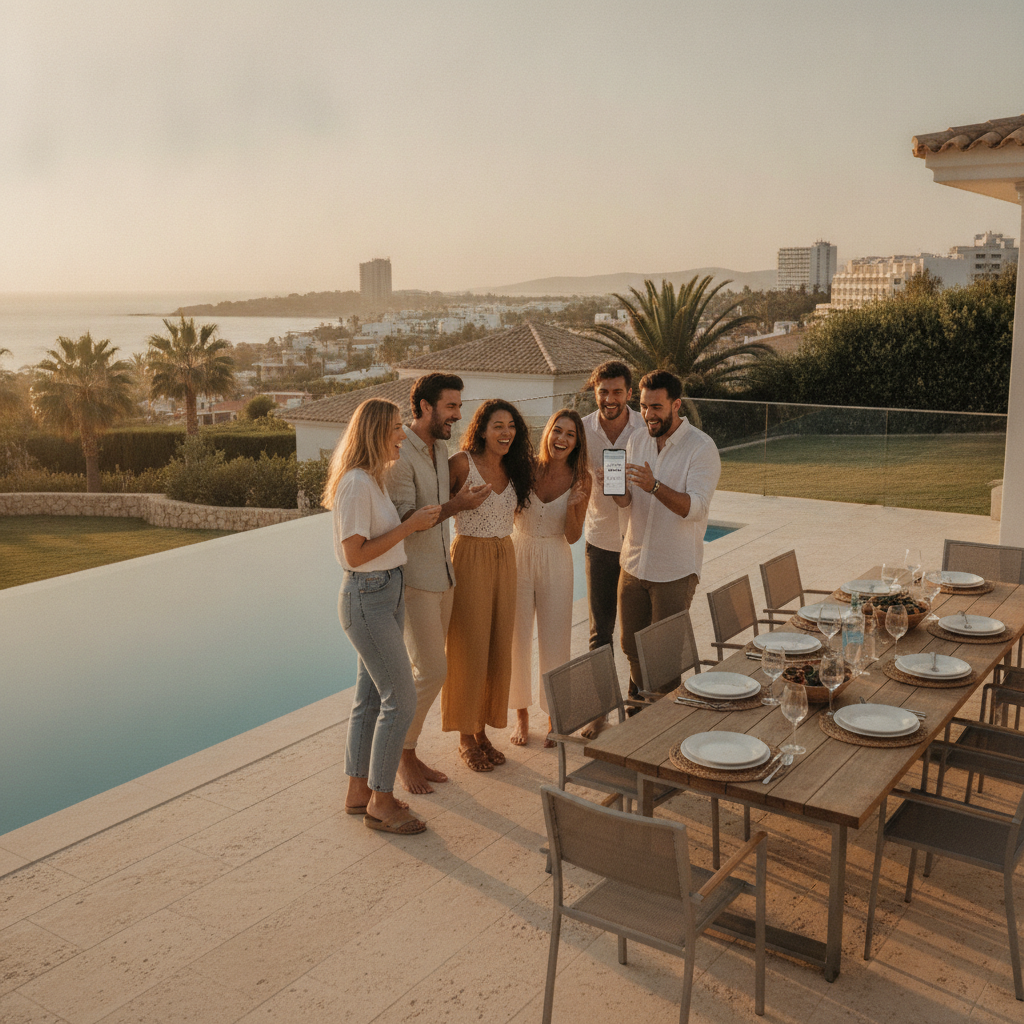
Beyond the financial case, there's a qualitative dimension to group accommodation that hotel stays genuinely cannot replicate. A shared living room, a dining table large enough for everyone, a porch overlooking a hillside village — these become the setting for the most memorable parts of a group trip. The evening spent cooking together in a rented farmhouse in Tuscany, or the morning coffee ritual on a shared balcony in Barcelona's Eixample neighborhood, creates a texture of shared experience that corridors and adjacent hotel rooms simply don't offer. For many groups, this social dimension becomes the primary reason they return to private rentals on every subsequent trip.
Making the Practical Case Before You Book
Before committing to hotels for your next group trip, it's worth running a straightforward comparison. Add up the total cost of individual or double hotel rooms for every person in your party, then search for a comparable private rental and divide that total nightly rate by the number of contributors. Factor in the kitchen savings across your stay, the absence of daily resort or parking fees, and the added space. Look at platforms like Vrbo and Airbnb side by side, and check whether the property allows direct booking to avoid service fees. You'll often find that the private rental comes out meaningfully cheaper per person — and considerably more comfortable in the process. The case for splitting a private home rather than each paying for a hotel room is one that the numbers make clearly, and consistently, for any group of three or more.
Travelers tend to remember group trips differently from solo ones — the shared moments linger longer, the stories get retold more often. It turns out that the accommodation choice plays a larger role in shaping that experience than most people anticipate at the booking stage. When a well-chosen rental becomes the natural gathering place for a group, the trip itself often becomes more cohesive, more relaxed, and more affordable than anyone expected. That combination is hard to argue with.