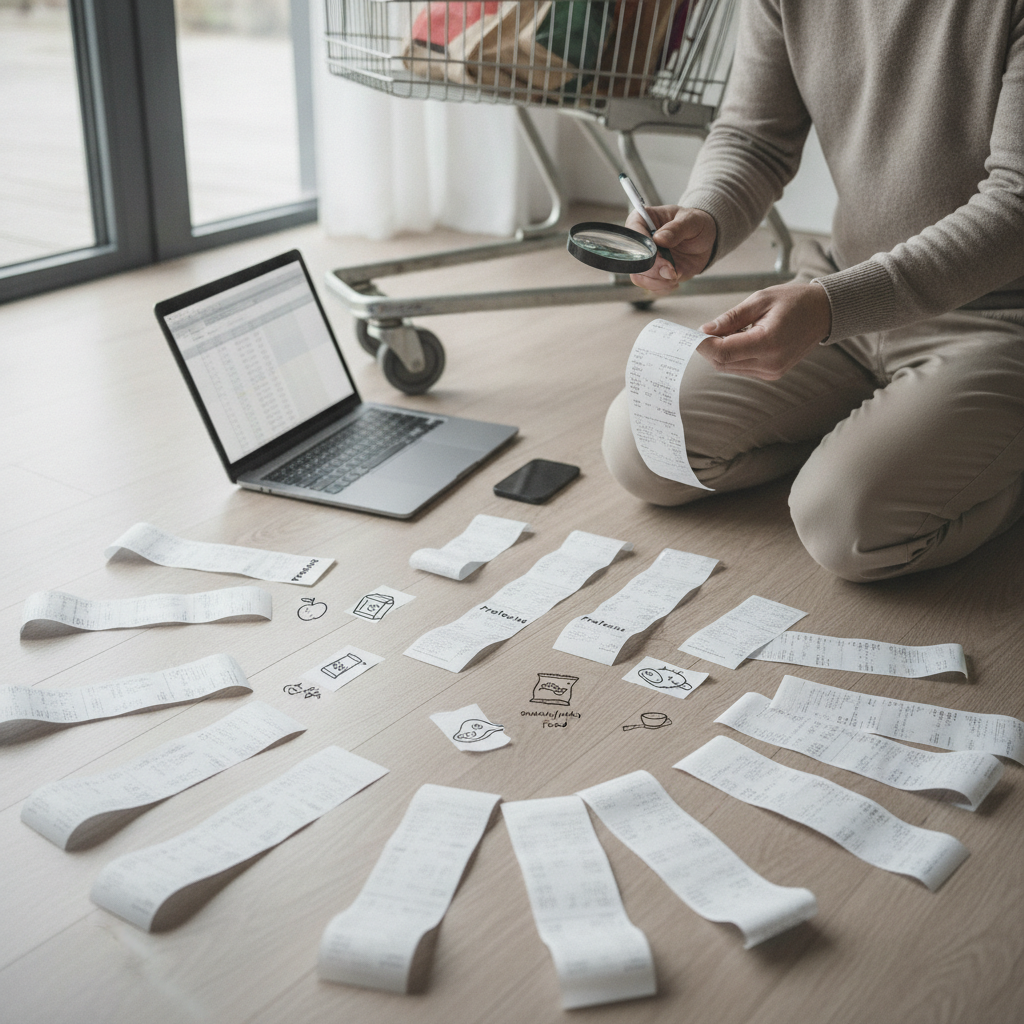
Most households have a rough sense of what they spend on groceries, but that sense is almost always wrong — and usually wrong in the same direction. The total feels familiar, but the breakdown stays invisible. Produce, snacks, beverages, convenience meals, condiments, and random impulse buys all blend into a single weekly charge that gets mentally filed under "food" and forgotten. The result is a budget category that grows steadily without ever revealing exactly where the growth is happening.
One month of treating every grocery receipt as a data point changes that. Not by requiring a complicated spreadsheet or a subscription app, but by simply collecting, categorizing, and reviewing what you already have. The receipts are already there. The information is already printed. All that changes is the habit of looking.
Start by Collecting Every Receipt Without Exception
The process only works if the data is complete. That means saving every grocery receipt for the full month — from the main supermarket run to the quick stop at Trader Joe's, the gas station snack purchase, and the corner store milk run. Digital receipts count too. Many stores like Kroger, Safeway, and Walmart send email confirmations or log purchases automatically through their apps. The goal is to capture every food-related transaction so that nothing slips through as an uncounted expense.
Create Five to Seven Simple Spending Categories
Detailed tracking works best when the categories are broad enough to fill naturally but specific enough to reveal patterns. A useful starting set might include: fresh produce, proteins (meat, fish, eggs), dairy, packaged snacks and beverages, pantry staples (grains, canned goods, oils), prepared or convenience foods, and household items that appear on grocery bills. Avoid creating too many subcategories at first. The point of the first month is to see the rough shape of spending, not to build an accounting system.
Assign Each Line Item to Its Category Weekly
Waiting until the end of the month to sort four weeks of receipts at once is discouraging and easy to abandon. A better rhythm is spending ten minutes each Sunday organizing that week's receipts. Write the category next to each line item, or keep a simple tally by hand. Some people find that using a notes app on their phone works just as well as any dedicated tool. The goal is consistency, not perfection — one categorized week of data is more useful than a flawless system that never gets started.
Watch for the Categories That Surprise You
After two or three weeks of tracking, most households begin to see at least one category that's significantly larger than expected. Beverages — sparkling water, juice, sports drinks, specialty coffee creamers — frequently turn out to absorb a disproportionate share of the grocery budget when you add them all up across a month. Prepared and convenience foods are another common surprise: the pre-marinated proteins, the rotisserie chicken, the bagged salad kits, and the grab-and-go lunches each seem reasonable individually but compound into a meaningful total. Spotting these categories is the first concrete payoff of the exercise.
Compare What You Bought Against What You Actually Used
Receipts show purchases, but the real efficiency question is whether those purchases were used. At the end of the month, do a quick walkthrough of what went to waste. Wilted produce, forgotten leftovers, expired condiments, and half-used pantry items tell a separate part of the story. Stores like Aldi and Lidl attract loyal customers partly because their smaller product range reduces the decision fatigue that leads to over-buying. Your receipt data paired with a waste check gives you a clearer picture of your actual cost per meal than any receipt alone.
Calculate a Category Total and Rank Them
Once the month is complete, add up each category and list them from highest to lowest spend. This ranked view is often the most illuminating part of the process. Most people expect proteins or produce to top the list, and sometimes they do. But snacks and beverages frequently rank higher than expected, and the convenience food category often rivals produce in total cost. Seeing the numbers in a ranked order removes the tendency to mentally round down on categories you use frequently and makes it harder to ignore where the real volume is.
Identify One Change Per Category, Not a Full Overhaul
The temptation after a month of tracking is to restructure everything at once, but that rarely sticks. A more sustainable approach is to identify a single adjustment in the top two or three categories. If snacks are the biggest surprise, the goal might be to introduce two homemade alternatives per week rather than eliminating the category entirely. If convenience foods rank unexpectedly high, the question becomes which two meals per week could realistically be prepped at home. Small, targeted changes in high-spend categories almost always deliver more lasting results than sweeping resets that create friction and fade within a few weeks.
Run the Exercise Again in Three Months
One month of receipt tracking gives you a baseline. A second round three months later shows whether your adjustments held and whether new leaks have opened in different categories. Spending patterns shift with seasons, schedules, and habits, so what looked like a snack problem in one quarter might have shifted to a beverage issue by the next. Recurring quarterly reviews also help catch gradual price creep — when your usual purchases quietly cost more but your shopping behavior hasn't changed, the total climbs without any obvious trigger. Tracking receipts periodically keeps that creep visible before it compounds into a significant budget drift.
The simple act of saving receipts and sorting them for one month tends to be quietly revelatory. It doesn't require financial expertise or a complicated system — just the willingness to look at what's already there. Most households find that the first month alone surfaces at least one category where modest, painless adjustments make a real and lasting difference to what leaves the account each month.