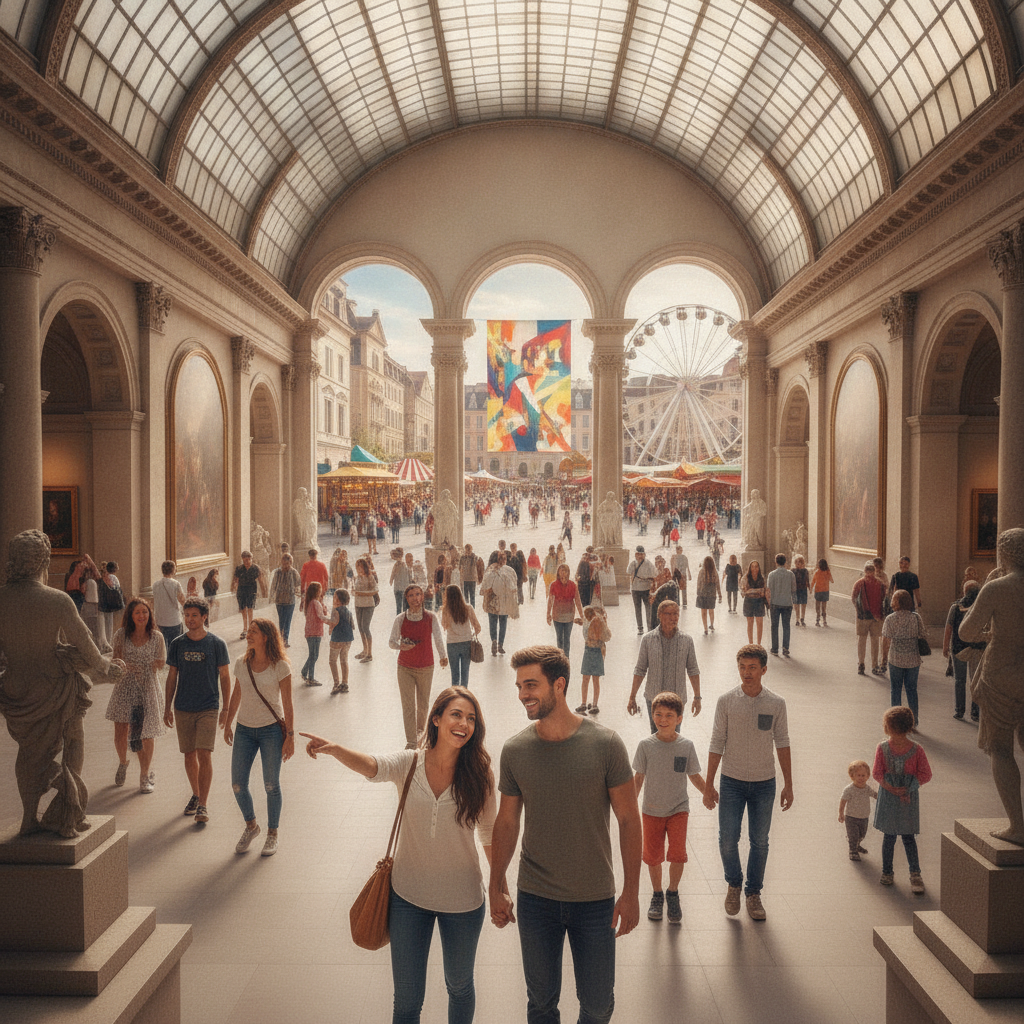
Travel budgets rarely fail because of a single large expense. They unravel in the middle days — the afternoons without a plan, the evenings spent wandering into overpriced tourist restaurants simply because nothing else presented itself. The traveler who arrives at a destination without knowing what's happening that week tends to default to whatever is most visible: ticketed attractions, packaged tours, and convenience-priced meals near the hotel. The traveler who spent two hours researching beforehand arrives with a different itinerary — and a noticeably different total bill.
How Do Free Museum Days Actually Work Across Major Destinations?
Many of the world's most respected cultural institutions offer no-cost or reduced-admission windows that aren't prominently advertised to international visitors. The Smithsonian museums in Washington D.C. are permanently free, but institutions like the Art Institute of Chicago, the Museum of Modern Art in New York, and the Tate Modern in London all offer specific windows — Thursday evenings, the first Friday of each month, or targeted community days — when general admission drops to nothing. In cities like Paris, the first Sunday of each month opens state-owned museums free of charge, covering institutions that would otherwise require admission fees that add up quickly for a family or group. Knowing these dates before booking can allow a traveler to align their itinerary without compromising which attractions they see.
What Makes Civic Festivals Different From Commercial Tourism Events?
Public festivals funded through municipal or regional arts budgets operate on an entirely different model than ticketed events. Rather than generating revenue from attendees, they're designed to activate public spaces and serve local communities — which means the programming quality is often high while the entry cost is zero. Medellin's Feria de las Flores, Edinburgh's many free Fringe outdoor performances, and the street programming surrounding events like Chicago's Millennium Park summer concert series all represent this category. These aren't stripped-down alternatives to paid entertainment. They frequently feature professional performers, curated installations, and cultural programming that a traveler would pay significantly to experience in a ticketed venue. The difference is that they're built for residents first, and visitors who find them are essentially benefiting from civic generosity.
Where Should Travelers Look Before They Book?
The most reliable sources are rarely the first to appear in search results. Tourism boards tend to highlight ticketed attractions because those drive measurable economic activity. For genuine community events, the better research path runs through city government cultural calendars, local arts council websites, neighborhood event listings on platforms like Eventbrite filtered by price, and destination-specific subreddits where residents post about upcoming happenings. Facebook community groups for a city can surface hyper-local events — block parties with live music, free outdoor cinema series, food festivals that charge nothing for entry — that no travel guidebook would mention. Spending time in these channels two to three weeks before departure yields a richer picture of what a city is actually doing that week.
How Does Event Research Change the Accommodation Decision?
Knowing where the free action is concentrated can meaningfully shift which neighborhood makes sense for a base. A traveler who discovers that an open-air market runs every weekend in a specific district, or that a summer concert series anchors a particular riverside park each Thursday evening, now has a reason to prioritize proximity to those areas when choosing accommodation. Staying in a residential neighborhood near recurring civic events rather than in the tourist center often reduces nightly rates while simultaneously shortening the walk to the best free programming. The research that reveals the events also tends to reveal the neighborhoods — and the neighborhoods tend to have the better independent restaurants, the local coffee shops, and the markets that haven't been priced for international tourists.
What Is the Real Dollar Impact of Pre-Trip Event Research?
The compounding effect becomes clear when the itinerary is mapped out. Consider a four-night trip where two evenings are anchored by free outdoor concerts or festival programming, one afternoon is spent at a museum on its free admission day, and one morning involves a public food market rather than a ticketed food tour. Those substitutions don't represent deprivation — the experiences themselves are often equal or superior to their paid equivalents. What they represent is a meaningful reallocation of the same budget. Money that would have been spent on admission fees and packaged entertainment gets redirected toward a genuinely excellent dinner, an upgrade on one night's accommodation, or a longer stay altogether. The trip doesn't feel like a budget exercise. It feels more expensive than it was.
Here's How to Build This Research Into Your Pre-Trip Routine
Start your event research no later than three weeks before departure, which gives enough time to spot recurring events and check whether your travel dates align. Search the destination city's official cultural calendar first — most major cities maintain one through their arts or parks department. Then cross-reference with Eventbrite, local subreddits, and any destination-specific Facebook groups you can join temporarily. Build a simple document or note with a column for each day you'll be there, and slot confirmed free events alongside any paid activities you've already planned. You'll often find that the free programming fills gaps you didn't know were there, and in many cases it displaces paid activities you assumed were necessary. Book accommodation after this step, not before — let the event map guide the neighborhood decision rather than the reverse.
The traveler who returns from a trip saying it felt far more generous than the budget suggested usually can't point to a single dramatic saving. The advantage accumulated quietly — an afternoon that cost nothing but delivered a memorable experience, a museum visit timed to a free window, an evening anchored by a civic festival that the locals attend every year and tourists stumble into by luck or by preparation. Preparation is consistently the more reliable path, and it starts long before the first bag is packed.