Weekends have a way of quietly draining your budget. A dinner out here, tickets to something there, a round of drinks to cap the evening — and suddenly Monday arrives with a lighter wallet and a vague sense that you didn't even do anything that memorable. The good news is that scaling back spending on social activities doesn't mean scaling back your social life. Most cities and towns have a surprisingly rich calendar of free and low-cost events that go completely unnoticed because people aren't looking for them.
Start by Checking What's Already Around You
Before booking anything that costs money, spend ten minutes on Eventbrite, Meetup, or your local parks and recreation department's website. Most municipalities publish weekly event calendars that include free concerts, outdoor markets, community fitness classes, and gallery openings. Neighborhoods like Brooklyn's Prospect Park or Chicago's Millennium Park consistently host free programming throughout warmer months — but even smaller cities tend to have more going on than residents realize. Making this a Sunday habit means you always walk into the week with options already queued up.
Swap Paid Venues for Public Spaces With a Plan
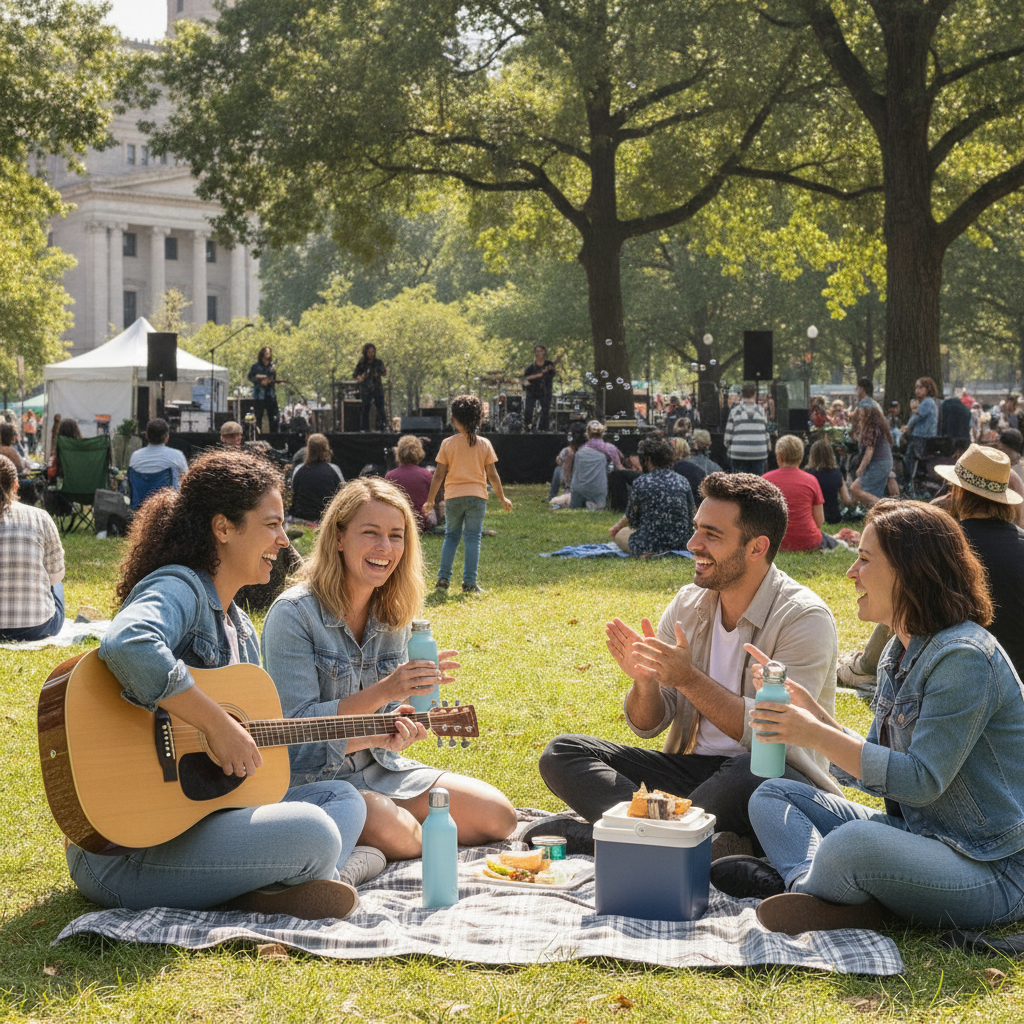
A lot of social spending happens not because people want an expensive experience, but because they want a shared one. The bar or the restaurant becomes the default because it requires zero planning. Replacing that default with something intentional — a picnic in a park, a walk through a farmers' market, a free outdoor movie — takes maybe five minutes of coordination but completely shifts the cost structure of your weekend. The experience often ends up being more memorable, too, because it's less interchangeable with every other weekend.
Use Library Cards as an Underrated Social Resource
Public libraries have quietly evolved into community hubs. Beyond books, most now offer free passes to local museums, tickets to cultural events, access to streaming platforms, and in-house programming like author talks, film screenings, and skill workshops. Checking your library's events page — most cities have them on apps like Libby or through the library's own portal — can surface free activities you'd otherwise pay for. It's one of the most overlooked sources of weekend plans that costs absolutely nothing to use.
Build a Rotation of Low-Cost Social Rituals
The social habits that stick tend to be repeatable ones. Instead of deciding from scratch each weekend, build a small rotation of free or near-free rituals that your social circle can count on. A Sunday morning trail walk, a monthly board game night at someone's place, a recurring trip to a local flea market — these become anchors that reduce the pressure to come up with something new and expensive every time. When a fun plan is already expected, there's far less temptation to fill the void with spending.
Look for Free Entry Days at Paid Attractions
Many museums, botanical gardens, zoos, and cultural institutions offer designated free admission days each month, often funded through corporate sponsorships or city programs. The Smithsonian institutions in Washington, D.C. are permanently free. The first Sunday of the month is free at dozens of museums across the country. Checking the websites of attractions you'd normally pay to visit often reveals these windows. A little advance planning turns what would have been a paid outing into a free one without any reduction in the actual experience.
Turn Hosting Into a Spending Strategy
One of the most effective ways to cut discretionary social spending is to shift the venue from out to in. Hosting a potluck dinner, a backyard gathering, or a casual movie night distributes the cost across everyone attending and usually results in a better experience than a restaurant at twice the price. The perceived barrier to hosting is almost always logistical rather than financial — people worry about the effort involved, not the cost. Keeping it simple and low-key removes that barrier entirely and makes hosting something you can do regularly rather than occasionally.
Follow Local Neighborhood Social Media Groups
Facebook Groups, Nextdoor, and neighborhood-specific subreddits are consistently good sources of free local event tips, last-minute plans, and community gatherings that never make it onto official event calendars. Hyperlocal communities share information about free outdoor cinema pop-ups, block parties, art walks, and skill swaps that larger platforms miss entirely. Following a few active local groups takes less than five minutes and creates a steady stream of weekend ideas that cost nothing and often lead to genuinely interesting experiences.
Reframe What a Good Weekend Actually Looks Like
A lot of recreational spending is driven less by genuine desire and more by a mental script about what a good weekend is supposed to include. Challenging that script — slowly, without self-deprivation — makes room for a different kind of weekend that's just as social and often more satisfying. Research consistently points to shared experiences and time with people you like as the core of weekend enjoyment, not the price tag attached to them. Once that shift takes hold, free events stop feeling like a compromise and start feeling like a better default.
None of this requires a dramatic overhaul of how you spend your free time. It starts with a single weekend — pulling up a local event calendar, texting a friend, and showing up somewhere that costs nothing. Do that a few times and the habit builds on its own, the savings accumulate quietly, and the social calendar stays just as full as it ever was.