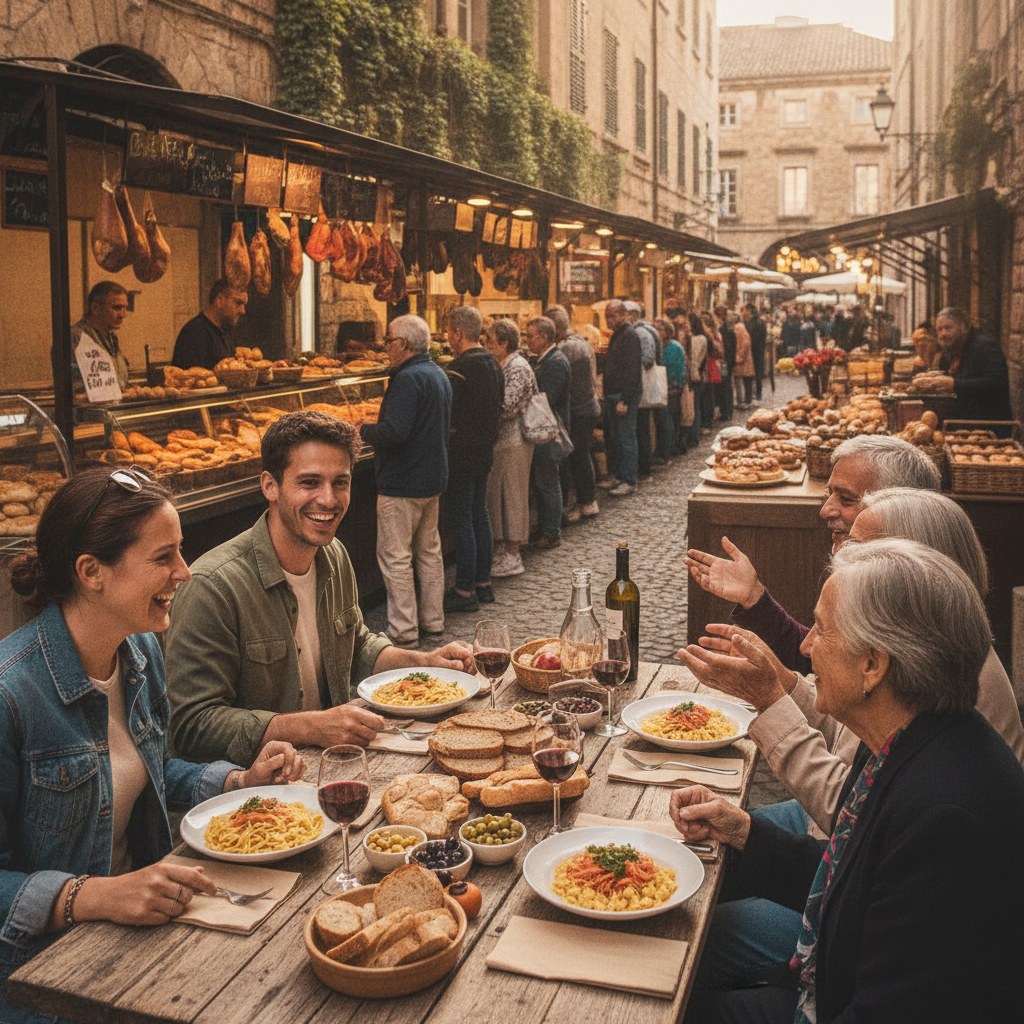
Traveling is expensive enough before you factor in three meals a day at restaurants that exist primarily because a famous landmark happens to be nearby. You sit down, scan a laminated menu with photos, and pay twice what you would have paid four streets over — for food that's often half as good. It's one of the most consistent budget leaks in travel, and it's almost entirely avoidable once you understand how tourist-area pricing actually works.
The Geography of Overpriced Meals
Restaurants near major attractions operate on a captive audience model. Foot traffic is guaranteed, turnover is high, and most customers will never return — so there's little incentive to earn loyalty through value or quality. Operators pay premium rents for those locations, and those costs flow directly onto your plate. The moment you walk two to four blocks away from any heavily visited site, the competitive dynamics shift entirely. Restaurants in residential or local commercial areas need repeat business from people who live nearby, which means they have to earn it.
Learn the Two-Block Rule Before You Arrive
The principle is straightforward: mentally draw a boundary around any major tourist attraction and resolve not to eat inside it. Two blocks is a reasonable minimum, though four or more is even better in dense cities. Before a trip, spend ten minutes on Google Maps identifying the major sights on your itinerary, then look outward from each one to spot neighborhoods — markets, side streets, local squares — where residents actually cluster. Neighborhoods like the Raval district in Barcelona or Shimokitazawa in Tokyo sit close to tourist zones but operate on entirely different pricing logic.
Use Apps That Surface Local Favorites
Apps like Yelp, Google Maps, and TheFork all let you filter by neighborhood and sort by review count rather than star rating alone. A restaurant with 800 reviews and four stars in a non-tourist neighborhood is almost always more reliable than a five-star place with 40 reviews two doors from a cathedral. Local food bloggers and forums like Reddit's r/travel or city-specific subreddits are particularly useful for finding the specific streets where residents actually eat. Searching "best lunch [city name] locals" in your destination's language often surfaces results that English-language travel guides never mention.
Eat Your Biggest Meal at Lunch
In most of Europe, Latin America, and parts of Asia, lunch is the main meal of the day — and restaurants offer fixed-price lunch menus called a prix fixe, menú del día, or set lunch that include multiple courses at a fraction of dinner pricing. A three-course lunch with wine in Madrid's Lavapiés neighborhood can cost what a single tourist-area appetizer costs near the Prado. Shifting your heaviest eating to midday and keeping dinners lighter — street food, a market find, or a simple grocery stop — restructures your daily food spend dramatically without any sense of deprivation.
Make Markets and Grocery Stores Part of Your Routine
Covered food markets aren't just tourist attractions in cities like Lisbon, Budapest, or Lyon — they're functioning commercial spaces where locals buy ingredients and grab lunch. The prepared food stalls inside are almost always cheaper and fresher than nearby restaurants, and eating there places you directly inside everyday local life rather than a curated dining experience built for visitors. Similarly, a supermarket stop for breakfast items, snacks, and picnic supplies every couple of days can cut daily food costs significantly while giving you flexibility that restaurant dining never offers.
Walk Toward Residential Streets When You're Hungry
One of the most reliable field tactics is simply to walk away from whatever crowd you're standing in. If you're hungry near a landmark, pick a direction that leads toward apartments, schools, or local shops rather than souvenir stalls, and start walking. Within a few minutes, the restaurant density shifts, prices drop on chalkboard menus outside, and the clientele changes from tour groups to office workers and families. That shift is your signal that you've crossed out of tourist pricing territory. Trust the visual cues — a restaurant full of people who look like they work nearby is almost never a trap.
Learn Two or Three Phrases in the Local Language
You don't need to speak a language fluently to signal that you're not a standard tourist. Knowing how to say "what do you recommend" or "what's the daily special" in the local language — even imperfectly — changes how staff interact with you at smaller neighborhood restaurants. In many places, it opens a conversation that leads to off-menu suggestions, better seating, or simply a more honest meal. It also builds enough rapport that you're less likely to be handed the tourist-facing menu with inflated pricing that some restaurants quietly maintain alongside their standard one.
Set a Daily Food Budget and Track It Loosely
Giving yourself a rough daily food number — not a rigid cap, but a general target — keeps you honest about where your eating choices are landing. Many experienced travelers find that a loose tracking habit, even just logging totals in a notes app, makes the gap between tourist-area and local-area pricing viscerally clear within the first two days. Once you see the difference in real numbers, the habit of walking an extra block becomes its own motivation. Tools like Trail Wallet or a simple spreadsheet work well enough; the goal isn't obsessive accounting, it's building pattern awareness.
Eating well while traveling doesn't require sacrifice — it requires direction. The best meals on most trips tend to happen in the places visitors weren't supposed to find, at prices that feel almost embarrassingly reasonable. A little geographic curiosity before and during your trip is genuinely one of the highest-return habits you can build as a traveler.