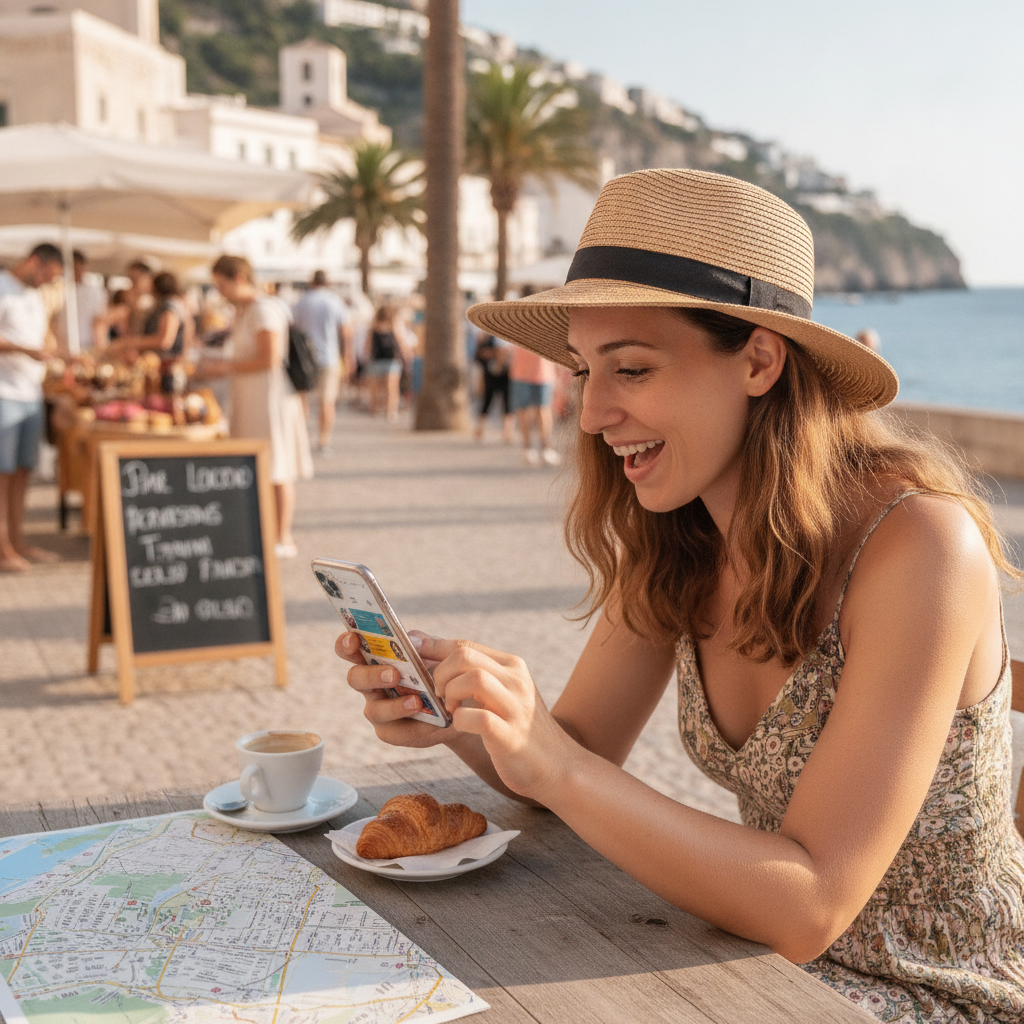
Booking platforms are built to sell you a version of a destination — curated, commission-driven, and remarkably similar regardless of where you're actually going. What they don't show you is the Thursday night free concert in the town square, the family-run trattoria offering a prix fixe lunch that costs a third of the TripAdvisor-ranked restaurant next door, or the local residents-only discount card that visitors can quietly request at the tourist office. Facebook groups, for all their noise, remain one of the most underrated tools for closing that gap before you board the plane.
Search Before You Book, Not After
Most travelers join destination groups after arriving — when it's too late to act on half the information. The better move is to search for groups three to six weeks before your trip. Look for variations on city or region names combined with words like "expats," "locals," "residents," or "visitors." A search for "Lisbon expats" or "Chiang Mai digital nomads" typically surfaces active communities with thousands of members posting daily. Joining early gives you time to read through pinned posts, scroll back through recent threads, and ask questions without the pressure of a flight landing in eight hours.
Read the Pinned Posts and Announcements First
Every well-run destination group has pinned content that members rarely think to flag elsewhere — recurring free events, seasonal market schedules, neighborhood festivals, and discount programs that locals consider common knowledge. These posts are often months old but still accurate, covering things like free museum days, community outdoor film screenings, and discount cards issued by local governments for culture venues. In groups focused on places like Medellín or Porto, it's common to find pinned guides compiled by long-term residents that list discounts unavailable through any booking engine. Spending twenty minutes on pinned content alone is often worth more than an hour on a tourism website.
Ask Specifically About Free and Low-Cost Events
General questions like "what should I do in Barcelona?" tend to generate generic responses. Narrow your ask instead: "Are there any free or low-cost events happening the week of my visit?" or "Which neighborhood markets don't charge entry?" Specificity signals that you're not looking for a highlight reel — you want practical information. Members who live locally or have visited recently respond differently to targeted questions, often sharing things like free walking tours that operate on a tip-only basis, public beach clubs with no cover charge, or community food festivals that only locals seem to know about.
Watch for Flash Deals and Discount Codes Posted by Members
Some destination groups, particularly those serving popular travel cities like Amsterdam or Tbilisi, have become informal deal-sharing hubs. Members post discount codes for local tour operators, share limited-time offers from restaurants launching new menus, and flag accommodation deals from small guesthouses trying to fill last-minute vacancies. Unlike affiliate-driven deal sites, these shares tend to come from people with no financial stake in the recommendation — they're passing along something that genuinely worked for them. Setting up group notifications for a week before your trip means you won't miss time-sensitive posts.
Find Locals Who Offer Informal Experiences
Destination Facebook groups regularly surface informal experiences that platforms like Airbnb Experiences don't list — a retired chef in Oaxaca hosting a small cooking class out of her home kitchen, a local photographer in Kyoto offering a two-hour walking tour, a family in rural Tuscany inviting visitors to help with an olive harvest in exchange for a meal. These arrangements are often negotiated directly in the group comments or through private messages, and they consistently offer better value and a more authentic experience than anything packaged and priced for the tourist market. Approaching these connections respectfully and doing basic due diligence before committing is standard practice.
Use the Search Function Like a Research Tool
Facebook's group search function is genuinely useful when treated as a local knowledge database. Searching terms like "discount," "free," "cheap eat," "skip the line," or "locals tip" within a destination group brings up threads you'd never find through a standard Google search. Groups focused on cities with large expat communities — think Playa del Carmen, Budapest, or Bali — have often been active for years, meaning their search history contains layered, time-tested advice on where to find value. Cross-referencing a few different threads on the same topic gives you a quick read on which recommendations are consistent versus which reflect a single person's experience.
Contribute Something Before Asking for Everything
Groups function as communities, and members who only extract information without contributing tend to get fewer and less detailed responses. Before posting your own questions, spend some time engaging — upvoting useful posts, sharing a deal you found independently, or thanking someone who gave helpful advice. When you do ask questions, you'll find the community more responsive. After your trip, posting a genuine summary of what worked and what didn't — including any deals or free experiences you discovered — adds real value to the group and benefits future travelers. It's a simple exchange that keeps these communities useful.
Cross-Reference What You Learn With Practical Verification
Not everything posted in Facebook groups is current or accurate. Operating hours change, free events get cancelled, and discounts expire. Treating group recommendations as strong leads rather than confirmed facts keeps you from being caught off guard. A quick check against a business's own social media page or a brief direct message to a venue to confirm an offer is still active takes two minutes and prevents disappointment. Groups in destinations with high tourist turnover — places like Prague's Old Town or Seminyak in Bali — tend to have faster-moving information that benefits from a quick verification step before you show up expecting a deal that ended three months ago.
As travel communities continue migrating across platforms, destination Facebook groups remain surprisingly durable — partly because they've built years of accumulated knowledge that newer platforms haven't replicated, and partly because local residents and long-term expats have little incentive to move somewhere unfamiliar. The real opportunity for travelers lies in treating these groups as an active pre-trip research tool rather than a passive resource to check after arrival. The deals, free events, and insider discounts are there — they're just sitting in threads that most people never think to look for until they've already landed.