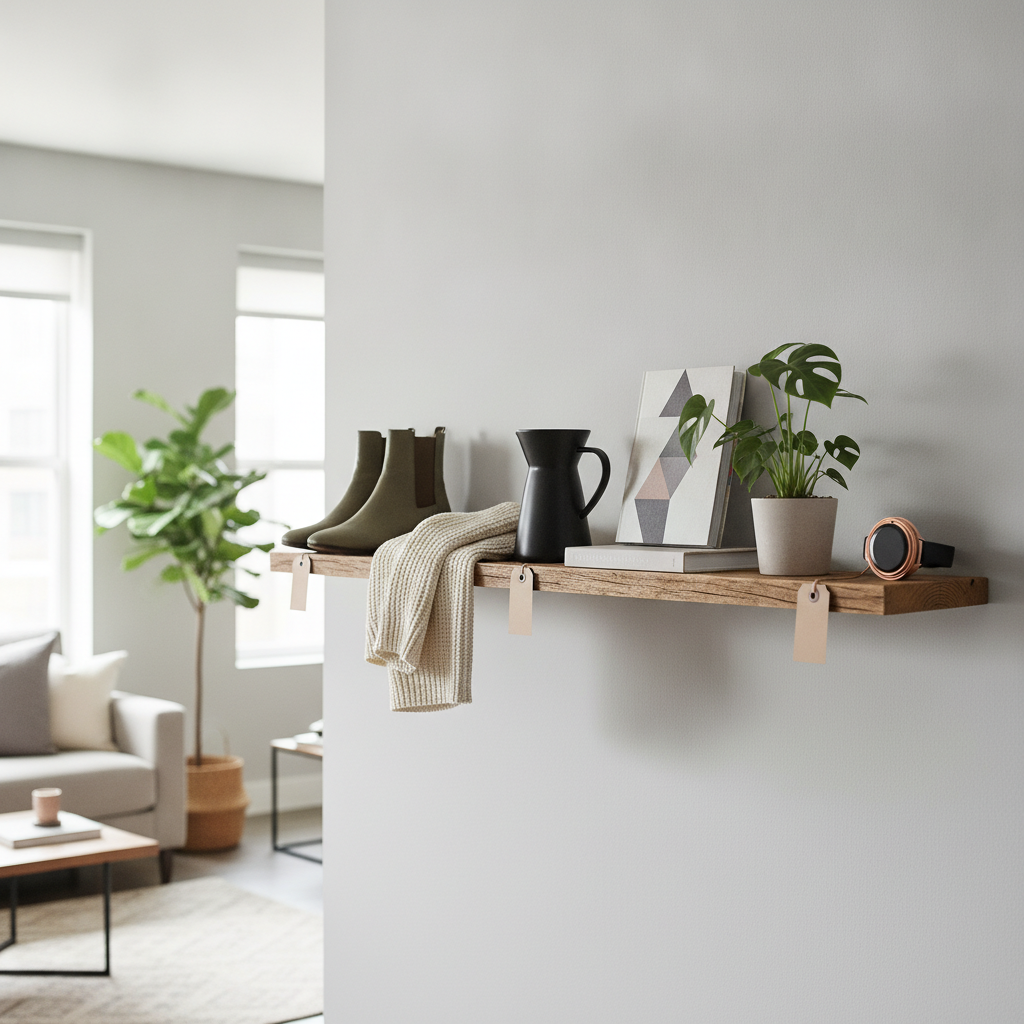
Consumer culture has long treated the return counter as the corrective mechanism for impulsive buying — a safety net that, in theory, allows shoppers to course-correct after the fact. But the return process is rarely as neutral as it appears. It costs time, sometimes money, and often involves a quiet psychological tax that most people underestimate: the mild shame of having wanted something so badly in the moment and finding it hollow in the hands a week later. There is a quieter, more effective practice gaining ground among intentional spenders — one that intercepts that regret before the purchase ever completes.
The Logic Behind the Cooling-Off Shelf
The cooling-off shelf is exactly what it sounds like: a designated physical space — a basket, a shelf bracket, a corner of a closet — where items under consideration live before a buying decision is made. Rather than placing an object in a cart, purchasing it, and returning it later, the shopper brings the item home on a trial basis, sets it on the shelf, and waits. The waiting period, typically somewhere between a few days and two weeks, is the entire mechanism. What happens during that time is the interesting part. The item, freed from the urgency of the store environment and the social pressure of a checkout line, either earns its place in daily life or it doesn't. Most of the time, it doesn't — and the decision becomes obvious without a receipt, a return label, or a conversation with a customer service representative.
This practice draws loosely from what behavioral economists call the *endowment effect* — the tendency for people to overvalue objects simply because they possess them — and works against it by creating a liminal state of ownership that is conditional rather than complete. The item is present, but not yet claimed. That distinction matters more than it might initially seem.
How Physical Space Shapes Spending Decisions
There is substantial overlap between how people organize their homes and how they make financial choices, and the cooling-off shelf capitalizes on that relationship deliberately. When an item sits in a visible, designated space rather than being integrated into a wardrobe, a kitchen drawer, or a bookshelf, it remains slightly foreign. It hasn't been absorbed into the domestic landscape. Shoppers who try this practice consistently report noticing, often within three or four days, that they walk past the item without reaching for it — and that observation alone is a more reliable signal than any in-store deliberation. The physical distance from the original retail environment removes the ambient cues — lighting, music, scent, the presence of other appealing products — that a store like Zara, IKEA, or even a well-curated Amazon product page uses to sustain desire artificially.
The shelf also functions as a kind of external memory. Returning items requires remembering to do so, packaging them, finding receipts, and in many cases navigating retailer-specific return windows. These friction points quietly encourage keeping things that were never truly wanted. The cooling-off shelf eliminates that friction entirely by removing the question of return and replacing it with the simpler question of whether to proceed with a purchase at all.
What Waiting Actually Reveals About Want Versus Need
The Japanese concept of *ma* — roughly, the meaningful pause or productive emptiness between moments — offers a useful cultural frame here. In design and architecture, *ma* is the space that gives a room its breath; in shopping behavior, the waiting period is a functional equivalent. It is not passive. During those days on the shelf, the shopper continues living without the item, which is itself information. If a kitchen gadget sits untouched for ten days while dinner still gets made, the gadget was solving a problem that didn't exist outside the store. If a coat tried on in November sits in the basket and gets reached for every time the temperature drops, the case for buying it becomes real.
This is where the cooling-off shelf differs meaningfully from the 48-hour delay rule, which focuses on postponing digital purchases. The shelf practice is tactile and spatial — it applies specifically to physical goods and uses the body's own interaction with an object as the evidence. It converts desire, which is abstract and easily manipulated, into behavior, which is concrete and honest.
Reducing the Emotional Cost of Shopping Regret
Regret spending — the pattern of buying, regretting, returning, and repeating — carries a psychological toll that accumulates quietly over time. Each cycle reinforces a subtle belief that one's own judgment cannot be trusted in a store, which paradoxically makes shoppers more susceptible to marketing reassurances and retailer policies that frame returns as low-stakes. Brands like Nordstrom and Zappos have built significant loyalty around generous return policies, and while those policies are genuinely useful, they also remove one of the natural friction points that would otherwise slow impulse buying down. The cooling-off shelf reintroduces that friction in a gentler form — not as a penalty, but as a process.
For people who shop as a form of emotional regulation, the shelf also creates a useful interruption. The act of placing something on a designated waiting space, rather than completing a purchase, offers a moment of agency that doesn't end in a transaction. That moment, repeated consistently, begins to reshape the habit loop around shopping itself — separating the act of browsing and wanting from the act of buying, in a way that builds genuine discernment over time.
Practical Setup and What to Do at the End of the Waiting Period
Setting up a cooling-off shelf requires almost nothing. A basket near the entryway, a spare shelf in a laundry room, or a dedicated hook on the back of a closet door all work equally well. The physical location matters less than its separateness from storage spaces where owned items already live. Some people attach a small sticky note to each item marking the date it was placed there; others keep a brief list in a notes app like Apple Notes or Notion. At the end of the designated waiting period — whatever feels right, whether three days or two weeks — the question is binary: has the item been reached for, thought about, or genuinely missed? If yes, proceed with the purchase. If not, return it to the store before the window closes or simply decline to buy it at all.
The practice tends to sharpen over time. Shoppers who maintain a cooling-off shelf for a few months often report that they begin applying the same mental pause to online browsing, leaving items in digital carts for days rather than checking out immediately — extending the principle without needing the physical space.
Making It a Household Habit
For households with multiple adults or children, a shared cooling-off shelf introduces a secondary benefit: it makes potential purchases visible and discussable before money is spent. A partner noticing an item on the shelf and asking about it is a natural, low-conflict way to examine a buying decision together. The shelf becomes a quiet communication tool, surfacing wants before they become purchases and creating space for the kind of conversation that might otherwise only happen during a tense post-purchase review of a bank statement.
You don't need to overhaul your relationship with money or commit to a strict budgeting system to make this work. You need a shelf, a willingness to wait, and enough trust in your own future behavior to believe that what's genuinely useful will still feel that way in a week. Most of what lands on the shelf, it turns out, will not. And that small, repeated discovery — that the desire faded on its own, without willpower or restriction — is precisely how the practice gradually shrinks the space between wanting and spending, making both feel more deliberate and less like something that simply happens to you in a store.
There is something quietly subversive about treating a physical space in your home as a check on consumption rather than a destination for it. The return counter was never really the answer — it came too late, after the wanting had already been acted on. The cooling-off shelf arrives earlier, before the transaction completes, in the exact moment where a pause is actually possible. That is where the savings happen, and where the regret never gets the chance to form.