There is a particular kind of fatigue that settles in around Tuesday evenings — the refrigerator feels uninspiring, the idea of cooking feels like one more obligation, and the takeout app opens almost on its own. For many households, this pattern repeats itself not because people don't want to cook, but because the familiar repertoire of home meals has simply run dry. The irony is that the very thing that feels like the easier choice — the delivery order, the restaurant run — quietly becomes one of the most consistent drains on a monthly budget, one Tuesday at a time.
What changes that pattern is rarely discipline or a rigid meal plan. What changes it, gradually and almost imperceptibly, is the introduction of something new. One unfamiliar recipe per week, approached not as a personal improvement project but as a mild curiosity, reshapes the relationship between the kitchen and the wallet in ways that budgeting spreadsheets rarely can.
The Psychology Behind Why Novelty Sustains the Habit
Repetition is the enemy of home cooking for most people. When the same six or seven dishes rotate endlessly, the kitchen stops feeling like a place of possibility and starts feeling like a chore rotation. Novelty, by contrast, activates a different kind of engagement — the kind that makes a person actually look forward to the process. Culinary anthropologists have long noted that humans are driven toward what food scholars call *neophilia*, a genuine appetite for new flavors and techniques that coexists with the comfort-seeking tendencies that pull toward familiar meals. Introducing one new recipe per week taps into that natural curiosity without overwhelming the schedule. It's a low enough commitment that it doesn't feel like a lifestyle overhaul, yet frequent enough that, over months, it builds a quietly impressive range of skills and a much larger repertoire of satisfying meals that can be made at home.
How the Savings Accumulate Without Feeling Like Restriction
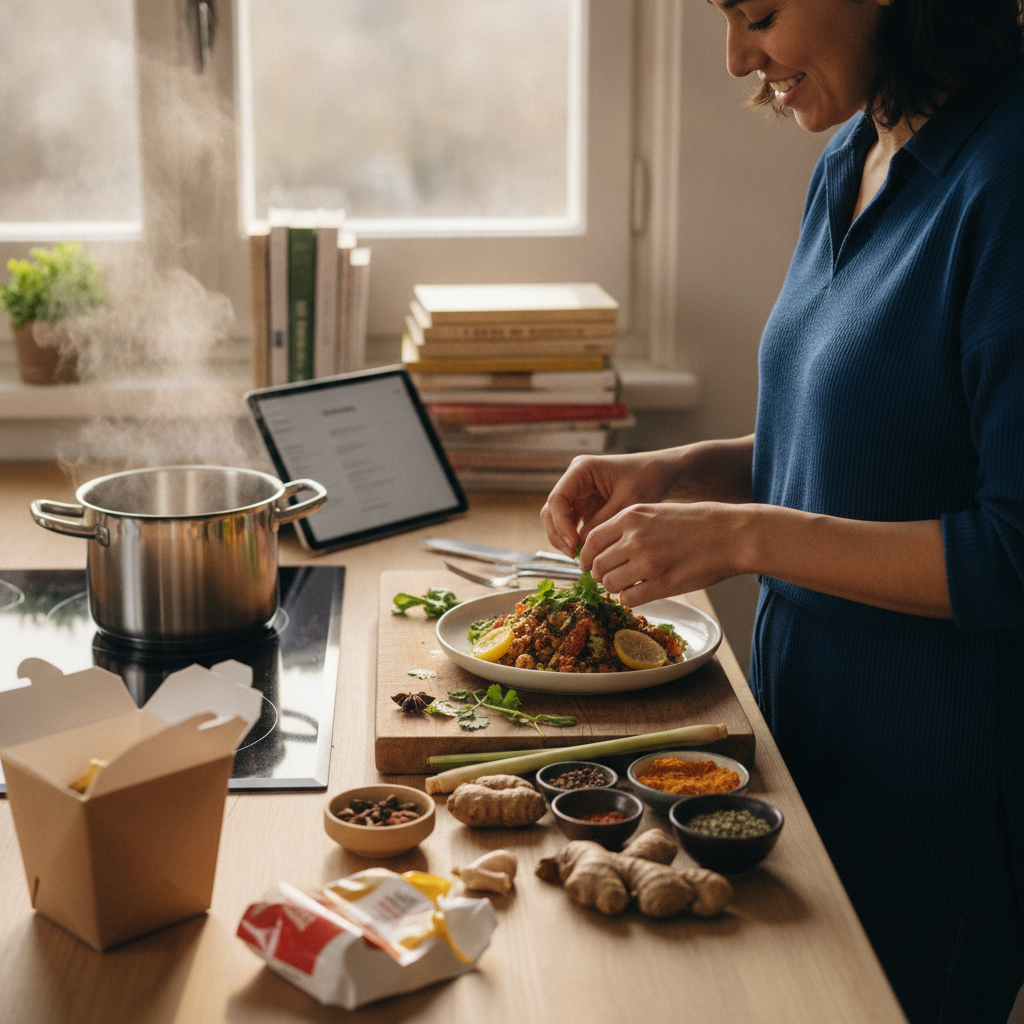
The financial logic here is straightforward but easy to underestimate. A typical meal delivery order — even from a mid-range platform like DoorDash or Uber Eats — regularly arrives at twice or three times the cost of the same meal prepared at home, once fees, tips, and the baseline markup on delivered food are factored in. A family that replaces even one or two weekly takeout orders with a home-cooked meal finds the savings compounding quietly over the course of a month. What makes this approach different from conventional frugality advice is that it doesn't ask people to simply stop doing something enjoyable — it asks them to replace it with something that becomes enjoyable through practice. The first time someone attempts a Thai *larb* (a bright, herb-heavy minced meat salad from Laos and Northern Thailand) or a Moroccan *chermoula* marinade, the kitchen feels interesting again. The takeout craving doesn't disappear, but it competes now with a genuine alternative that also happens to be satisfying.
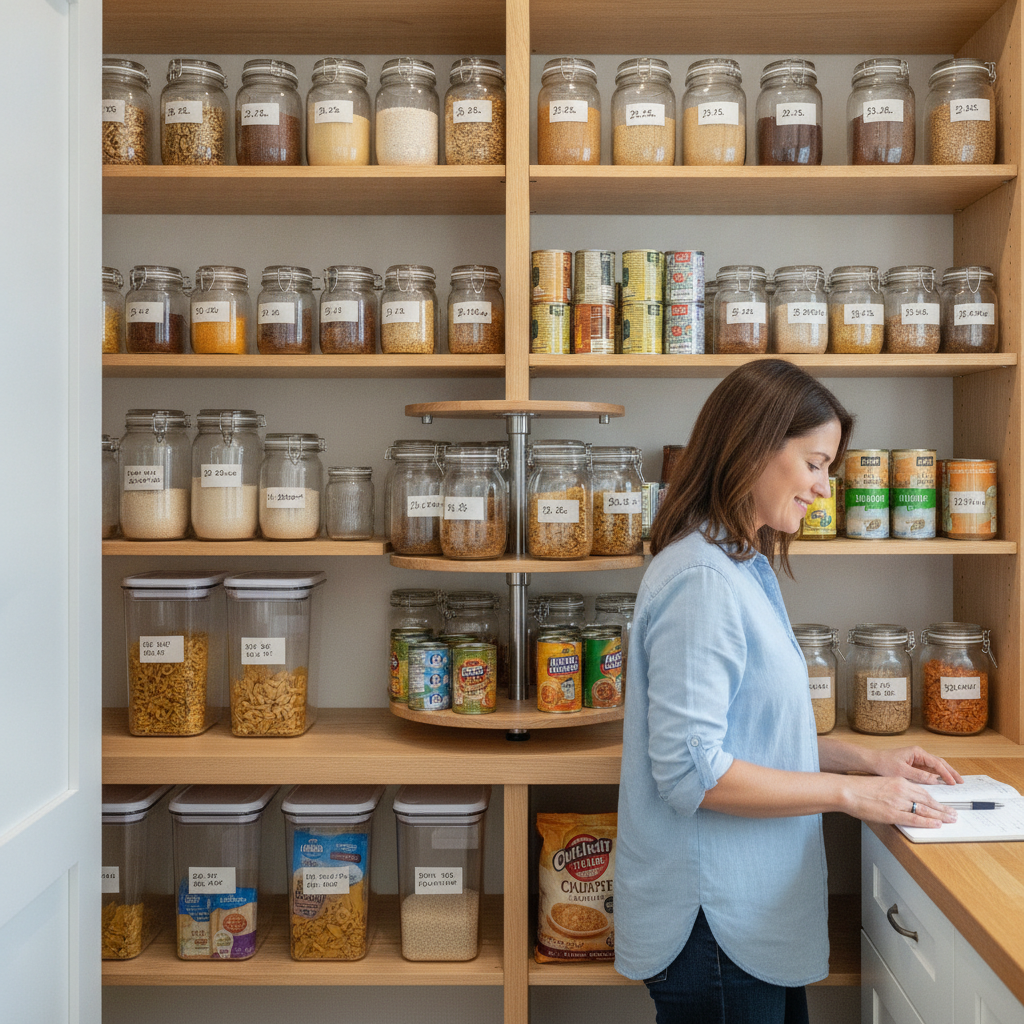
The savings also compound in a secondary way: cooking unfamiliar dishes tends to introduce households to ingredients they then keep on hand. A jar of fish sauce bought for one Vietnamese recipe becomes the foundation of three more. A block of tamarind purchased for a tamarind-glazed chicken gets used again in a dal. The pantry slowly evolves into a resource rather than a collection of rarely-opened staples, and meal improvisation becomes easier — which further reduces the moments when takeout feels like the only option.
The Role of Practical Recipe Discovery
Finding genuinely approachable unfamiliar recipes matters more than it might seem. A recipe that requires fifteen specialty ingredients and four hours of active preparation doesn't solve the Tuesday-evening problem — it replaces one obstacle with another. The most useful discovery sources tend to be those that bridge the gap between authenticity and accessibility. Platforms like NYT Cooking and Serious Eats have built their reputations on exactly this kind of editorial judgment, presenting dishes from cuisines around the world in formats that assume a reasonably equipped home kitchen and a realistic amount of available time. Similarly, cookbooks organized around single culinary traditions — a thorough Korean home-cooking guide, a Brazilian weeknight cookbook — offer a kind of structured exploration that builds confidence progressively rather than overwhelming a cook with too many unfamiliar elements at once.
The single-recipe-per-week cadence also maps neatly onto grocery shopping rhythms. Choosing a new recipe before the weekly shop means that the unfamiliar ingredients can be sourced intentionally, often from international grocery stores where specialty items cost a fraction of what they do in mainstream supermarkets. A Vietnamese *bún bò Huế* (a spicy, lemongrass-forward beef noodle soup from central Vietnam) requires ingredients that are standard at any Asian grocery but would seem exotic and expensive if purchased at a conventional chain. Learning where to shop for specific cuisines is itself a form of grocery education that pays dividends for years.
Building a Kitchen Confidence That Outlasts Any Budget Strategy
There's a longer arc to this habit that matters beyond the immediate financial benefit. Cooking confidence is cumulative. Someone who has successfully navigated an unfamiliar spice profile, learned a new knife technique, or figured out how to balance the flavors in an unfamiliar sauce has built a skill set that doesn't expire. Budgeting strategies can be abandoned when circumstances change; kitchen fluency, once developed, tends to stay. The cook who has worked through a dozen unfamiliar cuisines over the course of a year approaches the refrigerator differently than they did before — with more options, more creativity, and less of the inertia that makes ordering delivery feel inevitable.
This is where the savings become genuinely durable. It's not that takeout becomes unavailable or even undesirable; it's that the internal calculus shifts. When cooking at home feels like a real choice rather than a lesser alternative, the decision to order in becomes more deliberate and less reflexive. Occasional takeout, chosen consciously, is both affordable and pleasurable. Reflexive takeout, ordered because there's nothing interesting to cook, is where the budget quietly erodes.
The kitchen that once felt like Tuesday's least appealing obligation has, recipe by recipe, become something else entirely — a place where curiosity gets to live alongside practicality, and where saving money and eating well turn out, unexpectedly, to be the same project.