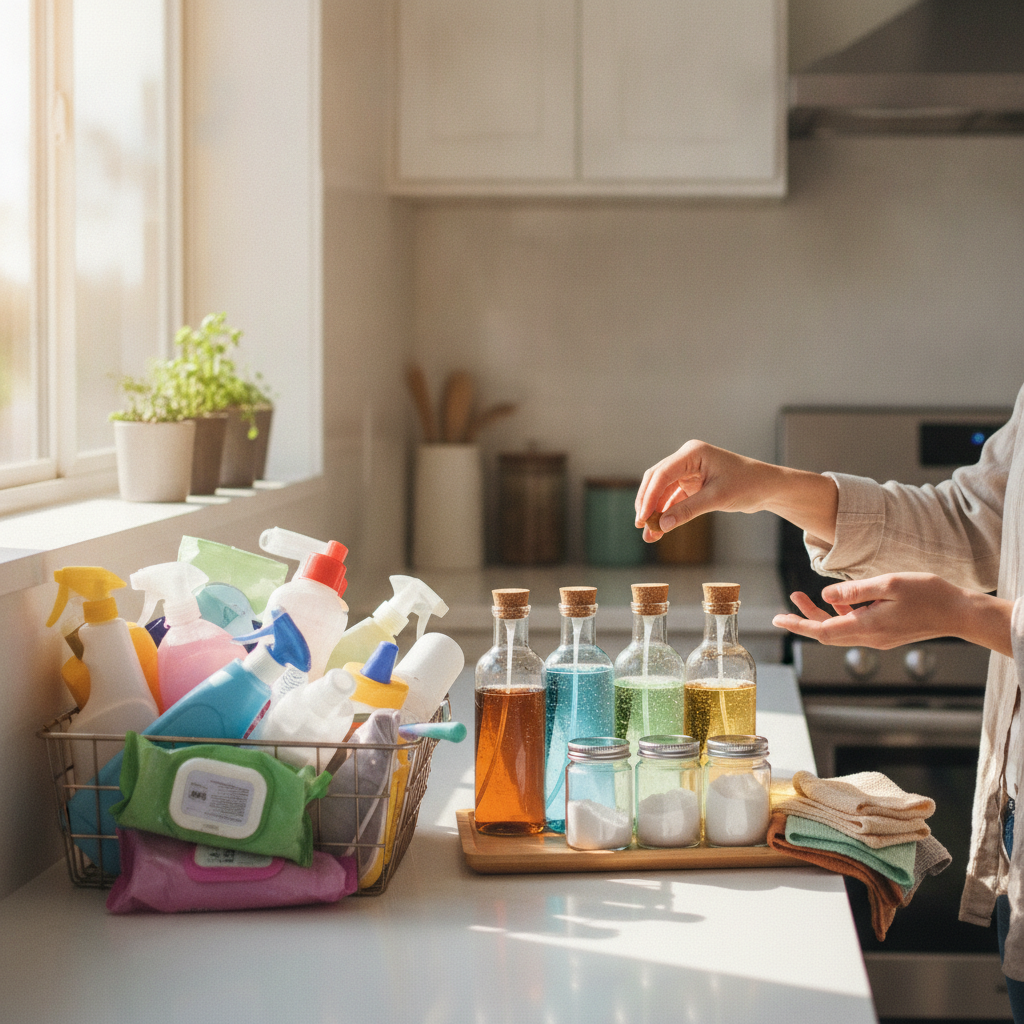
Most households quietly accumulate a cabinet full of single-purpose cleaners — one spray for the bathroom, another for the kitchen, a separate one for glass, a different bottle for floors. It feels organized, but the cost adds up faster than it looks, and the results aren't necessarily better than what a smaller, smarter set of concentrated products can deliver.
If your cleaning supply stash has grown into a cluttered, expensive collection of half-empty bottles, you're not alone. The good news is that trimming it down to a handful of versatile, concentrated alternatives is one of the simpler household cost reductions you can make — and it doesn't require sacrificing cleanliness or convenience.
The Real Cost of Single-Use Cleaning Products
Single-use cleaners are priced for convenience, not value. You're paying for water, packaging, branding, and shelf appeal — not cleaning power. When you buy a concentrated alternative, you're paying almost entirely for active ingredients, which means each bottle goes significantly further. Brands like Branch Basics and Blueland have built their entire model around this idea, and the math is straightforward: one concentrate diluted into multiple spray bottles costs a fraction of buying each product separately at full price.
Starting With a Versatile All-Purpose Concentrate
The foundation of a simplified cleaning kit is a quality all-purpose concentrate. Products from brands like Dr. Bronner's or Grove Collaborative can be diluted at different ratios to handle countertops, sinks, stovetops, and general surface cleaning. The same base product works across rooms — you just adjust the dilution. Buying a large bottle and refilling small spray bottles is both cheaper per use and dramatically reduces plastic waste over the course of a year.
Choosing a Single Heavy-Duty Abrasive
For tougher jobs — grout, stubborn soap scum, baked-on oven residue — you need something with mild abrasive action. Rather than keeping separate bathroom scrubs and kitchen cleansers, one good powdered or paste-style cleaner handles both. Bar Keepers Friend is a widely trusted example: it works on stainless steel, ceramic, porcelain, and glass cooktops without scratching. One container covers what three or four specialty products used to handle.
Using White Vinegar as a Secondary Workhorse
Distilled white vinegar costs almost nothing and earns its place in any simplified cleaning kit. Diluted with water, it cuts through mineral deposits, hard water stains, and grease on most non-stone surfaces. It's also a reliable deodorizer. The key caveat: avoid it on natural stone like marble or granite, where acidity causes damage. Outside of that, it replaces descalers, rinse aids, and several specialty sprays you might otherwise keep on hand.
Picking the Right Microfiber Cloths Over Paper Products
Switching cleaning products is only half the equation — what you clean with matters too. A set of quality microfiber cloths from a brand like MR.SIGA or Zwipes traps dirt and bacteria with just water or a light solution, reducing how much product you need per session. They're washable, durable over hundreds of uses, and replace paper towels for most cleaning tasks. The upfront cost pays itself back within a few months of regular use.
Keeping One Disinfectant for Targeted Use
Concentrated multipurpose cleaners handle everyday cleaning, but a dedicated disinfectant still has its place — particularly in bathrooms and kitchens after handling raw meat or during illness. Rather than reaching for disinfectant on every surface every time, reserve it for moments that genuinely require it. A concentrated disinfectant tablet system like those from Blueland lets you make a fresh batch only when needed, avoiding the waste of a half-used bottle sitting under the sink for months.
Storing Smart to Reduce Redundancy
Part of what drives households to keep buying is poor visibility — you can't see what you have, so you buy duplicates. Switching to a small set of concentrates works best when paired with a simple storage system: a few labeled spray bottles, one small caddy, and nothing more. When everything fits in one place, you stop buying things you already own. This alone eliminates a surprising amount of recurring spend at the grocery store or on delivery orders.
Making the Transition Without Waste
You don't need to throw out everything you currently own to start. Use up existing products before replacing them, and introduce concentrates one category at a time — starting with your all-purpose spray is the easiest entry point. Over a few months, the cabinet naturally empties and gets replaced with a leaner, more cost-effective set. The transition doesn't require a dramatic overhaul, just a different purchasing habit going forward.
The shift from single-use cleaning products to a small set of concentrated multipurpose alternatives is one of the cleaner examples of spending less without getting less. You end up with surfaces that are just as clean, a cabinet that's easier to manage, and a recurring supply cost that drops noticeably once the new habit settles in. It takes one or two purchasing cycles to feel the difference, but once you do, going back to the old approach rarely makes sense.