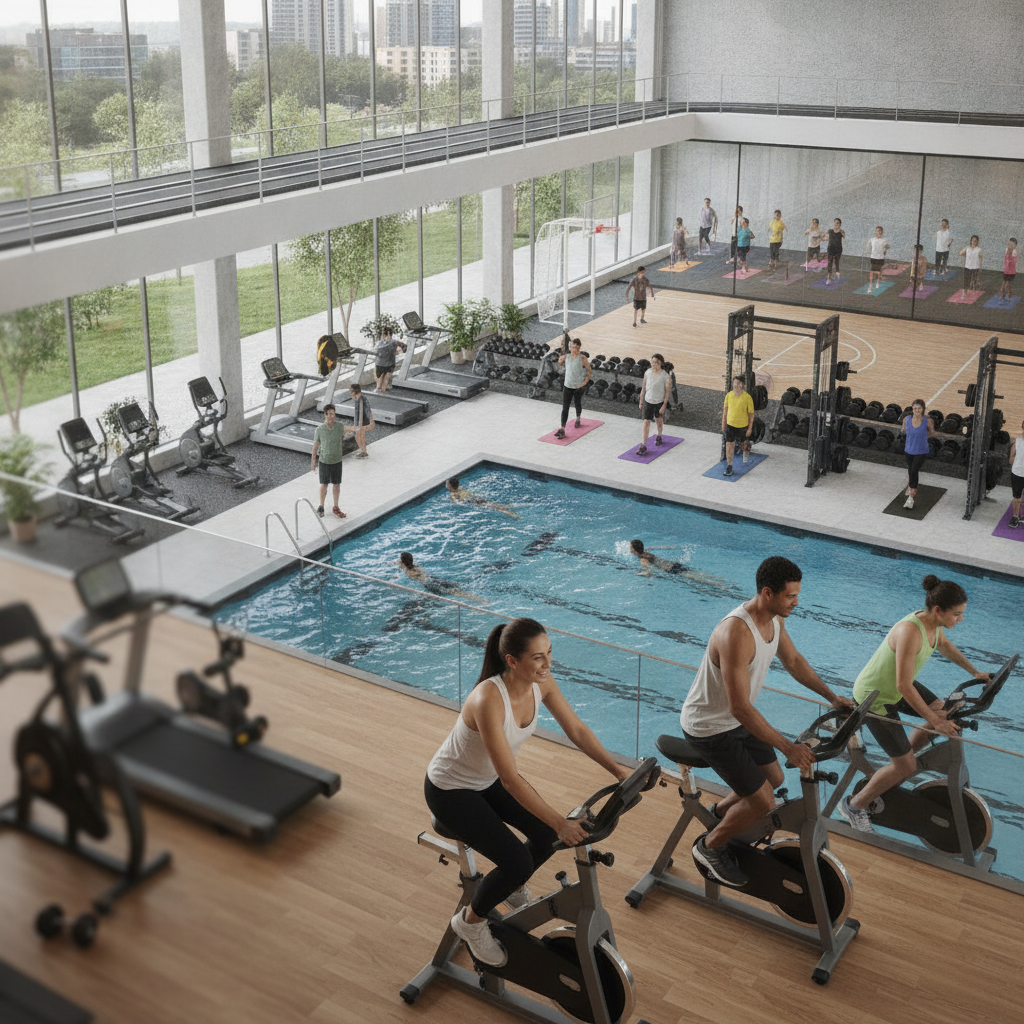
The fitness industry has long profited from a particular fantasy: that owning the right equipment transforms a home corner into a personal sanctuary of discipline. Treadmills, adjustable dumbbells, resistance bands, cable machines — each purchase arrives with the implicit promise that proximity alone will produce results. For millions of households, that promise quietly dissolves into a piece of furniture that collects laundry rather than sweat.
The Real Cost of Home Gym Ownership
Fitness equipment carries a deceptive price structure. The sticker price is only the beginning. Cardio machines require annual servicing, belts wear out, and resistance mechanisms degrade faster in residential settings than their warranties suggest. Storage becomes a genuine household constraint, particularly in apartments or smaller homes where a squat rack or rowing machine occupies space that might otherwise serve multiple purposes. When a piece of equipment is eventually sold — as most eventually is — the resale value rarely recovers a meaningful fraction of the original investment. Platforms like Facebook Marketplace and Craigslist are perpetually flooded with barely-used home gym gear, which itself reveals how commonly the pattern repeats. The cumulative financial reality of building a functional home setup tends to far exceed the cost of years of recreation center membership.
What Community Recreation Centers Actually Offer
Community recreation centers — whether run by a city parks department, a YMCA, or a regional organization like the LA Fitness network — provide access to a depth of equipment that no home setup can reasonably replicate. Olympic platforms, lap pools, racquetball courts, group fitness studios, steam rooms, and full free-weight areas coexist under a single monthly or annual fee that, across most American cities, lands well below what people assume. Many municipalities offer sliding-scale pricing based on household income, and employer wellness programs frequently reimburse partial or full membership costs through platforms like Gympass or ClassPass. The value proposition, when examined honestly, is remarkably strong — particularly for people who benefit from varied modalities rather than a fixed circuit of movements.
The Consistency Argument That Equipment Sellers Rarely Make
There is a well-documented behavioral pattern in fitness adherence: people who exercise in dedicated social environments maintain their routines longer than those who train alone at home. The mechanism is partly social reinforcement — seeing others engaged in the same activity normalizes the effort — and partly environmental cueing, the psychological phenomenon in which a specific physical space primes the brain for a specific behavior. When the gym is a place you go rather than a room you pass through on the way to the kitchen, the cognitive separation between leisure and exercise becomes cleaner. Group fitness classes formalize this further. A spin class at a local YMCA or a water aerobics session at a municipal pool creates an appointment, a social contract, a reason to show up that no home treadmill can manufacture. Equipment depreciates; habits compound.
Sunk Cost Thinking and the Equipment Trap
One of the subtler financial dynamics at play involves what behavioral economists call the *sunk cost fallacy* — the tendency to continue investing in something because of what has already been spent, rather than its current utility. A person who purchases a Peloton or a multi-station home gym often feels psychological pressure to justify the expenditure by using it, which sometimes works briefly and then collapses under the monotony of isolated training. The equipment sits idle, but selling it feels like admitting defeat. Meanwhile, a recreation center membership carries no such weight. If one facility no longer serves your needs, switching involves no lost asset, no resale negotiation, no garage-sale mathematics. The financial flexibility itself reduces stress, and reduced financial stress is one of the quieter contributors to sustained healthy behavior.
How to Evaluate a Community Center Before Committing
Not every recreation center merits the same enthusiasm. A few practical considerations help separate genuinely valuable memberships from underwhelming ones. Peak hours matter significantly — a facility that is pleasantly spacious on weekday mornings may feel impossible on Tuesday evenings. The quality of group fitness instruction varies enormously between a well-funded municipal center and an underfunded one, so it is worth attending a trial class before committing. Many centers, including YMCA locations and city-operated facilities in places like Chicago, Austin, and Seattle, offer free day passes precisely for this purpose. Parking, locker room conditions, pool lane availability, and the breadth of class scheduling all factor into whether a membership translates into consistent use. The goal is not the cheapest option but the one most likely to become a genuine weekly habit.
Making the Shift Practically and Financially
For those transitioning away from home equipment ownership, the shift works best when approached as a deliberate exchange rather than a reluctant surrender. Selling existing equipment before signing a new membership converts a depreciating asset into liquidity that can cover months of access fees. Timing matters here — late December and early January bring a brief surge in used fitness equipment buyers alongside the familiar wave of resolution-driven purchasing, making it one of the more favorable windows to sell. The freed-up physical space often yields secondary benefits: a recovered guest room, a functional home office, or simply the quiet psychological relief of a less cluttered living environment. You arrive at the recreation center without the guilt of unused gear waiting at home, and that absence of friction matters more than most people anticipate.
The fantasy that launched a thousand treadmill purchases — that ownership creates consistency — turns out to be almost precisely backward. What creates consistency is environment, community, variety, and the simple fact of showing up somewhere designed for the purpose. Community recreation centers offer all of that, at a fraction of the accumulated cost of building and maintaining equipment that serves, for most people, as an expensive reminder of intentions that never quite solidified into routine.