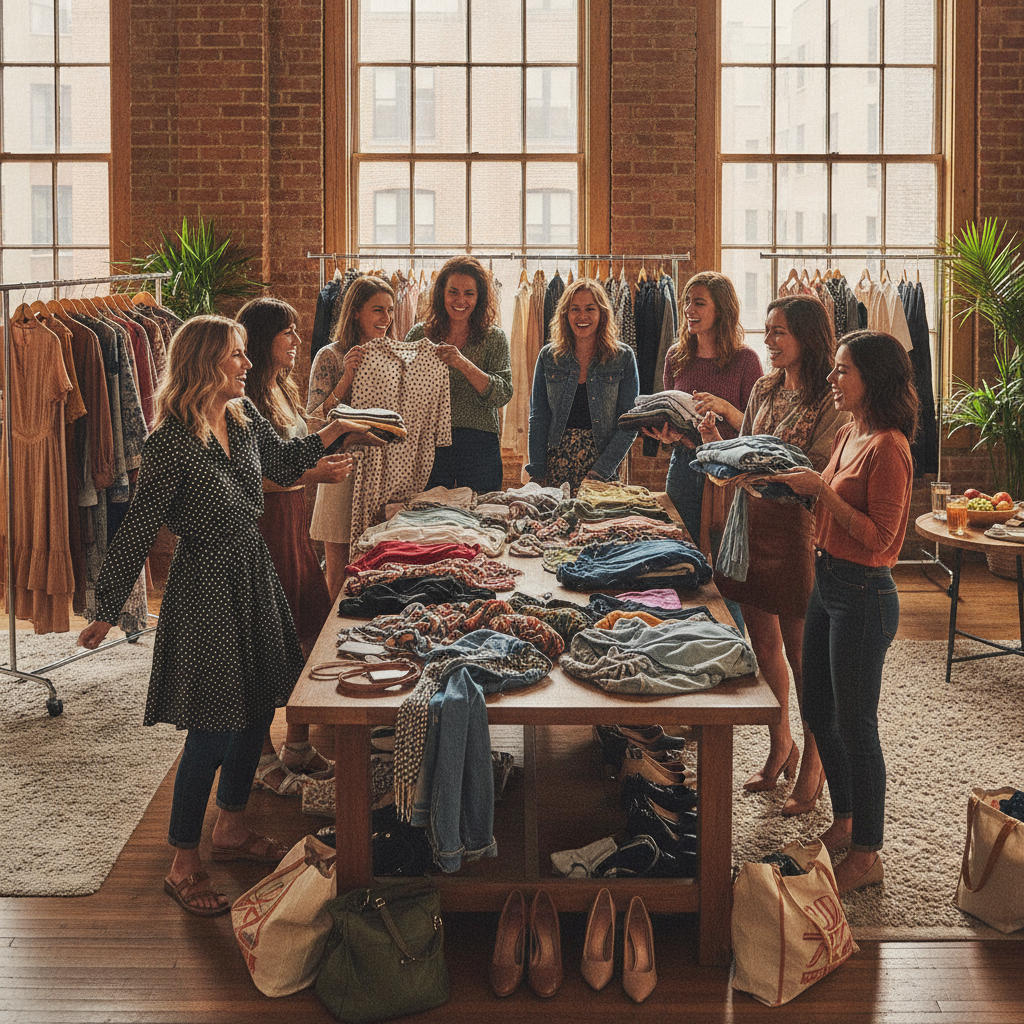
There is something quietly radical about a room full of people exchanging clothes they no longer wear, refreshing their wardrobes without spending a single dollar. The clothing swap — a practice with roots in community markets, cooperative living, and the long tradition of passing garments between friends and family — has evolved into a genuinely compelling alternative to the endless cycle of fast fashion and clearance-rack hunting. It satisfies the same hunger for something new without feeding the machine that produces so much textile waste. And for anyone who has watched a modest discount haul transform into a closet full of things that never quite fit the life being lived, the appeal becomes obvious.
The Economics of Wearing What You Already Own
Discount fashion carries a seductive logic: the price is low, so the risk feels low. But the math rarely holds. A deeply discounted top from Shein or a clearance rack at H&M still costs money, still requires a trip or a delivery, and still carries the quiet tax of guilt when it sits unworn. Clothing swaps reframe the transaction entirely. The currency is participation — bringing items, contributing to the collective pool, and receiving something in return that someone else genuinely loved and chose carefully. When the exchange is social rather than commercial, the psychology shifts. People tend to take home fewer things, but better ones. They hold each piece with more attention, considering whether it actually works rather than whether the price makes it worth the gamble.
What Swap Culture Borrows from Older Traditions
Anthropologists use the term *gift economy* to describe systems where value circulates through generosity and reciprocity rather than money. Clothing swaps sit somewhere in that tradition — not purely a gift economy, but something that draws from it. Many cultures have long practiced forms of communal exchange: the Japanese concept of *mottainai* (a deep reluctance to waste anything of remaining value) shapes the way older generations treat clothing; Scandinavian communities built a strong culture of *loppis*, or neighborhood flea markets, where second-use goods circulate continuously. The modern clothing swap party inherits from all of these without needing to name them. It is a gathering that values the lifespan of an object over the novelty of a new one, which is a quiet but meaningful shift in how a room full of people relates to their stuff.
How to Organize a Swap That Doesn't Devolve Into a Rummage Pile
The difference between a successful clothing swap and a chaotic pile of rejected items usually comes down to a few structural decisions made before anyone arrives. First, set a clear category: women's clothing only, accessories included, or all genders welcome — a focused swap produces better results than an open-ended one. Second, establish a minimum quality standard and communicate it directly. Asking guests to bring only items they would genuinely gift to a close friend filters out the stretched-out and the stained without requiring a committee. Third, organize the space intentionally. Grouping items by type — tops together, bottoms together, outerwear on a rack — transforms the event from a scramble into something closer to browsing a curated boutique. Apps like Poshmark and ThredUp have normalized the idea of secondhand as curated rather than compromised, and a well-organized swap borrows that same energy.
The exchange system also matters. A simple ticket model works well: each guest receives one ticket per item brought, which they trade for items taken. This prevents the awkward imbalance of one person arriving with a single blouse and leaving with an armful. It also creates a natural limit that encourages selectivity. For groups that want a looser atmosphere, a free-for-all final round — anything unclaimed at the end is available to anyone — adds generosity to the structure without undermining the fairness of the earlier rounds.
Turning Leftover Inventory Into Additional Value
Every swap ends with a residual pile. What happens to those unclaimed items is where the event can extend its value beyond the room. Donating to a local mutual aid organization, a women's shelter, or a neighborhood buy-nothing group — platforms like the Buy Nothing Project have active communities in most cities — ensures that nothing returns to a landfill. Some hosts collect a small entry donation for a local charity instead of using a ticket system, which adds a philanthropic layer without complicating the logistics. The point is that the end of the swap shouldn't feel like cleanup; it should feel like the final act of redistribution, the item finding its next home through a slightly longer path.
Making It a Regular Ritual, Not a One-Time Experiment
The clothing swap works best as a recurring event rather than a novelty. Seasonal timing — once in spring as winter coats give way, once in autumn as summer dresses are folded away — aligns naturally with the moments when people are already reassessing their wardrobes. A group that meets twice a year builds a rhythm and a shared vocabulary around the idea that clothing has a lifecycle, that ownership is temporary, and that the next person to wear something is as legitimate an heir to it as the original buyer. Over time, the group itself becomes part of the value: a reliable social occasion that costs nothing, refreshes the closet, and reinforces a way of thinking about consumption that discount fashion, however cheap, simply cannot replicate.
There is something that returns, in a clothing swap, to the original impulse of wanting to look good without being defined by spending. The room full of exchanged garments — a linen blazer from one person's forgotten formal phase, a pair of perfectly broken-in boots someone outgrew — carries a warmth that a clearance rack never could. The things have histories. The exchange has a social logic. And the person leaving with something new to them has paid for it not with money but with presence, which turns out to be a much more satisfying currency.