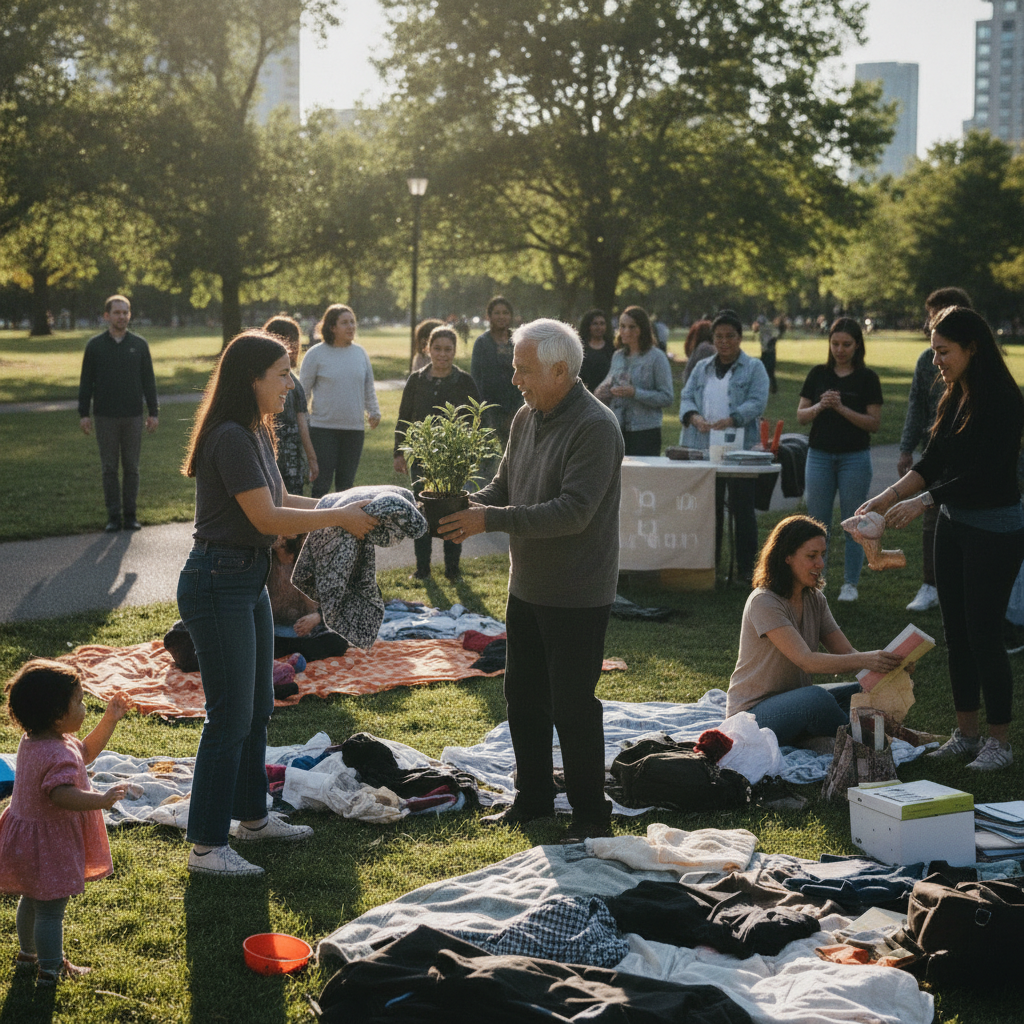
Something quietly radical has been happening in neighborhoods across the country — people are giving things away for free, without expectation of anything in return, and finding that the exchange feels richer than any transaction they'd made in years.
Buy Nothing groups, which began as small Facebook communities and have since spread to dedicated apps and hyper-local online forums, operate on a deceptively simple premise: members post items they no longer need, others request them, and everything changes hands without money. No bartering, no trading, no karmic scorekeeping. The gift economy — a term anthropologists use to describe systems where goods flow based on generosity and social bonds rather than market exchange — isn't new. Indigenous cultures and close-knit rural communities have practiced versions of it for centuries. What's new is watching it re-emerge in suburban cul-de-sacs and urban apartment buildings, often organized through the same smartphones people use to order same-day delivery.
The Accumulation Problem That Nobody Named
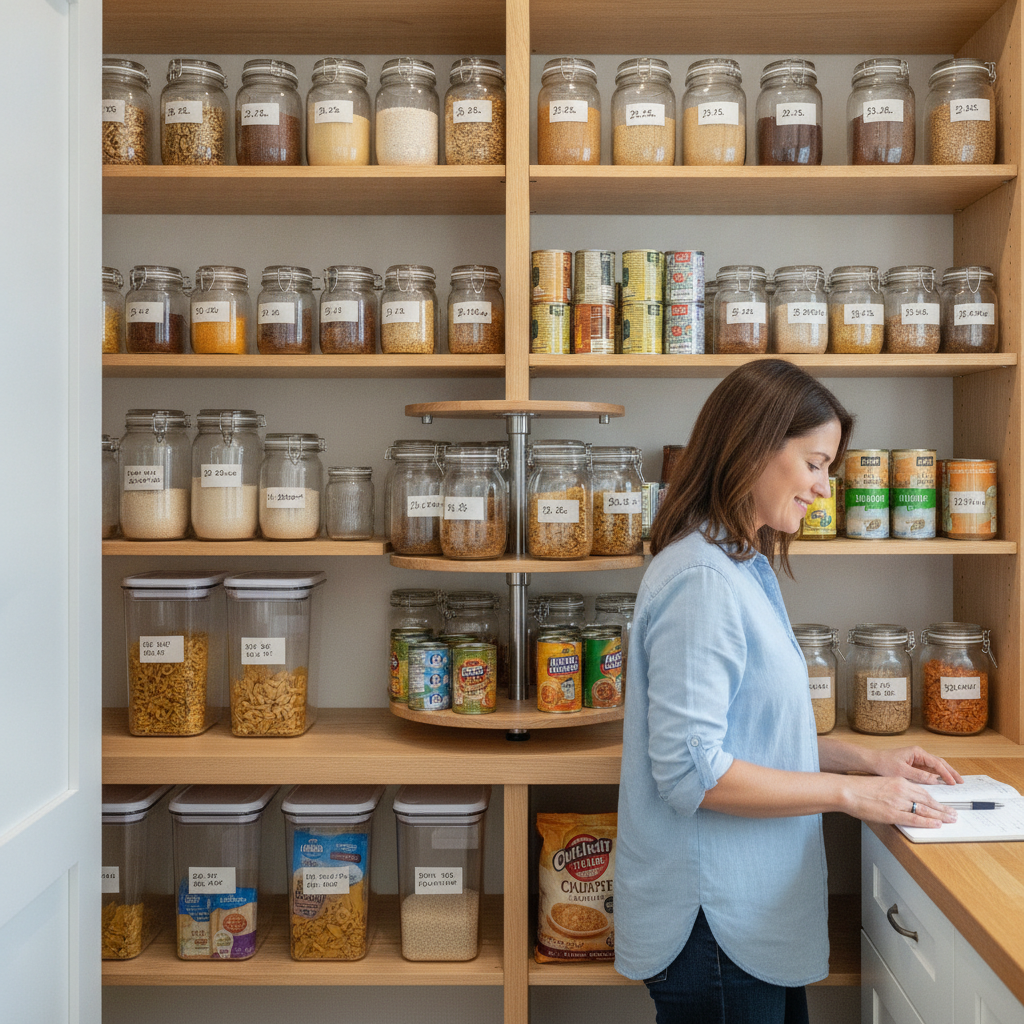
For decades, consumer culture offered a consistent story: acquiring things is progress, and more things mean a better life. Closets filled with seasonal gear used twice a year. Kitchen gadgets purchased with genuine enthusiasm, then quietly relegated to high shelves. Children's clothing bought in anticipation of growth spurts, outgrown before the tags came off. The storage industry ballooned to accommodate the overflow, and a peculiar anxiety settled in — not the anxiety of scarcity, but of surplus. What Buy Nothing groups have surfaced, almost accidentally, is the emotional weight of objects that have outlived their usefulness but feel too valuable to discard. Giving something to a neighbor who genuinely needs it resolves that tension in a way that neither donating to a large thrift chain nor selling online quite manages to do.
There's an intimacy to the local exchange that matters. When someone in the Buy Nothing Pasadena group posts a set of barely-used baking pans and learns they've gone to someone who just moved into their first apartment, the object acquires a second story. It stops being clutter and becomes a small, meaningful handoff. This is part of what's driving participation — not just the practical appeal of decluttering, but the psychological relief of giving something a purposeful continuation rather than a landfill ending.
Proximity and the Rediscovery of Neighbors
One of the more unexpected consequences of Buy Nothing culture is how thoroughly it reintroduces people to their own neighborhoods. Apps like Nextdoor tried to engineer this sense of local community with mixed results — the platform often became a venue for complaints and neighborhood watch anxieties rather than genuine connection. Buy Nothing groups, by contrast, tend to operate with a warmer register. The shared project of giving and receiving creates goodwill as a byproduct. People learn their neighbors' names, discover shared interests, and occasionally form friendships rooted in nothing more than a passed-along lamp or a bag of garden seedlings.
Sociologists use the term *social capital* to describe the networks of trust and reciprocity that make communities function. Buy Nothing groups generate it in ways that feel organic rather than engineered. A parent in Brooklyn who receives winter coats for her children one season may quietly return them the following year when they've been outgrown, starting a small, informal loop of care that operates entirely outside the economy. The objects themselves almost become incidental — vehicles for the deeper exchange that's actually happening.
What Ownership Actually Costs
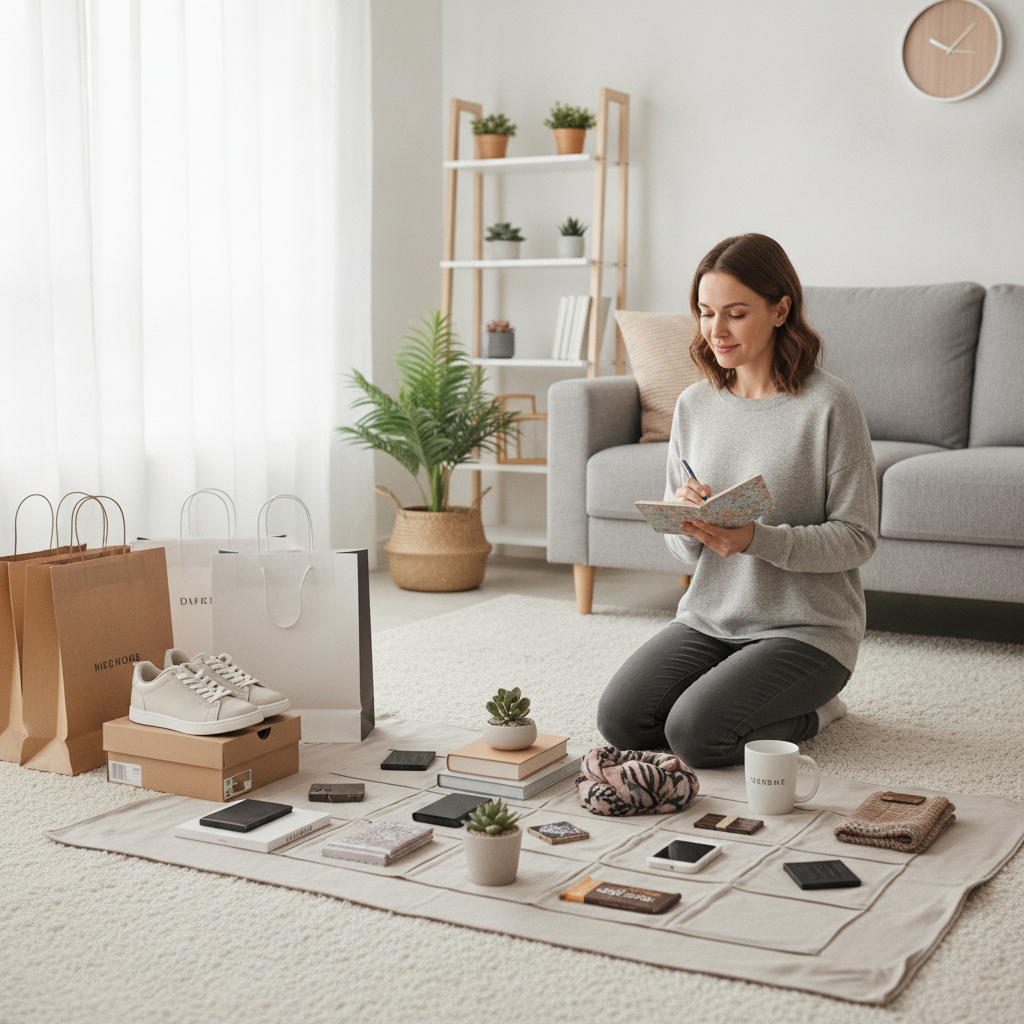
Buy Nothing culture also prompts a more uncomfortable question, one that sits at the edge of most participants' awareness: why did we buy so much in the first place? The answer involves a mixture of convenience, aspiration, and the psychological nudges built into modern retail — flash sales that manufacture urgency, subscription boxes that arrive before anyone's thought carefully about what they need, recommendation algorithms calibrated to keep people browsing. Purchasing became the default response to almost any want, and the result is a material abundance that frequently fails to deliver the satisfaction it promises.
Researchers who study consumer behavior have long noted a phenomenon sometimes called *hedonic adaptation* — the tendency for people to return to a stable baseline of contentment regardless of what they acquire. The new thing stops feeling new quickly, which drives the impulse to acquire again. Buy Nothing participation doesn't eliminate that impulse, but it does create a pause. Checking whether someone locally has what you need before purchasing it introduces friction in the most useful possible sense. It slows the reflex, and sometimes that's enough.
A Different Kind of Value
When you step back from the transaction entirely — when cost and ownership are removed from the equation — what remains is function. Does the object do what needs doing? Does someone else need it more than you do right now? These are simpler questions than the ones retail trains people to ask, and they tend to produce simpler, more satisfying answers. The Buy Nothing movement, whatever its limitations, has helped a growing number of people recalibrate their relationship with things. Not through minimalism as an aesthetic ideology, and not through the performative rejection of consumption, but through the quieter practice of paying attention — to what's already at hand, to who's nearby, and to what an object's real life might look like across multiple owners and several decades.
If the accumulation culture of the late twentieth century was shaped by the belief that having more was always better, the sensibility emerging in these neighborhood groups suggests something more nuanced: that the value of a thing is not fixed at the point of purchase, that generosity is a form of wealth, and that the most satisfying transactions are sometimes the ones where no money changes hands at all. That's a quiet revolution happening one porch pickup at a time — and it began, as most meaningful changes do, simply because a few people decided to try something different.