Sunday afternoons have a quiet, unhurried quality that weeknights simply never will. That window of time — somewhere between brunch and the low-grade dread of Monday — turns out to be one of the most powerful financial tools available to anyone who regularly finds themselves ordering takeout at 7 p.m. because dinner feels impossible. Batch cooking on Sundays isn't a trendy habit. It's a practical, repeatable system that quietly outpaces meal kit subscriptions when it comes to actually reducing what you spend on food throughout the week.
Understand Why Weeknight Spending Spirals So Easily
The problem with takeout isn't a lack of willpower — it's a lack of options in the moment. When you're tired, hungry, and staring at an empty fridge after a long day, the path of least resistance is Uber Eats or DoorDash. Those apps are designed to be frictionless, and they are. But that convenience carries a real cost: delivery fees, service charges, tips, and menu markups that can make a basic meal cost two to three times what it would have cost to make at home. Meal kit services try to solve this by delivering pre-portioned ingredients, but they charge a premium for that convenience too — and they still require you to cook in real time on a weeknight, which is exactly the condition that led to ordering takeout in the first place.
Start With a Simple, Realistic Sunday Grocery Run
Batch cooking works best when it's built around a short, focused grocery list rather than an ambitious meal plan. Before you head to the store, spend ten minutes looking at your week — what nights are busiest, how many people you're feeding, and what proteins and grains you actually enjoy eating. Apps like Mealime can help you generate efficient grocery lists based on overlapping ingredients, which cuts down on both spending and waste. The goal isn't to prepare five elaborate dinners. It's to have cooked components ready — a big pot of grains, a couple of proteins, roasted vegetables — that can be mixed and matched across the week without any real-time cooking effort.
Cook Components, Not Completed Dishes
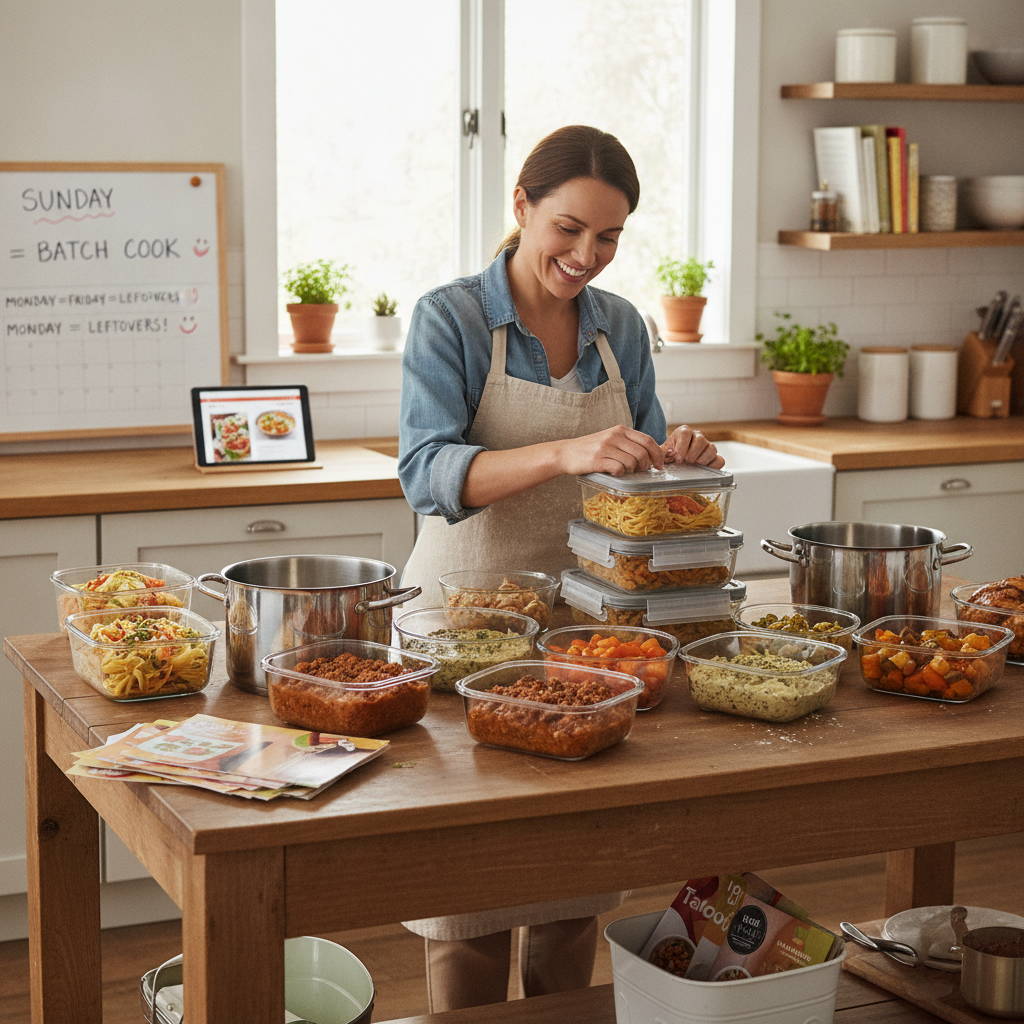
One of the most effective shifts in Sunday batch cooking is moving away from cooking full recipes and instead cooking flexible building blocks. A large batch of brown rice or farro, a sheet pan of roasted vegetables, a tray of baked chicken thighs, and a pot of lentil soup gives you the raw material for dozens of weeknight combinations. You can pull from these components to build grain bowls, wraps, quick stir-fries, or simple plate meals in under ten minutes. This approach avoids the monotony of eating the same dish four nights in a row and keeps things feeling fresh without requiring any weeknight effort.
Use Storage and Labeling to Make It Effortless
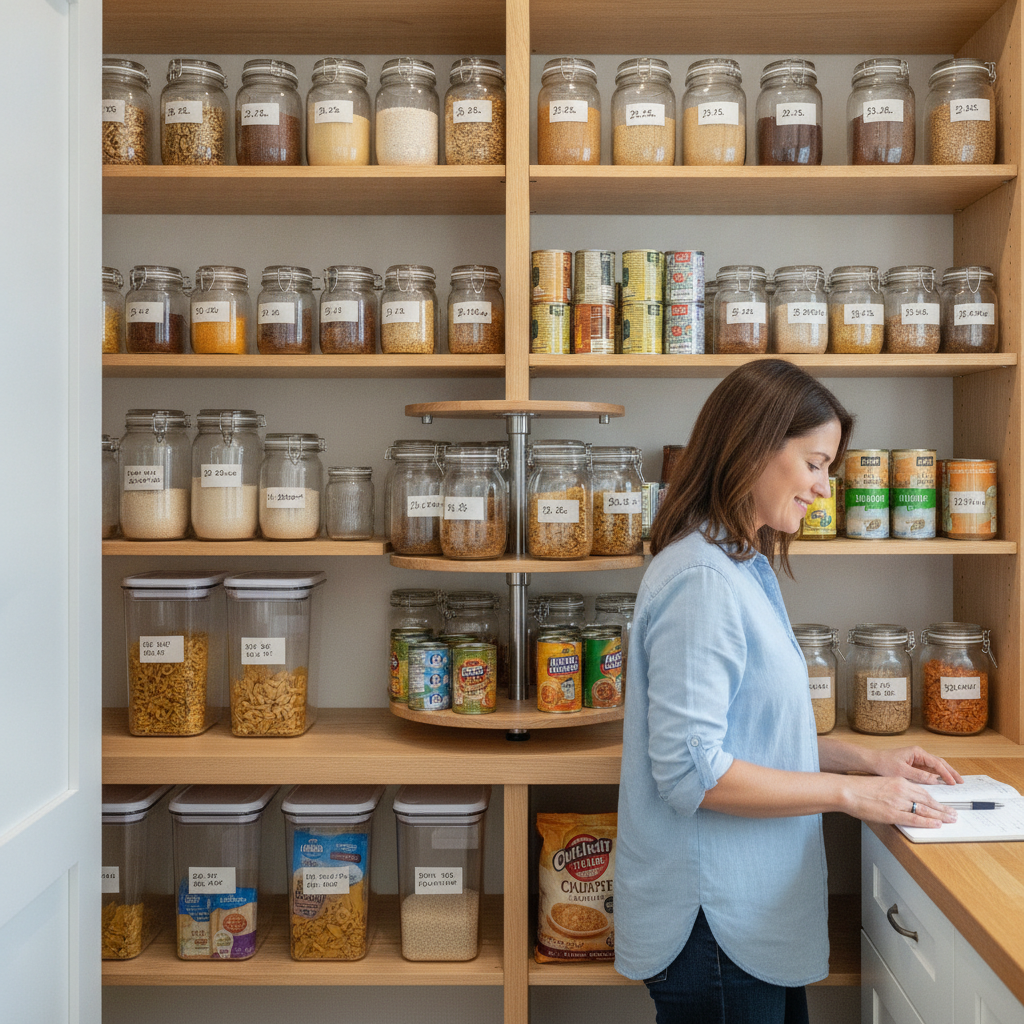
The difference between batch cooking that actually gets used and batch cooking that ends up forgotten in the back of the fridge often comes down to how you store it. Invest in a set of clear, stackable containers so everything is visible at a glance. Label each container with the contents and the date it was prepared — a simple habit that prevents waste and makes weeknight decisions faster. Apps like Paprika 3 are useful for keeping your batch cooking recipes organized in one place, and many people also use the notes feature in Google Keep to track what's in the fridge at any given time. When dinner is visible, accessible, and labeled, the friction that drives takeout decisions largely disappears.
Time Your Cooking Session for Maximum Efficiency
A well-structured Sunday cooking session doesn't need to take more than two hours, and often less. The key is running multiple things simultaneously — grains on the stovetop, proteins in the oven, and vegetables roasting on a second rack. Start with whatever takes longest and build backward from there. If you tend to lose track of time, set timers on your phone or use a kitchen display like an Amazon Echo to keep things on track without hovering over the stove. Most people who stick with batch cooking settle into a rhythm within two or three Sundays where it begins to feel automatic rather than effortful.
Compare the Real Cost Against Meal Kits and Takeout
Meal kit services like HelloFresh are convenient, but their pricing reflects that convenience. You're paying for packaging, portioning, and marketing — costs that grocery shopping doesn't carry. A Sunday batch cooking session using whole ingredients from a standard grocery store typically costs a fraction of what a meal kit service charges per serving, and it produces food that's already cooked rather than waiting to be prepared. Compared to weeknight takeout, the savings are even more pronounced. A habit of two to three batch-cooked meals per week, replacing that same number of delivery orders, adds up meaningfully over a month — without requiring you to track anything or follow a program.
Make It a Seasonal Habit That Evolves Naturally
One of the best things about Sunday batch cooking is how naturally it adapts to the seasons. In cooler months, it leans toward soups, braises, and hearty grain dishes that hold well in the fridge and feel satisfying when reheated. As the weather warms up, it shifts toward grain salads, marinated proteins, and roasted vegetables that work just as well cold. This seasonal rhythm keeps the habit from feeling repetitive and gives you a built-in reason to revisit your approach every few months. It also aligns naturally with what's on sale and in season at the grocery store, which quietly keeps costs lower without any extra effort.
The simplest path to spending less on weeknight food isn't a subscription or a system someone else builds for you. It's one afternoon, a short grocery list, and a reliable rhythm that removes the decision entirely when you're too tired to make one. Start small this Sunday — pick two or three things to cook, nothing ambitious — and notice how differently the week unfolds when dinner is already handled.